
Blog
Hot News
- Dawei Metal 2026 Chinese New Year Special Offer: Gallop into Success with Upgraded Tools!
- Aluminum Alloy Combination Tool Set for Home, Automotive, and Repair Use
- Striking Tools: Types, Uses, and How to Choose the Right One
- Highest Quality Hand Tools: Inside the World's Most Trusted Tool Brands
- Why a Machete Saw Belongs in Your Outdoor Kit
Contact Us
Company:Shandong Dawei Metal Materials Co., Ltd.
Tel:+8615666285386
Email:dwhardwaretools@gmail.com
Address:Room 1413, Building 8, Shandong Steel Xintiandi Plaza, No. 61 Gongye South Road, High-tech Zone, Jinan City
Blog
VDE Screwdrivers vs. Regular Screwdrivers: What Is the Difference?
Author:Editor Click: Release date:2026-10-10 15:38
A regular screwdriver and a VDE screwdriver may look similar in a product photo. Both have a handle, a shaft, and a working tip. Both can turn a terminal screw. That is where the comparison usually ends.
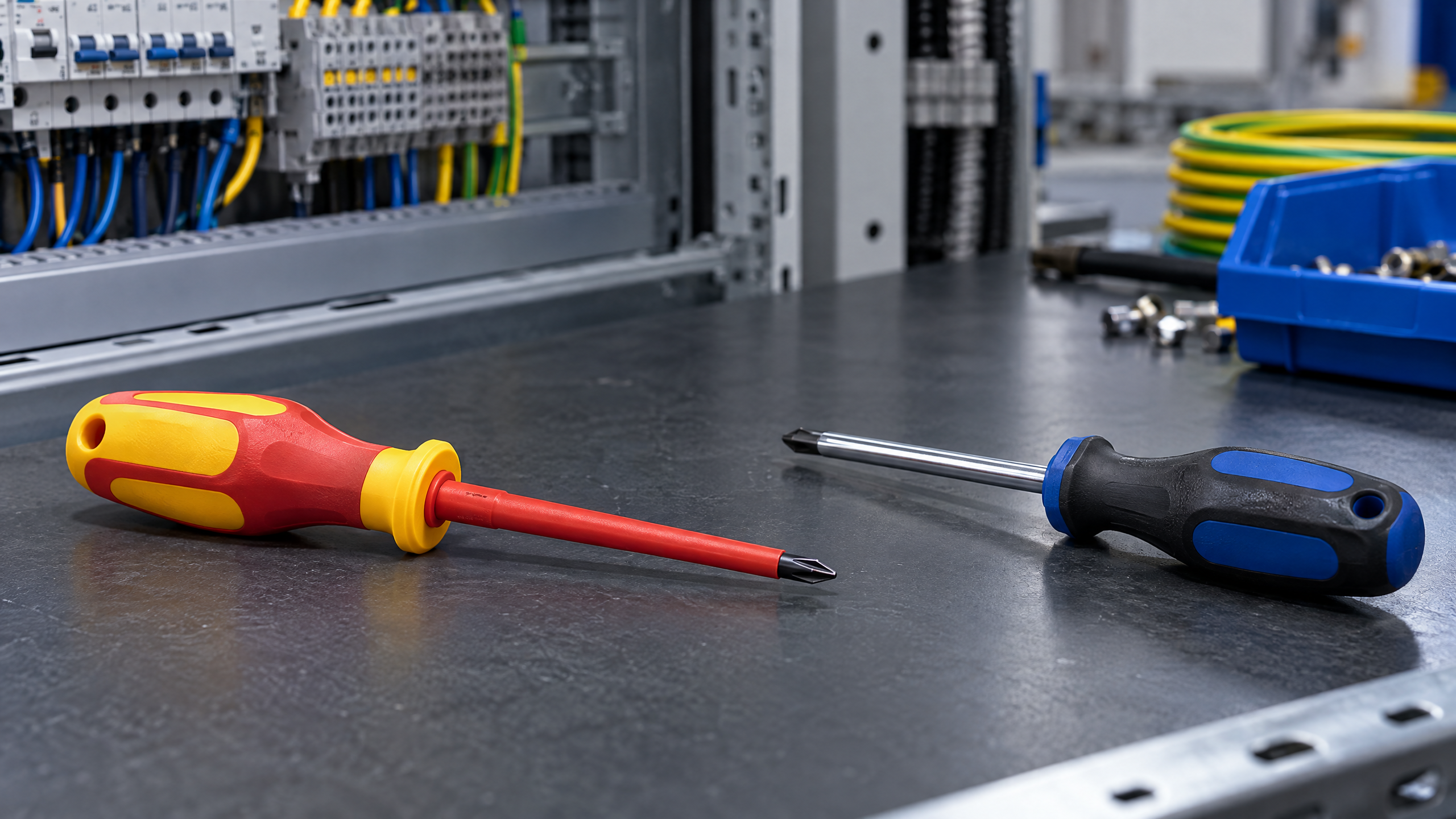
VDE insulated screwdriver and regular screwdriver comparison in a professional workshop setting.
The regular screwdriver is designed mainly for fastening work. A VDE screwdriver is designed for fastening in electrical environments, with an insulated system, protective features, markings, and—depending on the product—certification or test documentation for electrical applications.
The practical answer is straightforward: use a regular screwdriver for ordinary fastening and a properly marked VDE insulated screwdriver for electrical work where the tool may be exposed to live or potentially energized parts. Do not treat a red-and-yellow handle or a “1000V” label as proof by itself. The tool’s model, applicable standard, condition, and supporting information still need to be checked.
What Is a VDE Screwdriver?
A VDE screwdriver is an insulated screwdriver intended for electrical installation, maintenance, and related work. Its design normally combines several elements:
•An insulated handle
•An insulated shaft or protective shaft covering
•An exposed working tip
•A finger guard or collar to reduce hand movement toward the shaft
•A voltage marking where applicable
•Manufacturer and model identification
•A reference to an applicable standard or certification system where applicable
The insulation is not simply decorative plastic added to a conventional tool. The handle, shaft covering, working end, finger guard, markings, and manufacturing controls need to work as a complete tool system.
For electrical hand tools, buyers often encounter IEC 60900, an international standard covering insulated hand tools used for live working within defined limits. VDE certification and IEC 60900 are related but different terms. IEC 60900 is a standard; VDE refers to a certification and testing system associated with defined product requirements. A screwdriver may reference both, but one should not automatically be substituted for the other.
The exact certification status should always be confirmed for the specific model. A brand name or a product category does not automatically extend a certificate to every screwdriver in a catalogue.
Dawei Metal’s guide to 1000V insulated tools and insulated tool sets provides a broader overview of insulated screwdrivers, pliers, cutters, wrenches, and electrician tool kits.
What Is a Regular Screwdriver?
A regular screwdriver is a general-purpose fastening tool. Its design priorities usually include:
•Accurate tip geometry
•Shaft strength
•Handle comfort
•Grip and torque transfer
•Corrosion resistance
•Compatibility with a particular screw profile
Regular screwdrivers are suitable for many everyday jobs, including furniture assembly, appliance repair, workshop maintenance, automotive work, machine repair, and general hardware installation.
The word “regular” does not mean that a screwdriver is poorly made. A good general-purpose screwdriver can have a precise tip, a strong alloy-steel shaft, and a comfortable handle. It is simply not designed and verified as an electrical insulation tool.
That distinction matters. A handle that feels insulated in the hand is not the same as a screwdriver designed to provide a controlled protective barrier around the working shaft. Unless the tool is specifically marked, rated, and documented for electrical work, do not use it as an electrical screwdriver.
VDE Screwdrivers vs. Regular Screwdrivers
Feature | VDE screwdriver | Regular screwdriver |
Main application | Electrical installation and maintenance | General fastening and repair |
Insulation | Designed as part of the complete tool system | Usually standard handle construction, if any insulation is present |
Voltage marking | May include a 1000V or other applicable rating | Usually no electrical safety rating |
Standard reference | May reference IEC 60900 or related requirements | Usually not designed for live electrical work |
Finger guard | Common on professional insulated designs | May be absent or not designed for electrical protection |
Certification traceability | May be linked to model-specific documents | Depends on the manufacturer; often not relevant to electrical use |
Suitable application | Electrical work only within the rated and approved conditions | General repair, fastening, and mechanical work |
Inspection priority | Insulation, markings, shaft, tip, and handle connection | Tip, shaft, handle, and general mechanical condition |
It also does not mean that every regular screwdriver is unsafe in every situation. It means that a regular screwdriver has not been selected as an electrical safety control and should not replace a purpose-designed insulated tool.
The Main Difference Is More Than the Handle
The visible difference is the insulation. The more important difference is what the insulation is intended to do and how the product claim can be verified.
A professional VDE screwdriver should be evaluated as a combination of:
1.Electrical insulation: The insulating system is designed for the stated application and voltage conditions.
2.Mechanical performance: The shaft, tip, handle, and connection must still transfer torque without distortion or unexpected failure.
3.Protection geometry: The finger guard and covered shaft reduce the chance of the user’s hand sliding toward exposed metal.
4.Marking: The voltage rating, model, manufacturer, and other information should remain identifiable.
5.Traceability: The buyer should be able to connect the tool to product specifications, tests, or certification documents where applicable.
A regular screwdriver may have an excellent tip and stronger shaft than a low-quality insulated product. But mechanical quality alone does not make it an insulated electrical tool. The two decisions—mechanical suitability and electrical protection—must be considered together.
Is a 1000V Mark Enough?
No. A “1000V” mark is useful information, but it is not, by itself, proof of VDE certification.
A 1000V marking generally indicates that the tool is intended for a voltage-related electrical application under defined conditions. It does not tell you everything about the test method, certification body, AC or DC use, product model, or current condition of the tool.
Before purchasing or using a 1000V insulated screwdriver, check:
•Is the 1000V marking printed on the tool itself?
•Is the manufacturer or brand identifiable?
•Is the model number clear?
•Is IEC 60900 or another applicable standard referenced?
•Does the test report or certificate match the exact model?
•Does the documentation cover the complete screwdriver or only a component?
•Is the insulation free from cuts, cracks, deep scratches, swelling, or exposed metal?
•Is the working tip still correctly shaped?
A screwdriver that once carried a clear rating may no longer be suitable after a fall, overload, heat exposure, chemical contamination, or damage to the insulation. The printed marking cannot restore a damaged tool.
For a detailed selection process, see Dawei Metal’s practical guide to choosing a 1000V VDE insulated tool set.
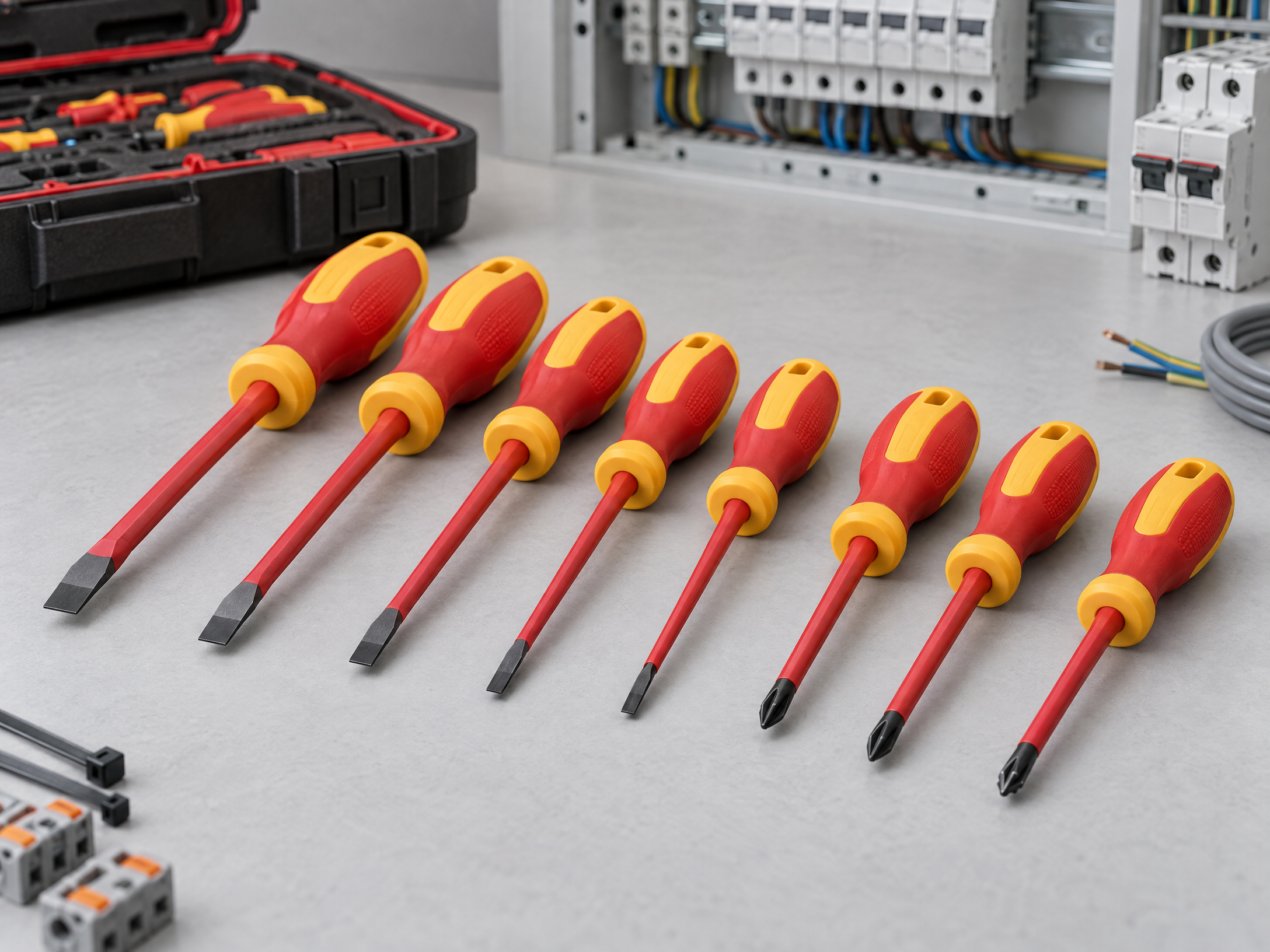
Common VDE screwdriver profiles and sizes for electrical maintenance.
Common Types of VDE Screwdrivers
The right screwdriver depends on the screw profile, terminal design, access space, and torque requirement. A set should be built around the fasteners found in the equipment, not just around the number of pieces in the case.
Slotted VDE Screwdrivers
Slotted screwdrivers are common in terminal blocks, circuit breakers, switches, sockets, control panels, and older electrical equipment.
Common blade widths include:
•2.5 mm
•3.0 mm
•4.0 mm
•5.5 mm
•6.5 mm
A narrow blade is useful for small terminals, but it should not be forced into a slot that requires a wider tip. A blade that is too narrow can concentrate force at the slot edges and slip under torque. A blade that is too wide may not seat fully or may damage the surrounding plastic.
Phillips VDE Screwdrivers
Phillips screwdrivers are widely used in electrical equipment, control cabinets, appliance components, mounting brackets, and general installation work.
Common sizes include:
•PH0
•PH1
•PH2
•PH3
PH1 and PH2 are common starting points for an electrician’s set. PH0 is useful for smaller fasteners, while PH3 is appropriate only where the equipment uses a larger Phillips head.
The driver should match the screw profile. Using a nearly matching size increases the chance of slipping, damaging the screw, and applying force in an uncontrolled direction.
Pozidriv VDE Screwdrivers
Pozidriv screws appear in some electrical equipment, construction hardware, and installation systems. A Phillips tip is not a proper substitute for a Pozidriv tip when the fastener is designed for Pozidriv engagement.
If the target market or equipment commonly uses PZ screws, a professional set may include PZ1 and PZ2 insulated drivers. The correct profile improves seating and helps reduce damage to the fastener.
VDE Precision Screwdrivers
Precision insulated screwdrivers are intended for small fasteners in control devices, instruments, electrical equipment, and compact assemblies. Their small size does not automatically make them suitable for electrical work.
Check the voltage rating, standard reference, and product documentation for the exact model. A small handle with a thin insulating layer should not be assumed to provide the same protection as a purpose-designed VDE tool.
How to Choose the Right VDE Screwdriver Size
The correct size is the one that fits the fastener fully and allows controlled force. It is not necessarily the largest or longest screwdriver in the case.
Match the tip to the fastener
The tip should fill the screw recess or slot without excessive play. If it rocks from side to side, the size or profile is probably wrong. This is especially important in terminal work, where a slipped tip can damage the screw head or move toward an adjacent energized component.
Consider the working space
Long shafts help reach recessed screws and terminals behind covers. They can be awkward in a crowded control cabinet or close to a barrier. Short shafts improve control in confined spaces but may not reach a recessed fastener.
A practical electrician’s set normally benefits from a mixture of lengths rather than one shaft length for every tip size.
Consider the torque requirement
A screwdriver should be used within its mechanical limits. If the fastener requires controlled torque, use the specified procedure or a suitable insulated torque screwdriver where the application calls for one. Do not use a VDE screwdriver as a pry bar, chisel, punch, or impact tool.
Consider the terminal design
Small terminal blocks may require narrow slotted tips. Circuit breakers and switches may use slotted or Phillips profiles. Industrial panels can contain several profiles and sizes in the same enclosure. Review the equipment and service history before deciding on the set configuration.
A Practical Size Guide for Electrical Work
Application | Common screwdriver choices |
Small terminal blocks | Small slotted or Phillips drivers, subject to the terminal design |
Circuit breakers | Slotted and Phillips drivers in common small and medium sizes |
Control cabinets | Slotted, Phillips, and sometimes Pozidriv drivers |
Switch and socket installation | Medium slotted and Phillips drivers |
Industrial panels | Multiple tip sizes, shaft lengths, and stronger mechanical construction |
Precision electrical equipment | Insulated precision drivers only where the product is rated and documented for the task |
How to Choose an Insulated Screwdriver Set
A small set is often more useful than a large set with duplicate or rarely used sizes. Start with the work performed most often and add tools for the fasteners that repeatedly cause delays.
Basic electrician set
A compact set may include:
•3.0 mm slotted
•4.0 mm slotted
•5.5 mm slotted
•PH1
•PH2
This configuration covers many basic installation and maintenance tasks, but it may not suit every panel or industrial site.
Professional maintenance set
A broader set may add:
•2.5 mm slotted
•6.5 mm slotted
•PH0
•PH3
•PZ1
•PZ2
•An insulated tester where applicable
•A fitted pouch or protective case
The actual combination should follow the site’s terminals, breakers, switches, control devices, and equipment fasteners. Piece count alone is not a meaningful measure of coverage.
Wholesale and OEM considerations
Importers, distributors, and tool brands should confirm more than the logo and case design. A purchasing specification should identify:
•Tool model and tip dimensions
•Shaft material and finish
•Handle and insulation material
•Voltage marking
•Applicable standard
•Certificate or test report scope
•Packaging and labeling
•Logo and handle-color requirements
•Sample approval process
•Replacement policy for damaged individual tools
A set labeled “VDE” should not be treated as proof that every tool inside has the same certification status. Check the individual models and the scope of the supporting documents.
VDE Screwdriver Safety Limitations
VDE screwdrivers are a safety aid, not permission to ignore electrical procedures.
They do not replace:
•Isolation and lockout/tagout
•Voltage verification
•Discharge of stored energy
•Barriers and safe approach distances
•Appropriate personal protective equipment
•Training and authorization
•The equipment manufacturer’s instructions
A 1000V rating does not mean that a user can work on any 1000V circuit under any conditions. The working voltage, AC or DC system, environment, tool condition, and local procedure all matter.
Before working near electrical parts, de-energize the circuit whenever possible. Live work should be performed only where it is authorized, justified, and assigned to trained personnel following the applicable procedure.
Common Mistakes When Buying or Using VDE Screwdrivers
Choosing by color
Red-and-yellow insulation is common on VDE tools, but color is not certification. Look for product markings and traceable information.
Choosing only by “1000V”
The voltage marking should be considered together with the model number, standard reference, test evidence, and tool condition.
Buying a mixed set without checking tip sizes
A 12-piece set may still be a poor fit if it contains duplicate PH2 drivers but lacks the slotted sizes used at the site. Compare the actual configuration.
Ignoring shaft length
A tip may be correct while the shaft is inconvenient or unsafe for the access space. Review recessed terminals, cabinet depth, guards, and surrounding components.
Using the screwdriver as a pry bar
Prying can bend the shaft, damage the tip, split the handle, or compromise the insulation. Use the tool only for the job it was designed to perform.
Keeping damaged tools in service
Remove the screwdriver from service if the insulation has a cut, crack, puncture, deep abrasion, loose section, swelling, chemical damage, or exposed metal. Also remove it if the tip is badly worn, twisted, or chipped.
Do not repair damaged insulation with tape, paint, heat-shrink tubing, or an improvised replacement sleeve. Those methods do not recreate the tested insulating system.
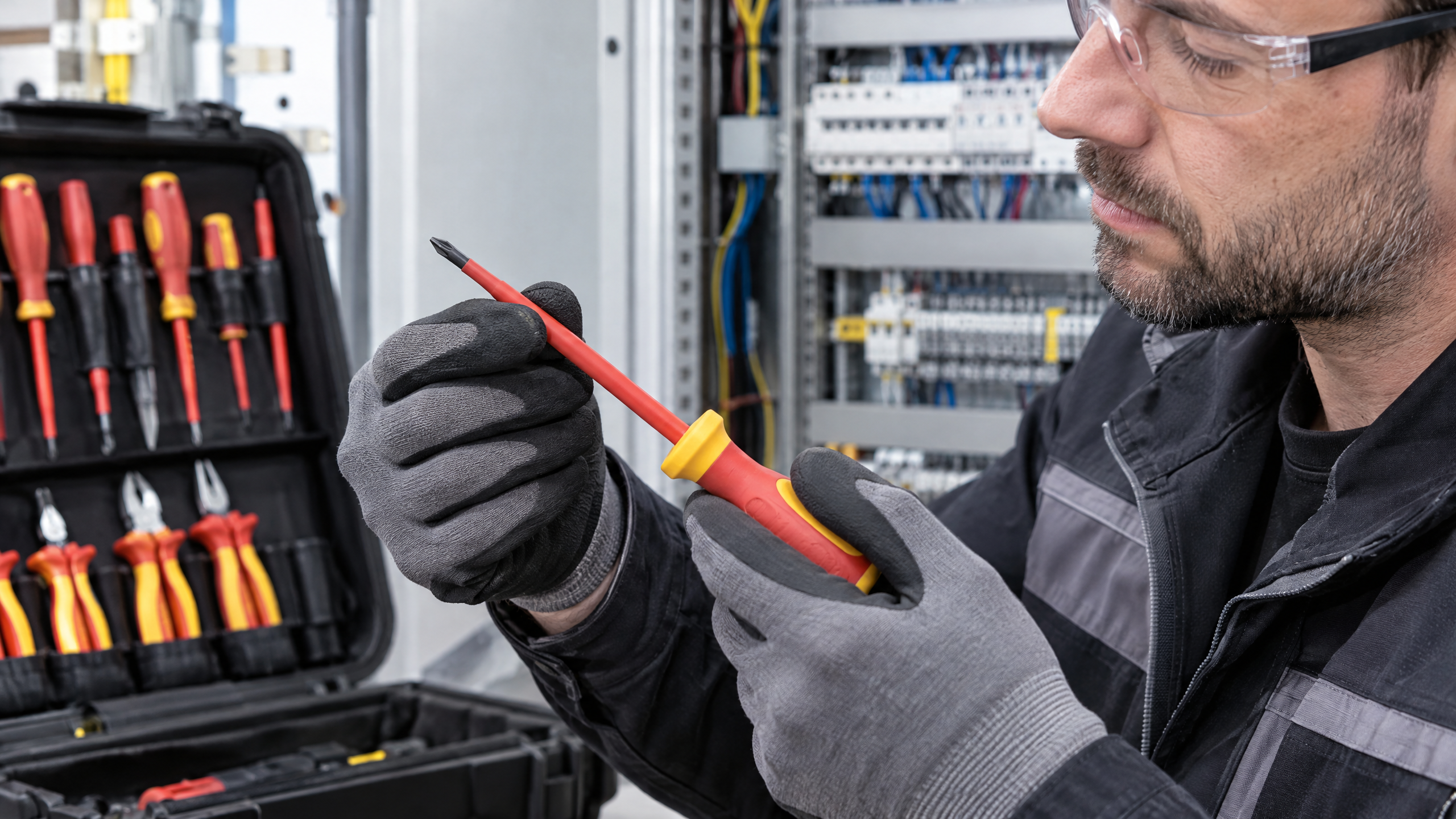
Inspect the insulation, finger guard, shaft, and working tip before use.
Inspection and Maintenance
Inspect an insulated screwdriver before each use and after a drop, overload, chemical exposure, or other unusual event.
Check the insulation
Look over the handle, shaft covering, finger guard, handle ends, and transition area near the working tip. The insulation should be clean, intact, and free from cracks, cuts, swelling, or exposed metal.
Check the working tip
A rounded or chipped tip can slip from a terminal. A twisted shaft or damaged handle-to-shaft connection can affect control and mechanical strength. Do not keep a screwdriver in service simply because its voltage marking is still readable.
Check the markings
Make sure the voltage rating, model information, and manufacturer marking remain legible. If the information has been rubbed away or the tool cannot be identified, follow the workplace procedure for verification or removal from service.
Clean and store the tool correctly
Use a soft cloth and a mild cleaning method allowed by the manufacturer. Avoid aggressive solvents, abrasive pads, wire brushes, and uncontrolled heat. Dry the tool before placing it in a closed case.
Store VDE screwdrivers in a fitted case or organized tool bag, away from loose blades, drill bits, sharp metal edges, direct sunlight, excessive heat, moisture, welding sparks, and aggressive chemicals.
Frequently Asked Questions
Are VDE screwdrivers safer than regular screwdrivers?
For electrical work, a properly marked and traceable VDE screwdriver is the appropriate tool because it is designed and evaluated for that type of application. A regular screwdriver is intended for general fastening and should not be used as an electrical safety tool.
Are all 1000V screwdrivers VDE certified?
No. A 1000V marking does not automatically prove VDE certification. Check the exact product model, applicable standard, certificate or test report, manufacturer information, and tool condition.
Can I use a VDE screwdriver on live circuits?
Only within its rated and approved conditions, and only where live work is authorized and carried out by trained personnel under the applicable safety procedure. De-energization and voltage verification should be used whenever possible.
What is the difference between an insulated screwdriver and a VDE screwdriver?
“Insulated screwdriver” describes a tool with an insulating design. “VDE screwdriver” usually refers to a tool associated with VDE testing or certification requirements. The exact standard, certification scope, and product documentation still need to be checked.
What sizes should an electrician’s screwdriver set include?
A practical starting set often includes slotted drivers around 3.0, 4.0, and 5.5 mm, plus PH1 and PH2. Add smaller, larger, Pozidriv, or precision sizes according to the equipment and fasteners used on site.
Can damaged VDE screwdrivers be repaired?
Do not improvise a repair to the insulation. Remove damaged tools from service and follow the manufacturer’s or workplace process for assessment, retesting, replacement, or disposal.
Does IEC 60900 apply to every screwdriver?
No. It applies to the relevant category of insulated hand tools when the product is designed and assessed against that standard. A regular screwdriver does not become an IEC 60900 tool because someone adds a voltage label.
Are VDE precision screwdrivers suitable for electrical work?
Only when the specific model is designed, rated, and documented for the intended electrical application. Small size alone is not evidence of electrical suitability.
Conclusion
A regular screwdriver may be perfectly suitable for general fastening, mechanical repair, and workshop jobs. It should not be treated as an electrical safety tool simply because its handle is comfortable or partly covered.
For electricians and maintenance teams working around live or potentially energized equipment, a properly marked and traceable VDE screwdriver is the more appropriate choice. The decision should still be based on the actual voltage rating, standard, model information, tip size, working space, condition, and site safety procedure.
Choose the screwdriver that fits the fastener. Verify the product information. Inspect the insulation before use. And remember that even the right VDE tool works as part of an electrical safety system—it does not replace isolation, verification, PPE, training, or sound judgment.
Label:
Related News
Latest product
-
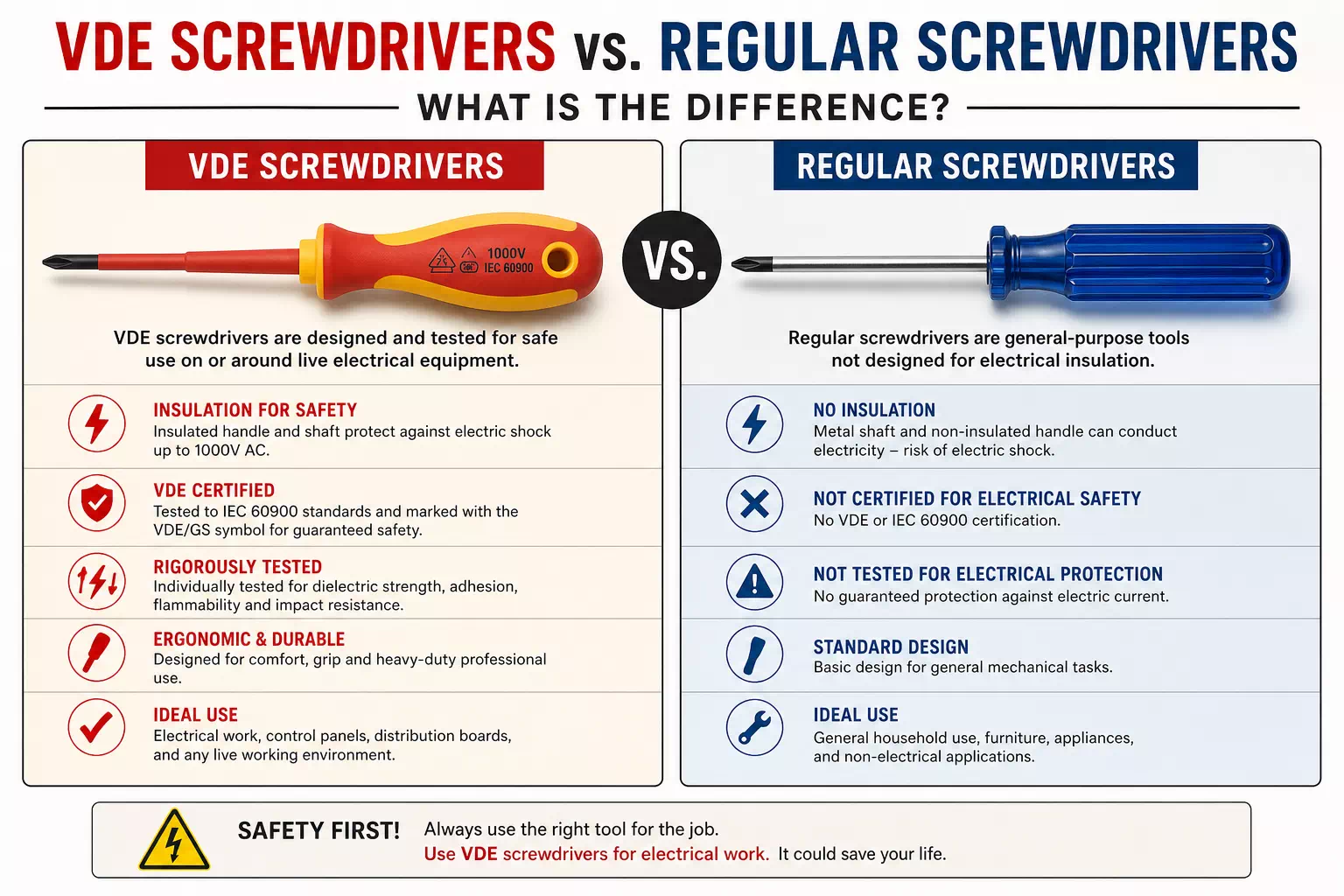
VDE Screwdrivers vs. Regular Screwdrivers: What Is the Difference?
-
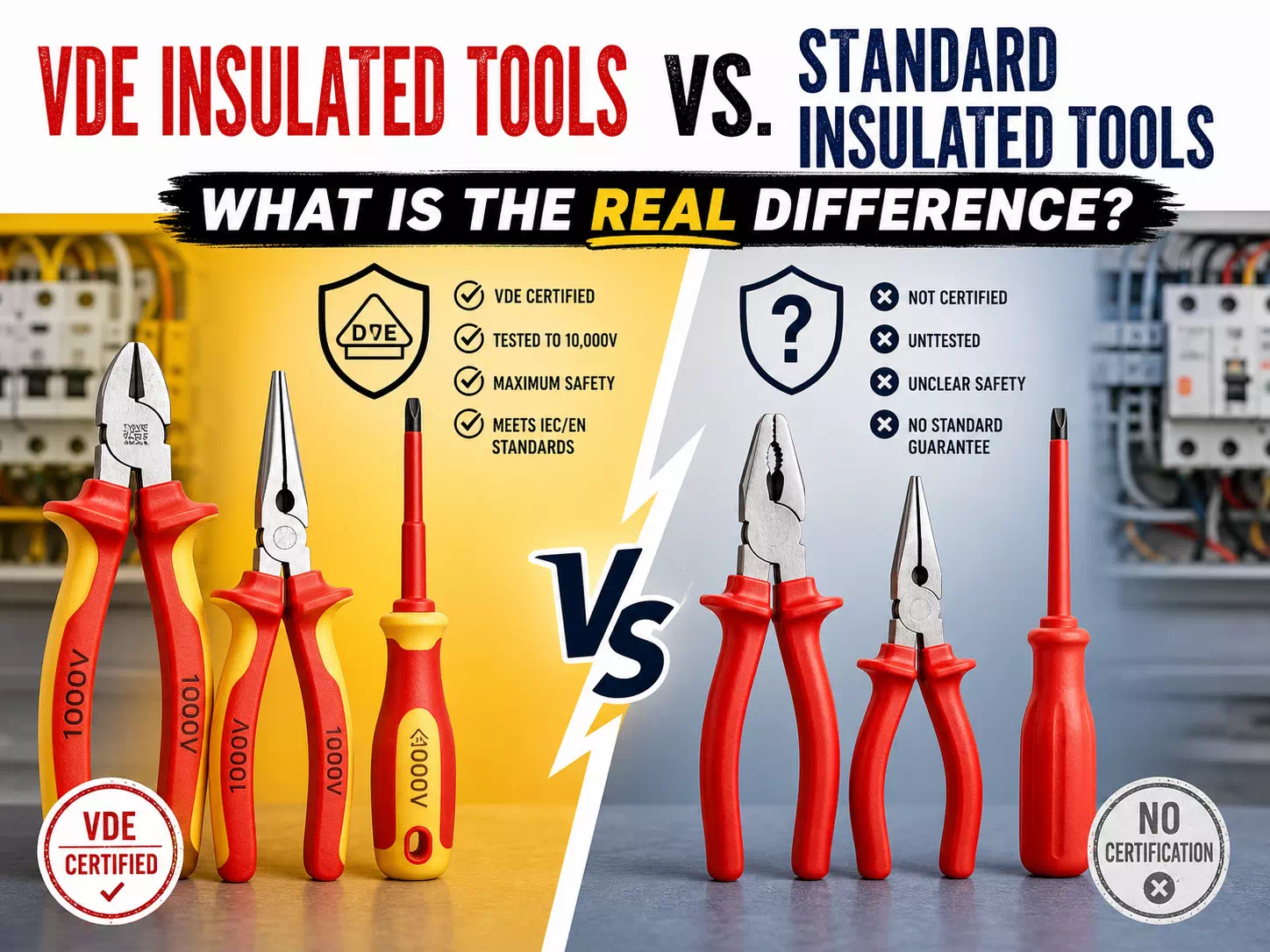
VDE Insulated Tools vs. Standard Insulated Tools: What Is the Real Difference?
-
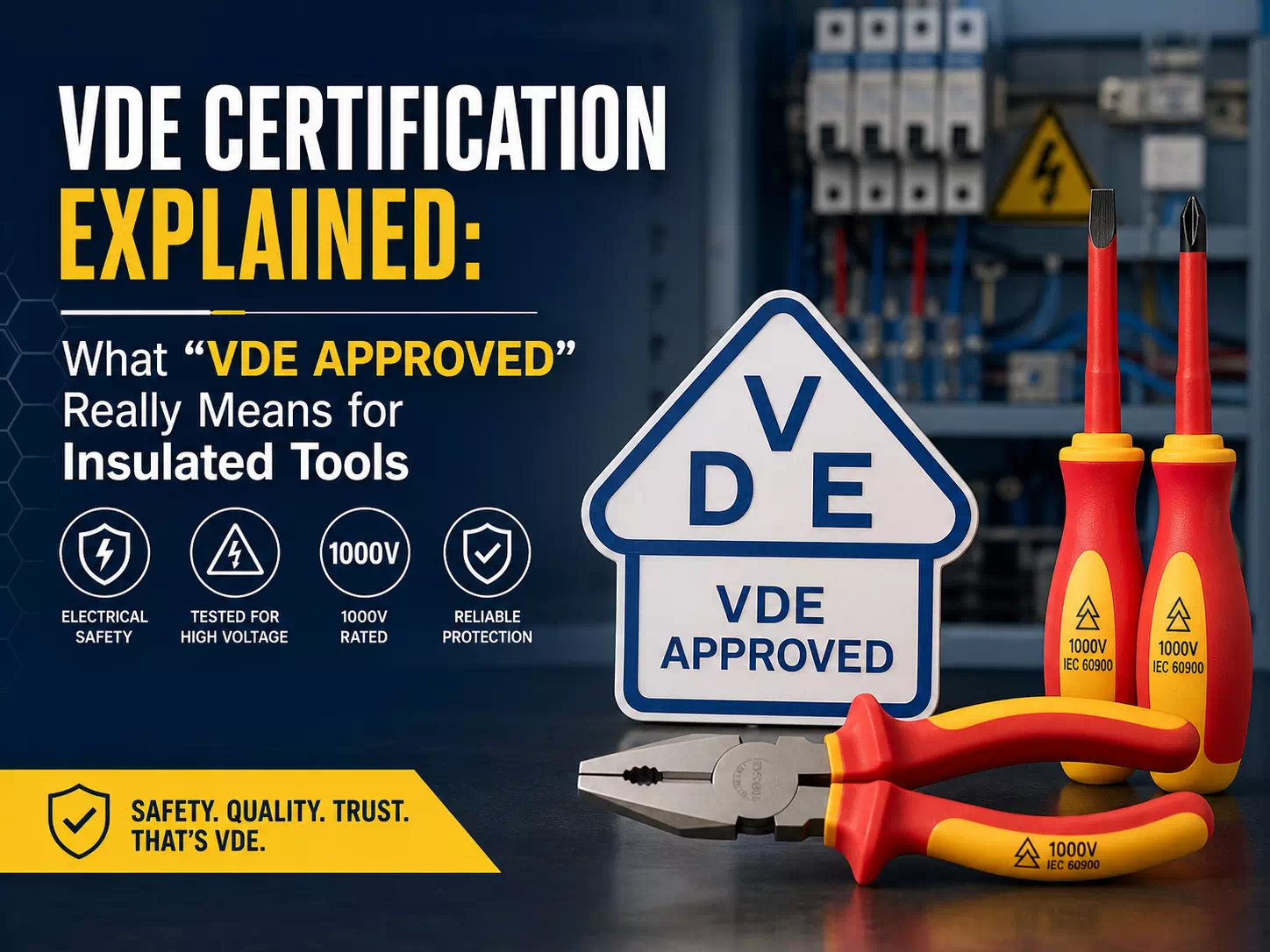
VDE Certification Explained: What “VDE Approved” Really Means for Insulated Tools
-
Metric vs. SAE Socket Sets: Which System Should You Choose for Automotive Repair?
-
Combination Wrench vs Adjustable Wrench: What Is the Real Difference?
-
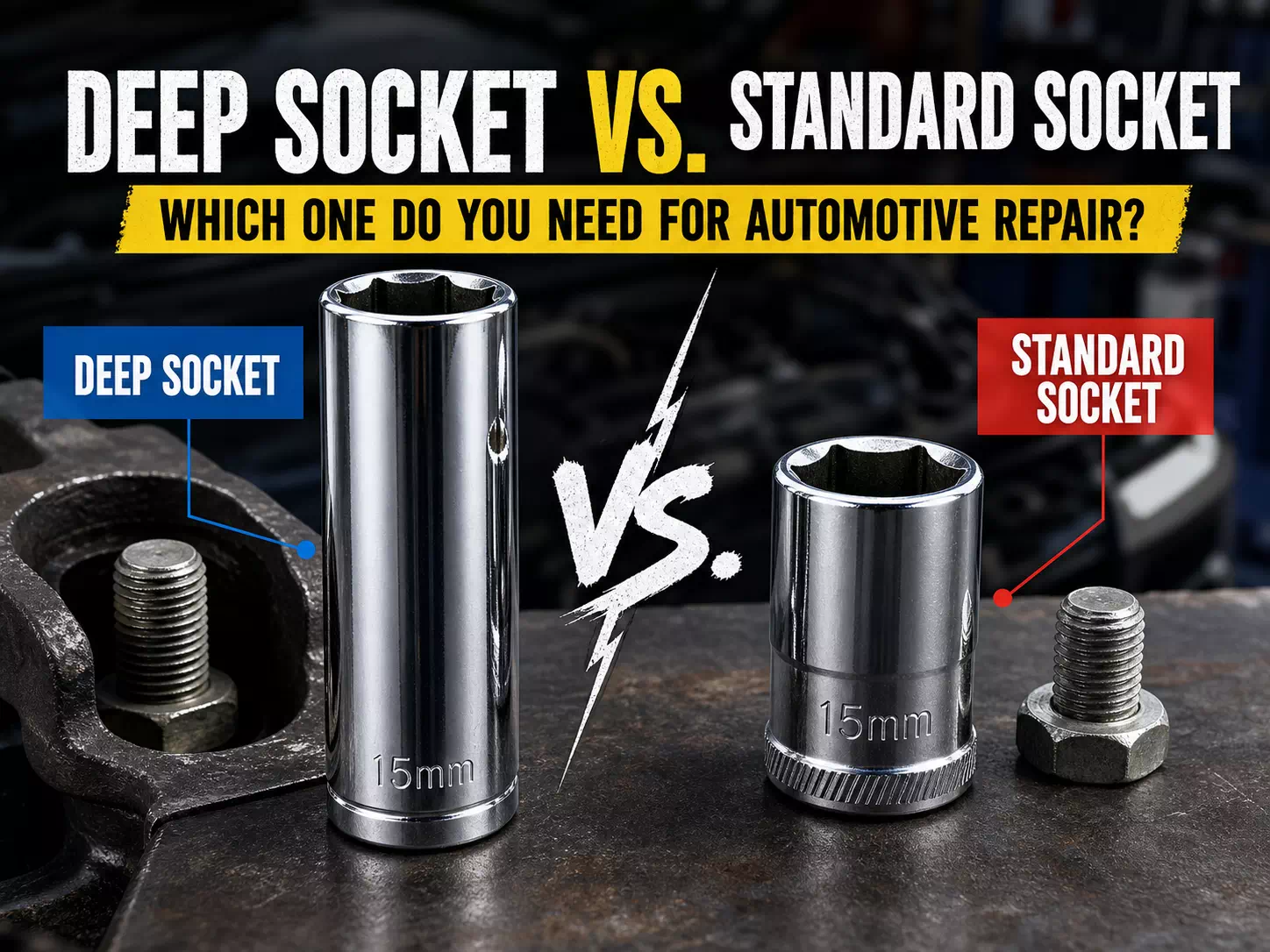
Deep Socket vs. Standard Socket: Which One Do You Need for Automotive Repair?