
Blog
Hot News
- Dawei Metal 2026 Chinese New Year Special Offer: Gallop into Success with Upgraded Tools!
- Aluminum Alloy Combination Tool Set for Home, Automotive, and Repair Use
- Striking Tools: Types, Uses, and How to Choose the Right One
- Highest Quality Hand Tools: Inside the World's Most Trusted Tool Brands
- Why a Machete Saw Belongs in Your Outdoor Kit
Contact Us
Company:Shandong Dawei Metal Materials Co., Ltd.
Tel:+8615666285386
Email:dwhardwaretools@gmail.com
Address:Room 1413, Building 8, Shandong Steel Xintiandi Plaza, No. 61 Gongye South Road, High-tech Zone, Jinan City
Blog
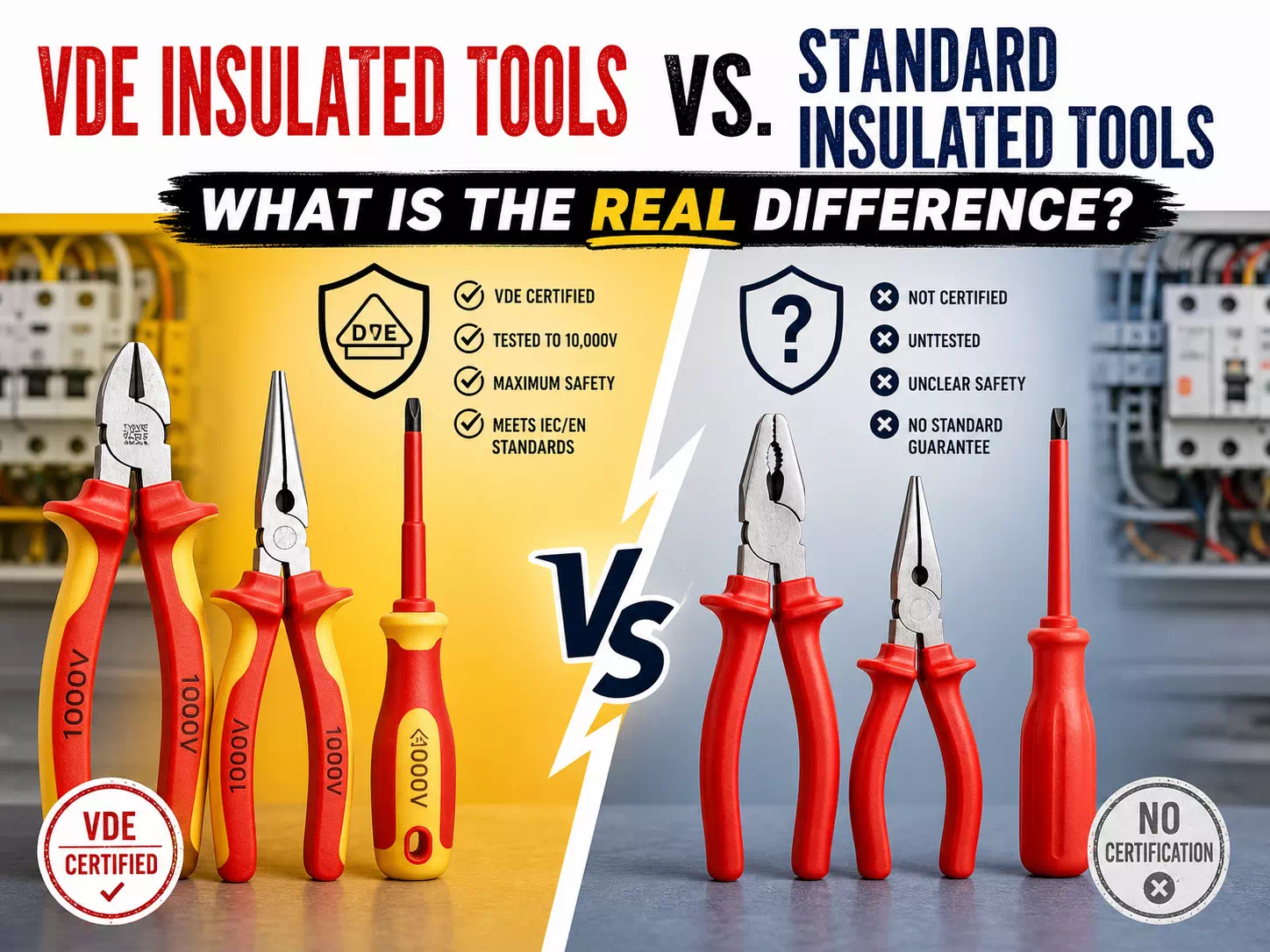
VDE Insulated Tools vs. Standard Insulated Tools: What Is the Real Difference?
Author:Editor Click: Release date:2026-10-07 15:20
A red-and-yellow handle can make two tools look almost identical on a distributor’s product page. One may be a traceable, certified product with a model-specific test record. The other may simply have an insulating layer and a “1000V” label printed on the handle.
That difference matters when the tool is going into a control cabinet, a distribution board, or an industrial maintenance kit.
The short answer is this: VDE insulated tools are generally easier to verify because their certification and product information are tied to defined requirements. Standard insulated tools may still be well made, but the buyer has to look more closely at the applicable standard, test evidence, markings, and supplier controls.
Neither category should be judged by handle color alone. A VDE mark does not make unsafe electrical work acceptable, and an insulated handle without traceable documentation does not provide the same level of purchasing confidence.
What Are VDE Insulated Tools?
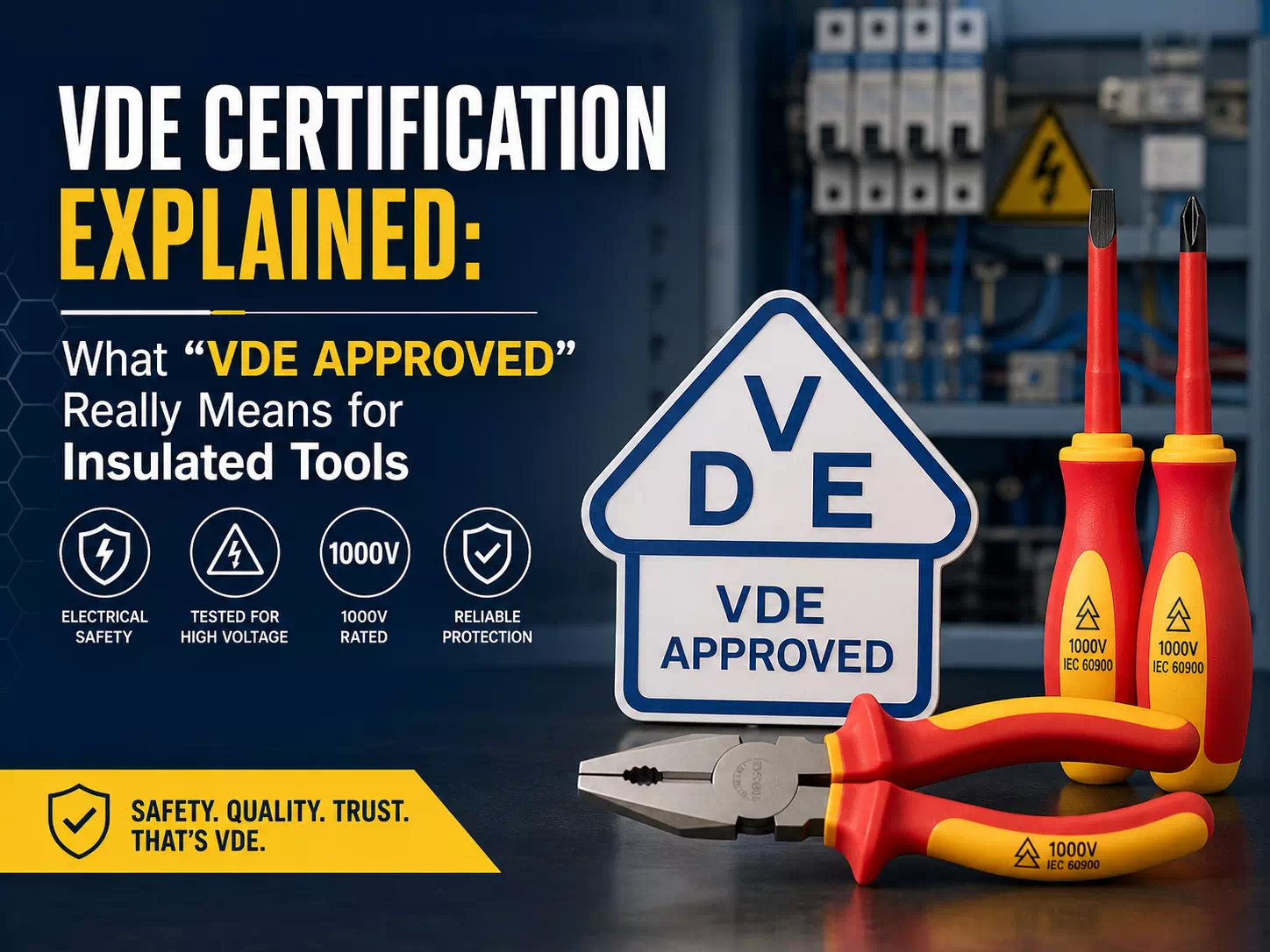
VDE insulated tools are hand tools associated with VDE testing or certification requirements for electrical applications. Depending on the product and certification scheme, the tool may carry a VDE mark, a model identification, a voltage marking, and a reference to an applicable standard.
For electrical hand tools, the relevant discussion often includes IEC 60900. That standard addresses insulated tools intended for work on or near live electrical systems within defined voltage limits. VDE certification and IEC 60900 are related subjects, but they are not interchangeable terms: one refers to a certification or conformity route, while the other is an international standard for the tool category.
A VDE-insulated screwdriver or pair of pliers should therefore be evaluated as a complete product system. The metal working end, the insulation, the finger guard, the markings, the manufacturing controls, and the supporting documentation all matter.
For a broader introduction to product types and applications, see Dawei Metal’s guide to 1000V insulated tools and insulated tool sets.
What Are Standard Insulated Tools?
“Standard insulated tools” is a broad market term rather than a single certification category. It can describe hand tools with insulated handles, double-layer insulation, or protective coatings that are intended for electrical work. The term does not, by itself, tell the buyer which standard was used or whether a third party certified the exact product model.
Some standard insulated tools are manufactured to serious quality requirements and supported by testing. Others may offer little more than a basic insulating covering. The phrase alone cannot distinguish between them.
This is why a buyer should separate four questions:
1.Does the tool have an insulating design?
2.What voltage and application is it intended for?
3.Which standard or test method applies?
4.Can the product claim be traced to the exact model being purchased?
A tool can be insulated without being VDE certified. It can also be marked “1000V” without giving the buyer enough information to confirm how that rating was established.
VDE Insulated Tools vs. Standard Insulated Tools
Comparison point | VDE insulated tools | Standard insulated tools |
Main distinction | Certification or conformity information is associated with defined requirements | Insulated construction is claimed, but certification scope may vary |
Documentation | Usually expected to be more traceable by model or product family | May range from detailed reports to limited supplier information |
Standard reference | Often linked to VDE requirements and/or IEC 60900 | Depends on the manufacturer and market |
Voltage marking | Should be clear and tied to the intended application | May be present, but needs independent verification |
Buyer confidence | Higher when the mark, model, and documents match | Depends heavily on supplier transparency and test evidence |
Typical purchasing position | Professional electrical work, regulated channels, and certification-sensitive markets | General electrical maintenance or price-sensitive channels after technical review |
Main limitation | Certification does not replace safe work procedures or inspection | Insulation alone does not prove a complete tested safety system |
The Real Difference: Traceability, Not Handle Color
The most useful difference is often invisible. It is the trail of information behind the tool.
For a professional buyer, traceability means being able to connect the tool in hand with a manufacturer, product code, technical specification, test result, and—where applicable—certificate. If a supplier changes the insulation material, tool geometry, handle design, or production process, the original documentation may no longer cover the modified product.
This point is especially important for OEM projects. A private-label logo or a new retail package may be straightforward. A change to the tool’s insulation system is a technical change and should be reviewed before production continues.
A reliable specification should identify at least:
•Tool type and model
•Working-end dimensions
•Insulation design and material
•Voltage marking
•Applicable standard
•Manufacturer or production source
•Test and inspection requirements
•Packaging and identification method
The more safety-sensitive the end use, the less useful a generic product photograph becomes as evidence.
Insulation Design and Mechanical Performance
Electrical insulation is only one part of the tool. The tool must still perform its mechanical job without slipping, twisting, cracking, or failing at the joint between the metal body and the insulated handle.
A screwdriver with an accurate tip and a stable shaft reduces the chance of cam-out at a terminal. Pliers need correctly aligned jaws and cutting edges. An insulated wrench must retain its mechanical shape under the loads expected in its intended use. If the working end is damaged, the tool should be removed from service even if the insulation looks clean.
VDE-related requirements may include electrical, mechanical, thermal, impact, and marking-related tests. The exact tests and conditions depend on the applicable product requirements. Buyers should request documentation for the specific model instead of assuming that every tool in a brand’s catalogue has the same status.
Standard insulated tools can also have strong mechanical performance. The question is not whether the word “standard” automatically means poor quality. The question is whether the supplier can demonstrate that the actual tool meets the performance level required for the job.
Is Every 1000V Insulated Tool VDE Certified?
No. A 1000V marking does not automatically mean that a tool is VDE certified.
In many markets, “1000V insulated” describes a voltage-related design or intended application. It does not necessarily identify the certification body, the test scope, or the exact standard used. The mark may be legitimate, but it still needs to be supported by product information and supplier documentation.
When reviewing a 1000V tool, check:
•Whether the voltage marking is printed on the tool itself
•Whether AC, DC, or both applications are specified
•Whether IEC 60900 or another standard is referenced
•Whether the model number matches the test report or certificate
•Whether the insulation covers the required areas
•Whether the product has a clear manufacturer identity
•Whether the supplier can explain the test and inspection process
For a practical selection process, Dawei Metal’s guide to choosing a 1000V VDE insulated tool set is a useful related resource.
When Should Electricians Choose VDE Insulated Tools?
VDE insulated tools are usually the safer purchasing choice when the work, customer, or market requires clear certification evidence. This includes professional electrical contractors, industrial maintenance departments, panel builders, utility service work, and distributors supplying certification-sensitive customers.
They are particularly useful when a company needs to standardize tool sets across a team. A defined model list makes it easier to check markings, replace damaged tools, document purchasing requirements, and answer customer or auditor questions.
A VDE tool set is not automatically the right set simply because it has a higher piece count. Compare the actual contents. A compact set with the correct screwdriver sizes and core pliers may be more useful than a larger case filled with tools your technicians rarely use.
Dawei Metal’s VDE insulated electrician tool set shows the type of configuration buyers may review when they need insulated sockets, a ratchet, extension bars, screwdrivers, pliers, and an adjustable wrench in one case. Certification and voltage claims should always be confirmed against the official product documentation before live electrical use.
When Can Standard Insulated Tools Be Considered?
Standard insulated tools may be considered when the supplier provides sufficient technical evidence and the product fits the application. They may be suitable for general electrical maintenance, training environments, industrial tool programs, or markets where third-party certification is not a procurement requirement.
That decision should be based on evidence, not simply on a lower price. Ask the supplier for:
•Product specifications
•Applicable standards
•Electrical and mechanical test reports
•Inspection criteria
•Batch or model traceability
•Sample approval procedure
•Replacement and complaint handling process
A standard insulated tool with clear documentation and consistent production can be a reasonable choice. A tool with an attractive handle and no traceable information is a different purchasing risk.
Which Insulated Tools Should Be Bought First?
The right starting set depends on the work, but most electricians and maintenance teams use a small group of tools repeatedly.
Insulated screwdrivers
Slotted and Phillips screwdrivers are common in terminal blocks, breakers, switchgear, control cabinets, and electrical equipment. Match the tip size to the fastener. A tip that is too small can slip and damage the screw; one that is too large may not seat fully.
Dawei Metal’s insulated screwdriver selection guide covers common sizes, 1000V markings, and set configuration in more detail.
Combination and long-nose pliers
Combination pliers handle general gripping, bending, and forming. Long-nose pliers reach into confined spaces and help position small conductors or components. Neither should be used beyond its mechanical capacity simply because the handle is insulated.
Diagonal cutters
Choose the cutter according to the conductor size and material. Overloading the cutting edge can chip the blade, misalign the joint, or damage the handle connection. A damaged cutter should be removed from service rather than kept because its insulation still looks intact.
Wire strippers
A wire stripper should match the conductor sizes used in the equipment. The aim is to remove insulation without scoring the conductor or leaving excessive bare metal outside the terminal.
Insulated wrenches and sockets
Electrical maintenance often includes terminal hardware, busbar connections, motor terminal boxes, and equipment fasteners. In these areas, an insulated wrench or socket can extend the usefulness of a set, but the tool must still be correctly sized and fully seated on the fastener.
Certification Does Not Replace Electrical Safety Procedures
A VDE mark, a 1000V rating, or an IEC 60900 reference does not authorize live work by itself. The tool is one control in a larger safety system.
Before working on electrical equipment, follow the applicable site procedure for isolation, lockout/tagout, voltage verification, discharge of stored energy, barriers, and personal protective equipment. Live work should be limited to situations where it is authorized, justified, and performed by trained personnel under the required procedure.
The tool must also be in good condition. Do not use it if the insulation has cuts, cracks, punctures, swelling, exposed metal, loose sections, or chemical damage. Do not sand the insulation, repaint it, wrap tape around a damaged section, or modify the handle in an attempt to restore protection.
Common Buying Mistakes
Buying by handle color
Two-color insulation is common because it makes wear easier to see. It is not a certificate. Treat color as a visual feature, not proof of compliance.
Treating “insulated” and “certified” as synonyms
Insulated describes construction. Certified describes a documented assessment against specified requirements. They overlap in professional products, but the terms are not identical.
Checking the certificate but not the model
A certificate for one tool does not automatically cover every tool in a set or every product made by the same factory. Match the product code, configuration, and scope.
Choosing the largest set
More pieces can mean more useful coverage, but it can also mean duplicated sizes, unnecessary cost, and a case that is harder to carry. Build the set around the work.
Keeping a damaged tool in service
A tool can still turn a screw after its insulation has been cut. That does not make it acceptable for electrical work. Tag it, remove it, and follow the workplace replacement or assessment process.
Inspection, Cleaning, and Storage
Inspect insulated tools before use and after a drop, overload, exposure to chemicals, or other unusual event. Look at the insulation, finger guards, metal working end, markings, and handle-to-shaft area.
Clean tools with a method approved by the manufacturer. A soft cloth and mild soap-and-water cleaning may be suitable for some products, but aggressive solvents, abrasive pads, wire brushes, and uncontrolled heat can damage insulation. Dry the tool fully before placing it in a closed case.
Store tools in a fitted case or organized bag, away from sharp metal objects, direct sunlight, excessive heat, moisture, welding sparks, and chemicals. A consistent storage layout helps a supervisor or technician notice a missing or damaged tool quickly.
Frequently Asked Questions
Are VDE insulated tools better than standard insulated tools?
They are generally easier to evaluate when the VDE mark, product model, applicable standard, and documentation can be verified. A well-made standard insulated tool may still be suitable, but its acceptance depends more heavily on the supplier’s technical evidence and the buyer’s requirements.
Are all VDE tools rated for 1000V?
No. Do not assume a voltage rating from the brand or product category. Check the marking and official documentation for the specific tool.
Is IEC 60900 the same as VDE certification?
No. IEC 60900 is an international standard for insulated hand tools used for live working within defined limits. VDE refers to a certification or testing system associated with specific requirements. A product may reference both, but they are not the same term.
Can I use standard insulated tools for live electrical work?
Only if the tool is specifically suitable for the application, meets the required standard and voltage rating, is in good condition, and its use is allowed by the applicable safety procedure. Insulation alone is not enough.
Does a VDE mark mean the tool never needs inspection?
No. Inspect the tool before use and after events that may cause damage. Certification describes the product as assessed under defined conditions; it does not guarantee the condition of a tool that has been cut, overheated, contaminated, or overloaded.
Can a VDE tool set be customized for OEM orders?
Some packaging, logo, color, and assortment changes may be possible. Any change to the insulation system, handle design, material, or manufacturing process should be reviewed because it may affect the certification scope.
Conclusion
The real difference between VDE insulated tools and standard insulated tools is not the color of the handle or the number printed on the packaging. It is the level of technical evidence behind the product.
VDE insulated tools are usually the better fit when certification, traceability, professional acceptance, and standardized team purchasing matter. Standard insulated tools can also be considered, but only after the buyer checks their construction, applicable standard, test evidence, markings, and supplier controls.
For either category, choose the tool for the actual work, verify the model-specific information, inspect it before use, and follow the required electrical safety procedure. A certified tool is an important safeguard; it is not a substitute for training, isolation, verification, or sound judgment.
Label:
Related News
Latest product
-
VDE Insulated Tools vs. Standard Insulated Tools: What Is the Real Difference?
-
VDE Certification Explained: What “VDE Approved” Really Means for Insulated Tools
-
Metric vs. SAE Socket Sets: Which System Should You Choose for Automotive Repair?
-
Combination Wrench vs Adjustable Wrench: What Is the Real Difference?
-
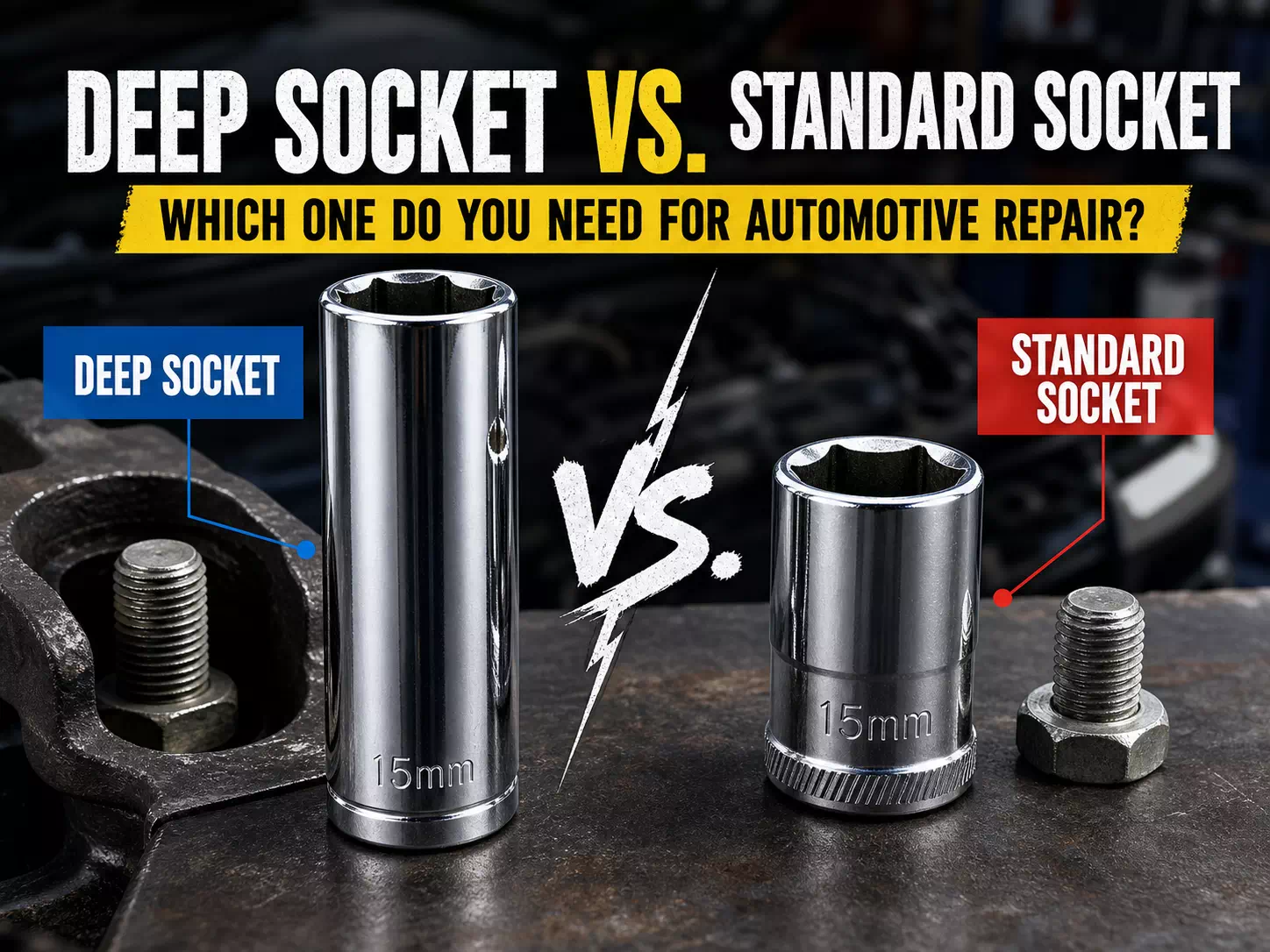
Deep Socket vs. Standard Socket: Which One Do You Need for Automotive Repair?
-

Socket Set vs. Wrench Set: Which Is Better for Automotive Repair?