
- Dawei Metal 2026 Chinese New Year Special Offer: Gallop into Success with Upgraded Tools!
- Aluminum Alloy Combination Tool Set for Home, Automotive, and Repair Use
- Striking Tools: Types, Uses, and How to Choose the Right One
- Highest Quality Hand Tools: Inside the World's Most Trusted Tool Brands
- Why a Machete Saw Belongs in Your Outdoor Kit
Company:Shandong Dawei Metal Materials Co., Ltd.
Tel:+8615666285386
Email:dwhardwaretools@gmail.com
Address:Room 1413, Building 8, Shandong Steel Xintiandi Plaza, No. 61 Gongye South Road, High-tech Zone, Jinan City
How to Maintain and Store Insulated Tools: A Daily Care Guide for Electricians
A new insulated tool set usually looks perfect when it comes out of the case. The insulation is clean, the markings are easy to read, and every screwdriver, plier, and wrench is in its assigned slot. The real test begins after the tools have spent a few months in a workshop, a service van, or the bottom of a busy maintenance bag.
Insulated tools are exposed to drops, sharp metal edges, oil, dust, heat, moisture, and repeated contact with terminals and fasteners. A small cut in the insulation or a damaged finger guard may not stop the tool from turning a screw, but it can change the level of protection the tool provides.
That is why maintenance and storage should be treated as part of the tool’s service life, not as housekeeping. A practical routine helps electricians find damage before the tool enters a panel, keeps tool sets complete, and gives maintenance managers a reliable way to remove questionable tools from service.
> Safety note: Insulated tools reduce the risk of accidental contact with energized parts; they do not make unsafe electrical work safe. Follow the applicable isolation, lockout/tagout, voltage verification, personal protective equipment, and live-work procedures. Only trained and authorized personnel should perform electrical work.
What maintenance can and cannot do
Maintenance can keep the tool clean, visible, organized, and in good mechanical condition. It can also identify damage early. It cannot restore a cut or cracked insulating layer, turn an ordinary tool into a certified insulated tool, or replace the testing required by a safety program.
This distinction matters in the field. Wiping a tool clean may remove oil and reveal a crack, but it does not repair the crack. Wrapping tape around damaged insulation may hide the problem, but it does not recreate the tested insulating system. A questionable tool should be tagged and removed from use, not returned to the case with a temporary patch.
For the same reason, buying a new set should include a plan for inspection and replacement. Dawei Metal’s [insulated electrician tool sets](/products/toolsets/) can be compared by configuration, but the maintenance routine begins as soon as the set is received.
Daily inspection before the first job
A visual inspection should take place before the tool is used, not after a problem appears. The check does not need to take long when the same sequence is followed every day.
Check the insulation
Look over the entire insulating surface for cuts, cracks, deep scratches, punctures, swelling, loose sections, or exposed metal. Pay particular attention to the area near the tool head, the handle ends, and the finger guards. These are common contact and impact points.
Two-color insulation can provide a useful visual warning when the outer layer is worn, but color alone does not determine whether a tool is safe. If the insulation is damaged or the inner layer is visible, remove the tool from service and have it assessed according to the company procedure.
Check the working end
The metal working end must also be inspected. A screwdriver tip that is rounded, twisted, or badly chipped can slip from a terminal. Pliers with misaligned jaws, damaged cutting edges, or excessive looseness may not grip or cut correctly.
Mechanical damage is a safety issue as well as a productivity issue. A tool that slips can move toward a nearby busbar or damage a conductor. The tool may still carry a clear voltage marking, but that marking does not compensate for a failed working end.
Check the markings
Make sure the voltage rating, standard marking, manufacturer information, and any identification label remain readable. For tools used within the IEC 60900 range, markings and traceability are part of the information used to identify the tool and its intended application. If the label has been rubbed away or is no longer legible, follow the workplace process for verification.
Check the case and accessories
Inspect the case, slots, hinges, latches, and dividers. A broken slot can allow a tool to move around and strike another tool during transport. Also check that the correct test accessories, replacement bits, and tool-specific components are present where the set requires them.
Cleaning insulated tools without damaging the coating
Tools should be cleaned after use when they have been exposed to oil, dust, metal filings, coolant, or other residue. Dirt can hide damage and make the handle slippery.
For routine cleaning, use a soft cloth and a mild cleaning method recommended by the manufacturer. Where the tool maker permits it, soap and water can be used on the insulating surface, followed by rinsing and complete drying. Do not put wet tools back into a closed case.
Avoid aggressive solvents, abrasive pads, wire brushes, and unapproved chemicals. These may roughen, soften, swell, or discolor the insulation. A surface that looks clean is not necessarily a surface that remains suitable for electrical protection.
Metal working parts may require light lubrication or rust protection according to the manufacturer’s instructions. Keep oil and grease away from the insulating surface and from areas where residue could affect grip. Do not apply a coating or paint to the insulation as a way to improve or restore its electrical properties.
Drying and moisture control
Moisture is a storage problem as much as a cleaning problem. After washing or working in a damp environment, dry the tools and the case before closing them. Wipe the tools first, then allow them to air-dry in a clean, ventilated area.
Do not use uncontrolled high heat to speed up drying. Radiators, open flames, heat guns, and hot vehicle dashboards can affect plastics and insulating materials. If a tool has been soaked, exposed to condensation, or stored in a wet case, isolate it and follow the manufacturer’s or employer’s inspection procedure before returning it to service.
A service vehicle deserves special attention. Temperature changes can create condensation inside a closed case, while tools stored next to wet clothing or leaking containers may remain damp for hours. Keep the case away from water, and open it periodically when conditions are humid.
Correct storage for insulated tools
Storage should protect the tools from impact, contamination, temperature extremes, and unnecessary contact with other metal objects.
Use a fitted case or organized tool bag
A fitted case with labeled slots makes it easier to identify missing tools and prevents tools from striking one another. It also encourages technicians to return each item to the same position after a job.
For a team, standardized cases are especially useful. If every electrician carries the same core set, a supervisor can check the case quickly and a missing screwdriver is less likely to go unnoticed. Dawei Metal’s [tool set category](/products/toolsets/) includes different configurations that can be reviewed when standardizing a team’s basic equipment.
Keep tools away from sharp objects
Do not store insulated screwdrivers next to loose blades, drill bits, saws, or unprotected metal parts. A tool that is safe when placed in the case can be damaged during transport if it rubs against a sharp edge.
Do not place heavy equipment on top of a soft tool bag. The weight can deform handles, damage the case, or press a tool against a sharp object. When a service vehicle is used, secure the case so it cannot slide or fall during travel.
Control heat, sunlight, and chemicals
Store insulated tools in a cool, dry area away from direct sunlight, heaters, welding sparks, aggressive chemicals, and fuel or oil containers. Long exposure to heat, ultraviolet light, and unsuitable chemicals may affect the insulating material even when there is no immediate visible crack.
The storage area should also make inspection practical. A dark, overcrowded drawer encourages tools to be returned without checking them. A labeled shelf, cabinet, or fitted case makes both inspection and inventory easier.
What to do after a tool is dropped or struck
A dropped tool should be inspected immediately, even if it appears to work normally. Impact can damage the insulation, loosen the handle, bend the working end, or create a crack that becomes larger during the next job.
Separate the tool from the active kit and mark it as under inspection. Check the insulation, handle, finger guards, jaws, cutting edges, and any moving parts. If the damage is uncertain, do not return the tool to service based on a quick visual guess. Refer it to the responsible person or qualified inspection provider under the workplace procedure.
The same rule applies when a tool has been struck by a hammer, trapped under equipment, exposed to an arc event, or dropped from a height. Damage is not limited to what can be seen on the handle.
Periodic inspection and dielectric testing
Daily visual checks are the first line of defense, but they are not the same as a formal electrical test. The required inspection and retesting schedule depends on the applicable standard, local rules, employer program, tool type, and working environment.
Some manufacturers recommend periodic inspection by a qualified person and dielectric retesting when there is doubt or after significant damage. OSHA’s electrical protective-equipment requirements emphasize inspection of insulating equipment for damage before use [1]. IEC 60900-related information also describes tool markings, testing, and visual inspection as part of the product and user information [2].
Keep records for tools used in organized maintenance programs. A simple record can include the tool ID, type, model, date inspected, inspector, condition, action taken, and next review date. If a tool is sent for dielectric testing, record the test date and result with the same ID.
Do not confuse a dielectric test with proof that a tool is mechanically sound. The tool must pass the relevant mechanical and visual checks as well. A tool with a damaged cutting edge or loose handle may still require replacement even if its insulation test result is acceptable.
A daily, weekly, and periodic maintenance routine
A simple schedule is easier to follow than a complicated one. The exact frequency should be adapted to the work environment, but the division below gives a useful starting point.
Frequency | Recommended checks |
Before each job | Inspect insulation, markings, working ends, handles, finger guards, meter leads, and case condition |
After each job | Wipe off dirt and oil, return tools to assigned slots, check for new damage, and report missing items |
After a drop or impact | Remove the tool from service, label it, inspect it, and follow the assessment or retest procedure |
Weekly for heavy-use kits | Review the complete set, clean the case, check cutting edges and moving joints, and replace damaged storage inserts |
Periodically | Review tool records, arrange qualified inspection or dielectric testing when required, and replace tools that fail inspection |
The point of the schedule is not to create paperwork for its own sake. It is to make sure that a damaged tool does not remain invisible until someone needs it in a hurry.
Safety practices when using a maintained tool set
Maintenance cannot compensate for incorrect use. Use the screwdriver size that matches the terminal, keep cutting tools within their rated capacity, and choose a wrench or socket that fits the fastener properly. If a connection has a specified torque, use a calibrated torque tool where required.
Before measuring, inspect the meter and leads as carefully as the hand tools. Confirm the function, range, input jack, CAT rating, and voltage rating. Fluke recommends checking a meter for damage and verifying its operation with a known voltage source or proving unit before measurement [3].
A well-maintained insulated tool set should support a controlled work process. It should not encourage a technician to bypass isolation or use a non-contact detector as the only proof that a circuit is dead. If the task can be completed de-energized, follow the de-energized procedure.
For work involving electric vehicles, higher-voltage systems, or specialized equipment, review the equipment-specific requirements before selecting the tool set. Dawei Metal’s guide to the [role of VDE insulated tools in EV repair](/blog/vde-insulated-tools-critical-role-ev-repair.html) provides related background, but the vehicle manufacturer’s service procedure remains the controlling document for the work.
Team management and replacement rules
A maintenance team should have a clear answer to three questions: who checks the tools, where are damaged tools placed, and who approves their return to service?
Use a tool register for shared sets and assign an ID to each case or high-value tool. When a tool fails inspection, place it in a separate quarantine area rather than leaving it in the normal case. A red tag or “Do Not Use” label is useful, but the storage location should also make the status obvious.
Keep a small stock of replacement screwdrivers, cutters, and other frequently damaged tools. Replacing one damaged tool is usually simpler than taking an entire kit out of service, provided the replacement has the same required rating and specification. Before issuing the replacement, update the record and verify that it belongs to the approved tool list.
When purchasing a new set, compare the actual configuration rather than the piece count alone. The [15-piece 1000V VDE insulated tool set](/ToolSets/weida-w07315-insulated-electrician-tool-set-vde.html) may suit a compact basic setup, while a [25-piece 1000V VDE insulated tool set](/ToolSets/weida-w07325-insulated-electrician-tool-set-1-2-sockets-vde.html) may provide broader coverage. For industrial maintenance, also compare the [19-piece electrician’s insulated tool set](/ToolSets/weida-w07318-insulated-electrician-tool-set-vde.html) and the [18-piece VDE insulated electrician’s tool set](/ToolSets/weida-w07317-insulated-electrician-tool-set-vde.html).
Common maintenance mistakes
Using tape to repair insulation
Tape can make damage less visible, not less dangerous. Do not treat tape, heat-shrink tubing, paint, or adhesive as a certified repair unless the tool manufacturer and the responsible safety authority specifically provide an approved repair method.
Cleaning with whatever solvent is available
A solvent that removes grease from metal may soften or damage an insulating coating. Use the manufacturer’s approved cleaning method and avoid abrasive cleaning.
Leaving wet tools in a closed case
Moisture can remain trapped in the case and promote corrosion or material deterioration. Dry the tools and the case before storage.
Checking only the handles
A good-looking handle does not mean the jaws, cutting edges, shaft, fasteners, or case are in good condition. Inspect the whole tool.
Treating a test report as a permanent guarantee
A previous test result does not cancel the need for a visual inspection before use. Tools can be damaged after the test, especially in transport or heavy industrial work.
Final checklist
Before an insulated tool set goes to the next job, confirm the following:
· Every tool is present and stored in its assigned position.
· The insulation is clean, dry, intact, and free from cracks or exposed metal.
· Voltage and standard markings remain readable.
· Screwdriver tips, plier jaws, cutting edges, and wrench heads are mechanically sound.
· The case, slots, latches, and dividers protect the tools during transport.
· Damaged or questionable tools have been removed from service and clearly labeled.
· Inspection and test records are current where the safety program requires them.
· Replacement tools match the approved rating and specification.
Conclusion
An insulated tool set is not maintained by the case alone. It stays reliable because someone checks it before the job, cleans it after use, stores it away from damage, and removes questionable tools before they return to the panel.
For individual electricians, that routine may take only a few minutes. For a maintenance department, it creates a repeatable system for inspection, replacement, and accountability. Start with the right [1000V VDE insulated tool set](/products/toolsets/), then protect that investment with disciplined daily care and storage.
Good storage does not make a tool safer than its design allows. It does, however, make damage easier to see, missing tools easier to find, and safe working habits easier to maintain.
- Pro:How to Choose a 1000V VDE Insulated Tool Set: A Practical Guide for Electricians and Maintenance Tea
- Next:Mechanic Tool Set vs. Mechanic
-
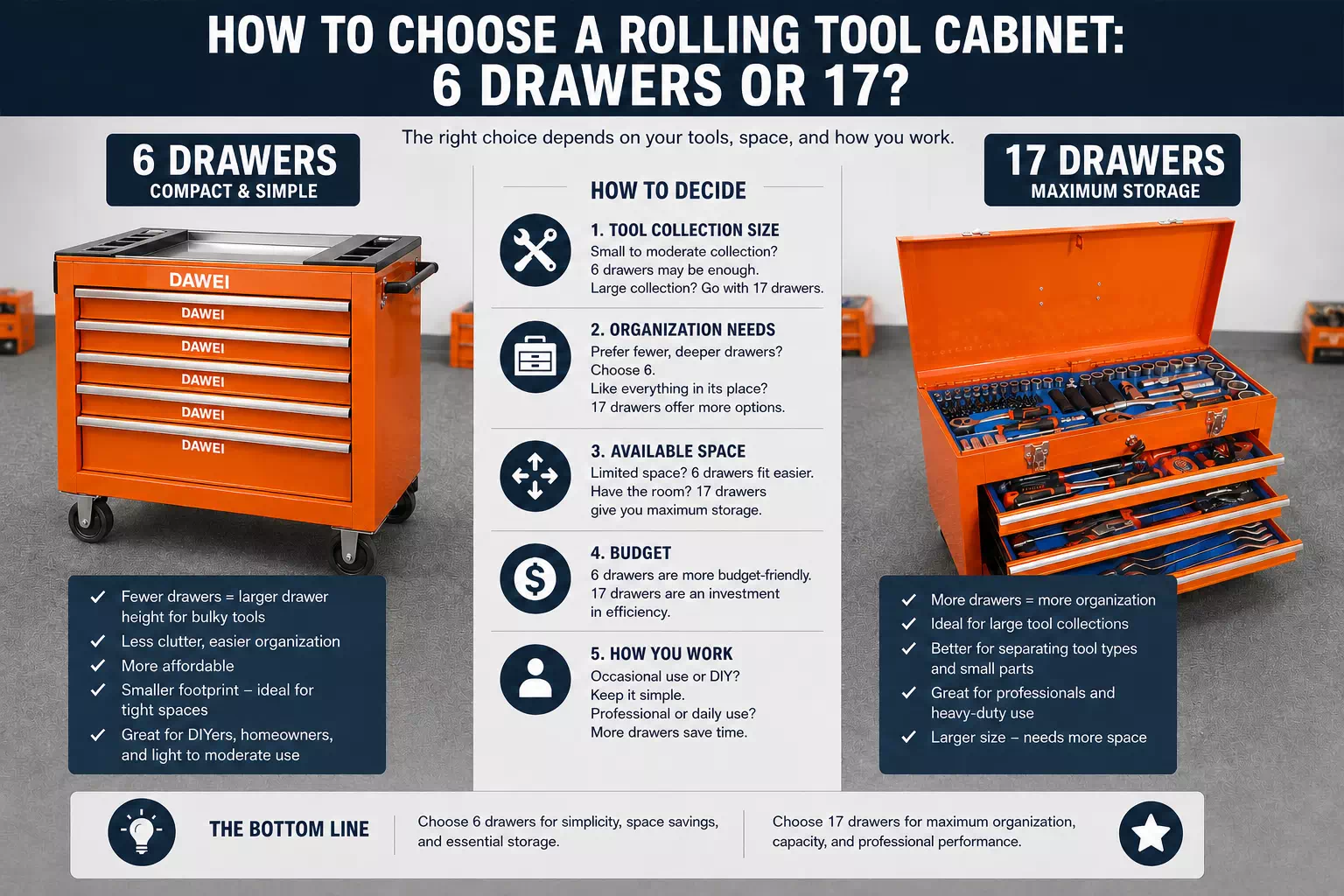
How to Choose a Rolling Tool Cabinet: 6 Drawers or 17?
-

How to Choose a Gear Wrench Tool Set for Motorcycle Maintenance
-
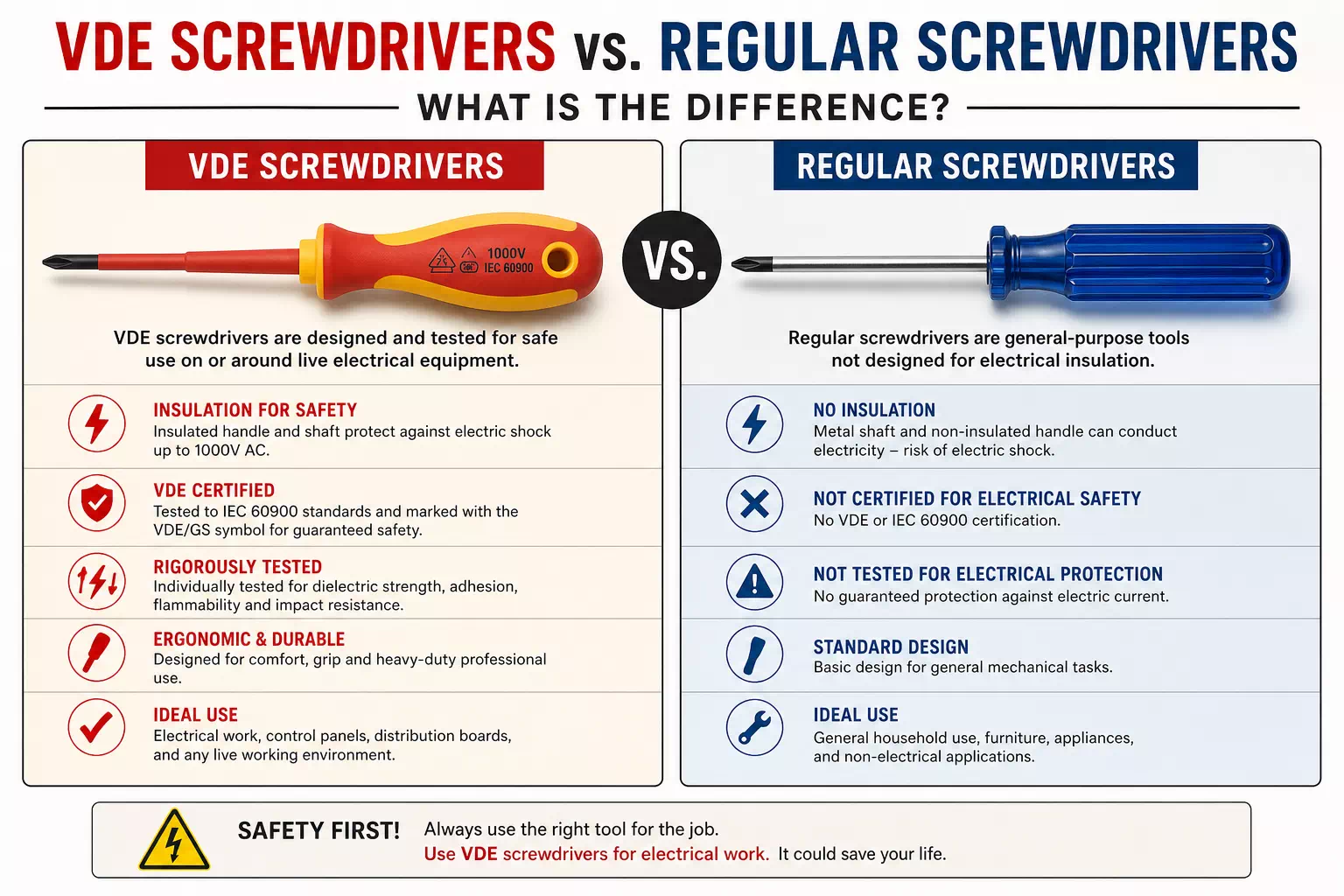
VDE Screwdrivers vs. Regular Screwdrivers: What Is the Difference?
-

VDE Insulated Tools vs. Standard Insulated Tools: What Is the Real Difference?
-

VDE Certification Explained: What “VDE Approved” Really Means for Insulated Tools
-

Metric vs. SAE Socket Sets: Which System Should You Choose for Automotive Repair?