
- Dawei Metal 2026 Chinese New Year Special Offer: Gallop into Success with Upgraded Tools!
- Aluminum Alloy Combination Tool Set for Home, Automotive, and Repair Use
- Striking Tools: Types, Uses, and How to Choose the Right One
- Highest Quality Hand Tools: Inside the World's Most Trusted Tool Brands
- Why a Machete Saw Belongs in Your Outdoor Kit
Company:Shandong Dawei Metal Materials Co., Ltd.
Tel:+8615666285386
Email:dwhardwaretools@gmail.com
Address:Room 1413, Building 8, Shandong Steel Xintiandi Plaza, No. 61 Gongye South Road, High-tech Zone, Jinan City
Metric vs. SAE Socket Sets: Which System Should You Choose for Automotive Repair?
Metric vs. SAE Socket Sets: A Practical Guide
A socket might look like it fits, but it can still be the wrong tool. On a clean, undamaged fastener, the difference may be easy to spot. On a rusty nut or a fastener hidden behind a bracket, however, a nearly matching socket can slip, round the corners, and turn a simple repair into a much harder removal.
That is why the choice between metric and SAE socket sets should be based on the vehicles and equipment being serviced, rather than on which sizing system seems more familiar. Metric tools are common on many modern vehicles, while SAE tools remain relevant for older vehicles, certain imported models, agricultural equipment, trailers, industrial machinery, and mixed fleets.
For a home garage, a metric-first set can be a practical starting point when the vehicles use metric fasteners. A professional workshop may need both systems, but they should be kept clearly separated and used according to the actual fastener. The goal is not to own every size; it is to have the coverage that matches the work.
Quick Answer: Which Socket System Do You Need?
Workshop Situation | Practical Starting Point | Why |
One or two modern passenger vehicles | Metric socket set | Many routine fasteners may use metric sizes; confirm on the actual vehicle. |
Older vehicle or restoration work | SAE coverage may be necessary | Older hardware can use inch-based fasteners and may require fractional sizes. |
Agricultural or industrial machinery | Inspect equipment before buying | The sizing system varies by machine and manufacturer. |
Mixed fleet or repair shop | Both metric and SAE | Different vehicles and equipment can use different fastener standards. |
Unknown fastener | Measure and test the fit | Do not rely on a close-looking size or country of origin. |
What Do Metric and SAE Mean?
Metric sockets are sized in millimeters. A socket marked “10 mm” is designed to fit a fastener with a nominal hex dimension of approximately 10 millimeters.
SAE sockets use inch-based measurements, commonly expressed as fractions such as 5/16 inch, 3/8 inch, 7/16 inch, 1/2 inch, and 9/16 inch. SAE stands for the Society of Automotive Engineers, although tool catalogs commonly use “SAE” as a practical label for inch-based socket sizing.
The sizing system describes the fastener opening, not the drive connection. A 3/8-inch drive ratchet can accept both a 10 mm socket and a 3/8-inch SAE socket when both sockets have a 3/8-inch square drive. Drive size and socket size are separate specifications.
This distinction causes frequent purchasing and workshop mistakes. A marking such as “3/8-inch” may refer to the drive size rather than the fastener size. Before choosing a tool, check whether the marking describes the square drive or the hex opening.
Metric vs. SAE Socket Sets: Key Differences
Feature | Metric Socket Set | SAE Socket Set |
Size indication | Millimeter measurements, such as 8 mm or 13 mm | Fractional-inch measurements, such as 5/16 or 1/2 inch |
Typical use | Many modern vehicles and equipment | Older vehicles, some imported models, agricultural equipment, trailers, and industrial machinery |
Identification | Usually marked in mm | Usually marked with fractions or SAE |
Size sequence | Millimeter-based | Fractional-inch based |
Main buying concern | Useful millimeter range and coverage for the equipment being serviced | Useful fractional range and coverage for the equipment being serviced |
Interchangeability | Not a routine replacement for SAE sizing | Not a routine replacement for metric sizing |
The application matters more than the label. A vehicle may use metric fasteners even when it is sold in a market where SAE tools are common. Always check the vehicle or equipment documentation and the actual fastener rather than relying only on the country of origin.
When Should You Choose a Metric Socket Set?
A metric socket set is often a practical choice for newer passenger vehicles, motorcycles, commercial vehicles, and equipment that uses metric fasteners. It is especially useful when the fasteners have already been identified as millimeter sizes.
Modern Automotive Service
Many routine maintenance tasks may involve metric fasteners. Depending on the vehicle, battery terminals, engine covers, brackets, sensors, accessory mounts, brake components, and underbody hardware can all require metric sockets.
That does not mean every fastener on every modern vehicle is metric. Vehicles can contain different standards, specialty fasteners, or replacement hardware that does not match the original configuration. Check the actual fastener and the applicable service information before selecting the socket.
Home Garages
For a home user with one or two modern vehicles, a metric-focused tool setup can provide practical coverage without requiring two complete toolboxes. A 3/8-inch drive set with common standard and deep metric sockets, a ratchet, and a few extensions is a reasonable starting configuration when the vehicles use metric fasteners.
Use 1/4-inch drive tools when the fasteners are small or the working space is tight. Use 1/2-inch drive tools for larger wheel, suspension, and chassis fasteners. Drive size should be selected according to the task, independently of whether the socket is metric or SAE.
International Equipment and Replacement Parts
Metric sockets are also common in machinery and equipment supplied through international manufacturing networks. When equipment drawings, replacement parts, or fasteners use metric dimensions, a metric set can simplify maintenance even if the workshop also services equipment with inch-based hardware.
When Do You Need an SAE Socket Set?
An SAE socket set remains useful when equipment uses fractional-inch fasteners. This can include older vehicles, certain imported models, agricultural equipment, trailers, industrial machinery, and machines built to older inch-based specifications.
Older Vehicles and Restoration Work
Older vehicles may use SAE fasteners across the engine bay, chassis, body, and suspension. A metric socket that appears close in size can fit loosely or fail to engage the fastener correctly.
Restoration work deserves extra care because fasteners may be corroded, painted, replaced, or modified over time. Do not assume that every fastener still matches the original specification. Identify it by actual measurement, fit, and service documentation where available.
Agricultural and Industrial Machinery
Tractors, attachments, pumps, generators, and industrial machines can use SAE fasteners even when the rest of a workshop relies mainly on metric tools. Before standardizing a tool inventory, review the equipment that the maintenance team actually services.
In this environment, downtime can cost more than the additional tool inventory. If a common SAE size is routinely needed, keeping that size available may be more practical than stopping a repair to source it.
Mixed Fleets and Specialized Repair Services
A repair shop working on vehicles from different years and manufacturers may need both metric and SAE tools. The solution is not to use whichever socket appears to fit. Keep both systems available, label storage clearly, and verify the correct size before applying force.
Can a Metric Socket Be Used as a Substitute for an SAE Socket?
Some metric and SAE sizes are close enough to appear interchangeable, but similar nominal dimensions do not guarantee a safe fit. The suitability depends on the exact dimensions, fastener condition, socket profile, and the amount of force required.
For example, a 13 mm socket and a 1/2-inch socket are close in nominal size, but they are not the same. A loose fit becomes more problematic when using a ratchet, breaker bar, or impact wrench, especially on corroded or partially rounded fasteners.
Do not select a substitute simply because it can be forced onto the fastener. The socket should fit snugly, engage the working flats evenly, and remain fully seated. When the fit is uncertain, stop and measure the fastener or check the applicable service information.
How to Identify an Unknown Fastener
1.Clean dirt, paint, and loose corrosion from the fastener. Debris can prevent the socket from fitting correctly.
2.Try the suspected socket by hand before applying force. It should sit smoothly on the fastener without significant wobble.
3.If the socket stops before reaching the base of the fastener, check for an obstruction, damaged profile, or incorrect size.
4.When both metric and SAE candidates are available, compare the fit without applying force. A correct socket should engage the flats evenly.
5.For a damaged fastener, use an appropriate extraction socket or another method designed for damaged hardware rather than repeatedly testing progressively tighter or looser standard sockets.
Metric and SAE Socket Sizes for Typical Automotive Repairs
A useful socket inventory should reflect the vehicles and equipment being serviced. The table below is a planning guide, not a substitute for verifying the actual fastener sizes on the equipment.
Workshop Setting | Sizing Focus | Purchasing Approach |
Modern passenger vehicles | Common metric dimensions, with standard and deep options where needed | Start with the sizes actually used on the vehicles. |
Older vehicles / restoration | SAE fractional sizes, plus metric tools where documented | Check the actual fastener rather than assuming the original specification. |
Mixed repair shop | Both metric and SAE across relevant drive sizes | Standardize coverage around common jobs and replace high-use pieces individually where possible. |
Agricultural / industrial machinery | Equipment-specific; SAE may be important on older inch-based machinery | Review the equipment inventory before choosing the set. |
Single-vehicle home garage | Metric or SAE according to the vehicle | Build around actual vehicle requirements instead of buying two complete sets immediately. |
The exact range of sizes is less important than whether the set covers the common fasteners in your actual work. Standard and deep options are useful when longer bolts, studs, or recessed fasteners are involved.
Do Metric and SAE Sockets Use the Same Ratchets?
Yes, as long as the drive size is the same. A 1/4-inch metric socket and a 1/4-inch SAE socket both fit a 1/4-inch drive ratchet. The same principle applies to 3/8-inch and 1/2-inch drive systems.
This allows metric and SAE socket systems to share ratchets, extensions, and other compatible drive tools while remaining separated by fastener size in the storage system.
It is important to keep the two measurements separate. A 1/2-inch drive ratchet can accept both a 10 mm socket and a 1/2-inch SAE socket. The drive size describes the square connection; the socket marking describes the fastener opening.
Standard, Deep, and Impact-Rated Sockets in Both Systems
Metric and SAE sockets are both available in standard and deep designs. The sizing system does not determine socket depth.
A standard socket is compact and useful when the fastener is exposed or the tool needs to work in a tight space. A deep socket extends farther over a nut or stud and is useful when a standard socket bottoms out on exposed threads or cannot reach a recessed fastener.
Both metric and SAE sockets are also available in impact-rated versions. When using an impact wrench, select sockets and accessories specifically designed for impact applications. Do not use a standard chrome socket simply because the drive size fits.
Socket depth is covered in more detail in the related article, “Deep Socket vs. Standard Socket.” In practice, a workshop may need metric standard sockets, metric deep sockets, SAE standard sockets, and SAE deep sockets. The right combination depends on the equipment being serviced.
Selecting the Right Drive Size
Sizing system and drive size should be chosen independently. A practical automotive setup often uses more than one drive size.
Drive Size | Routine Work | Practical Advantage |
1/4 inch | Small fasteners, interior components, sensors, clamps, and limited-access areas | Compact control |
3/8 inch | Engine work, brackets, accessories, and routine maintenance | Versatile general coverage |
1/2 inch | Wheels, suspension components, hubs, chassis, and larger fasteners | Higher capacity for larger sockets and higher-force work |
For a home garage, a 3/8-inch metric set can be a sensible starting point when the vehicles use metric fasteners. A professional workshop may need multiple drive sizes and both metric and SAE coverage.
Do not use a larger drive size to compensate for a missing socket size. A 1/2-inch drive socket is not inherently safer simply because the ratchet is larger. Select the correct socket for the fastener and use an appropriate tool for the required torque.
How to Buy a Metric and SAE Socket Set
Do not judge a socket set by piece count alone. A large case may contain duplicate parts, adapters, or accessories while leaving out sizes that the workshop uses regularly.
Verify that metric and SAE sockets are clearly identified and easy to distinguish.
Check the actual size range in both systems rather than relying on the total piece count.
Assess the mix of standard and deep sockets and confirm which sizes are deep.
Check the ratchet mechanism, extension lengths, socket profiles, and drive sizes.
Confirm impact-rated options when the set will be used with impact tools.
Check whether common individual replacement sockets are available for professional use.
Choose a storage system that makes missing or misplaced tools easy to spot.
A consistent set that can be replenished is often more useful for a repair shop than a larger set that becomes difficult to maintain when individual pieces are lost.
Choosing a Mechanic Tool Set
If the goal is to equip a workshop rather than purchase only a few sockets, consider a complete mechanic tool set that combines socket coverage with the other hand tools used during routine service.
When comparing complete configurations, look at drive-size coverage, metric and SAE availability, standard and deep sockets, storage layout, extension selection, replacement support, and the type of work the set is expected to handle.
A broader automotive hand-tool setup can also be useful when a workshop needs sockets, wrenches, pliers, screwdrivers, and other common tools in one organized package.
For more guidance on selecting a complete workshop kit, see the related “Mechanic Tool Set vs. Mechanics Tool Set” guide.
Common Mistakes to Avoid
Buying Two Complete Sets Without Inspecting the Equipment
Some users buy both a full metric set and a full SAE set before checking which fastener standards their vehicles or machines actually use. Review the equipment inventory first and build coverage around the jobs that occur regularly.
Treating Similar Sizes as the Same
A close fit does not necessarily mean a correct fit. Approximate substitutions are especially risky with corroded fasteners, high-torque joints, and damaged corners.
Confusing Socket Size With Drive Size
A 3/8-inch drive and a 3/8-inch SAE socket are different specifications. Read the socket marking and product description carefully before choosing the tool.
Ignoring Depth and Shape
A wide range of socket sizes is only useful when the depth and profile also match the fastener. Depending on the job, a workshop may need deep sockets, thin-wall sockets, spark-plug sockets, or other specialty profiles.
Using Hand Sockets With Impact Wrenches
Impact wrenches generate loading conditions that standard chrome hand sockets are not designed to withstand. Choose sockets and extensions specifically rated for impact applications.
Mixing Metric and SAE Tools in Storage
Metric and SAE sockets placed together without clear organization can be confused easily. Use labeled trays, cases, or drawer sections, and return every socket to its designated location after a repair.
Storage and Inspection
Keep metric and SAE tools in separate sections even when they share the same drive size. Organize each section by drive size and then by fastener size. Make standard and deep sockets easy to distinguish.
Inspect the working profile for rounding, cracks, distortion, heavy corrosion, or other damage. Check the socket before connecting it to a ratchet or extension, and remove damaged tools from service rather than keeping them in the case.
After completing a repair, account for sockets, extensions, adapters, and universal joints. A final check around the engine bay and under the vehicle helps prevent tools from being left in hot or moving areas.
Frequently Asked Questions
Is the Metric System Better Than SAE for Automotive Repair?
Neither system is inherently better. Metric is often the practical choice for many modern vehicles, while SAE remains necessary for older vehicles, certain imported models, agricultural equipment, trailers, and industrial machinery. Choose the system that matches the fasteners actually being serviced.
Do I Need Both Metric and SAE Socket Sets?
A home user with one modern vehicle may only need a basic set that matches that vehicle. A repair shop, fleet department, restoration garage, or workshop handling different types of equipment may need both systems. Check the equipment inventory before buying broad duplicate coverage.
Can I Use a Metric Socket on an SAE Fastener?
Do not treat a similar-sized metric socket as a routine substitute for an SAE socket. Even small differences can create a poor fit, especially under high force. Use the correct size whenever possible.
Can Metric and SAE Sockets Use the Same Ratchet?
Yes. When the drive size is the same, a 3/8-inch metric socket and a 3/8-inch SAE socket both fit a 3/8-inch ratchet. Their fastener openings are still different, so the correct socket size must be selected for the fastener.
Should I Buy Metric or SAE Sockets First?
Inspect the vehicles and equipment first. If the work primarily involves newer passenger vehicles with metric fasteners, a metric set is a practical starting point. If the work centers on older vehicles or machinery using inch-based fasteners, SAE coverage may be more important.
Are Metric and SAE Sets Available in Deep and Impact Versions?
Yes. Both systems can include standard, deep, thin-wall, and impact-rated sockets. Socket depth and impact rating are separate selection decisions from the metric or SAE sizing system.
Conclusion
The decision between metric and SAE socket sets is not about personal preference. It is about matching the tool to the fastener and the equipment being serviced.
A metric socket set is often a practical choice for many modern vehicles. An SAE socket set remains important for older vehicles, certain imported models, agricultural equipment, trailers, and machinery that uses inch-based measurements. A mixed workshop may need both, but the two systems should be kept clearly separated and correctly identified.
Before purchasing, verify the fastener standards used by the vehicles and equipment in your workshop. Then compare the size range, drive sizes, standard and deep coverage, impact options, storage layout, and replacement availability. Avoid approximate substitutions and use the correct impact-rated accessories when required.
A good socket set is not necessarily the case with the highest piece count. It is the set that covers the jobs you actually perform, fits the fasteners correctly, and allows technicians to work without unnecessary improvisation.
-
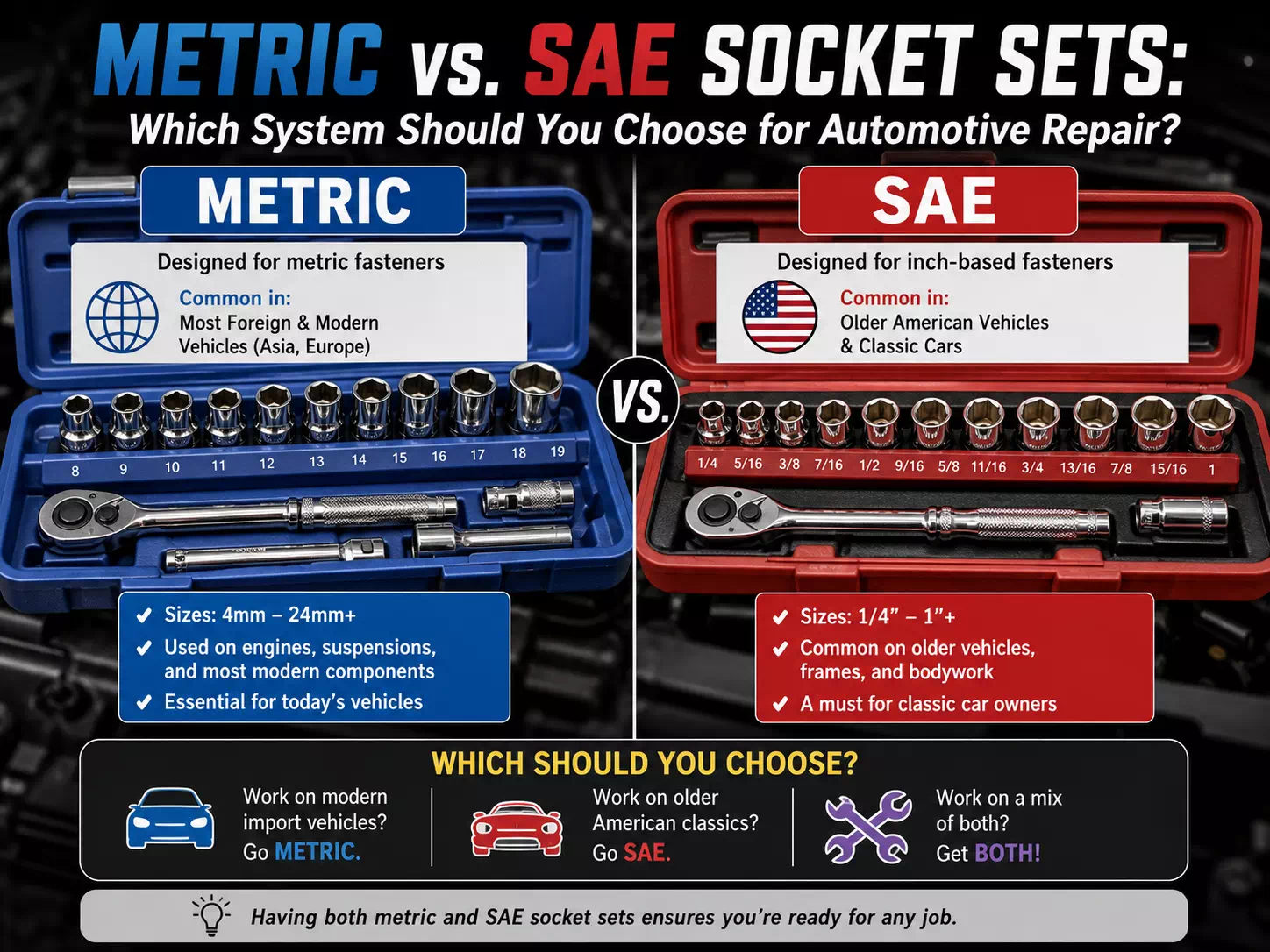
Metric vs. SAE Socket Sets: Which System Should You Choose for Automotive Repair?
-
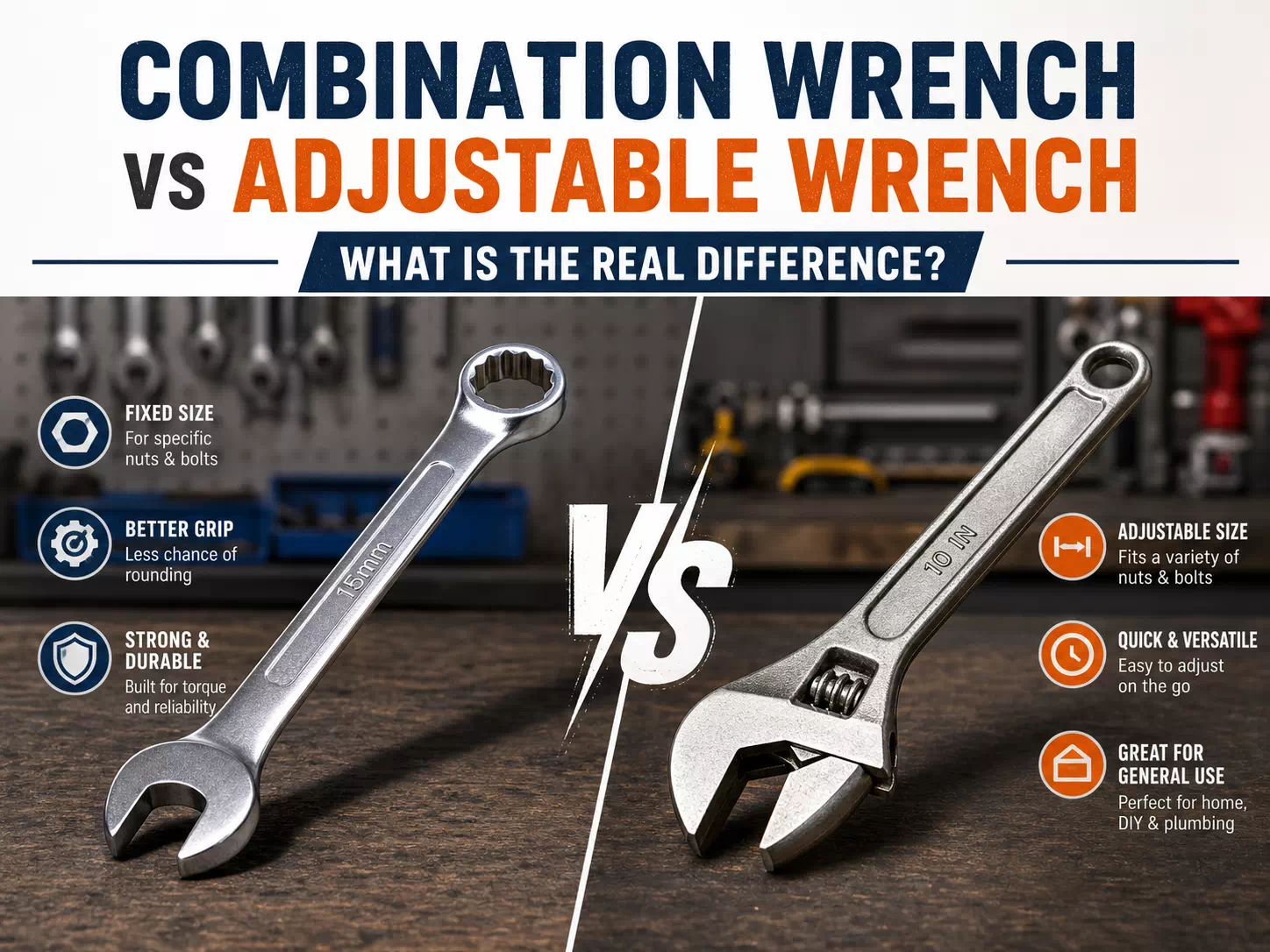
Combination Wrench vs Adjustable Wrench: What Is the Real Difference?
-
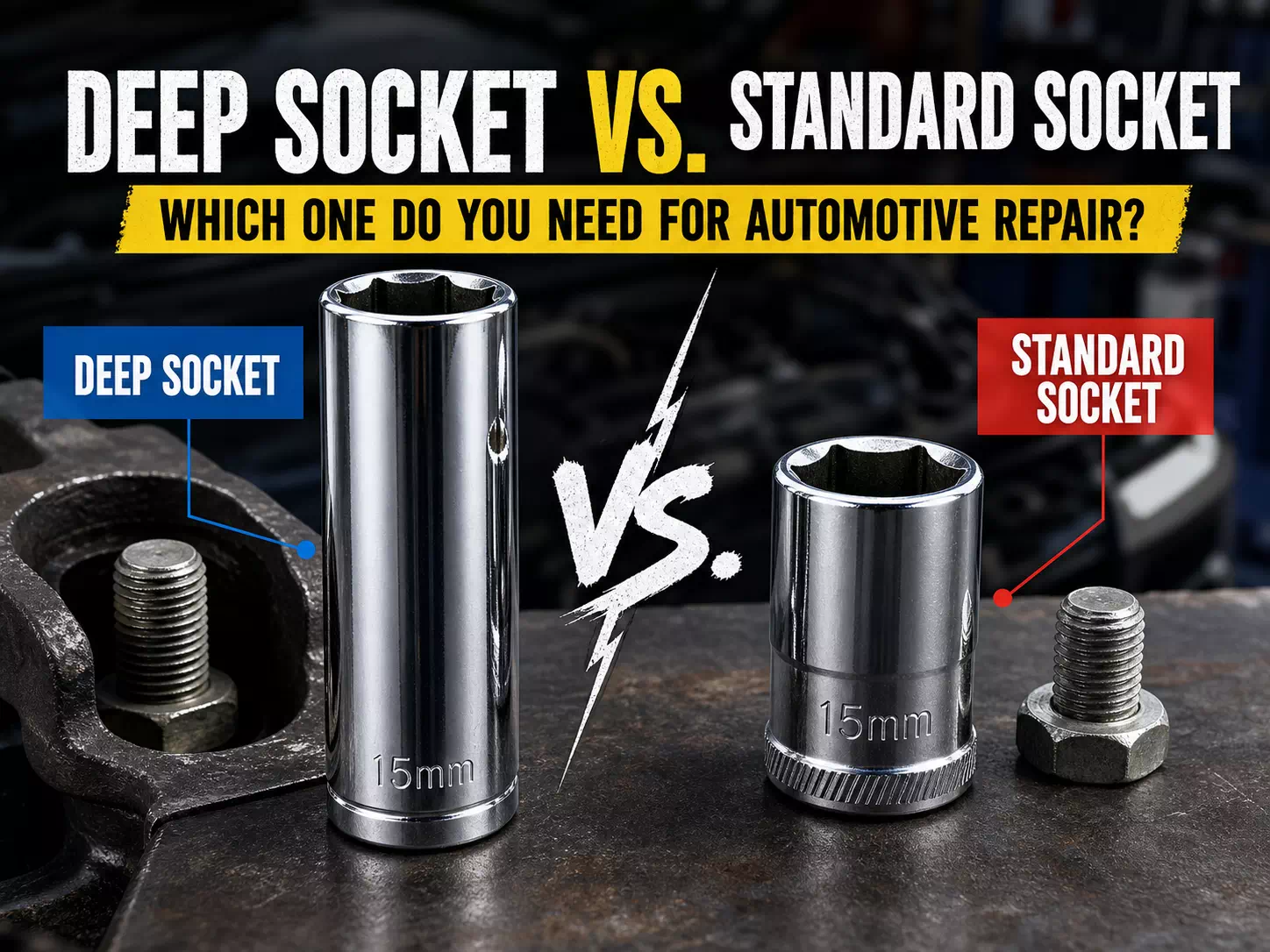
Deep Socket vs. Standard Socket: Which One Do You Need for Automotive Repair?
-

Socket Set vs. Wrench Set: Which Is Better for Automotive Repair?
-
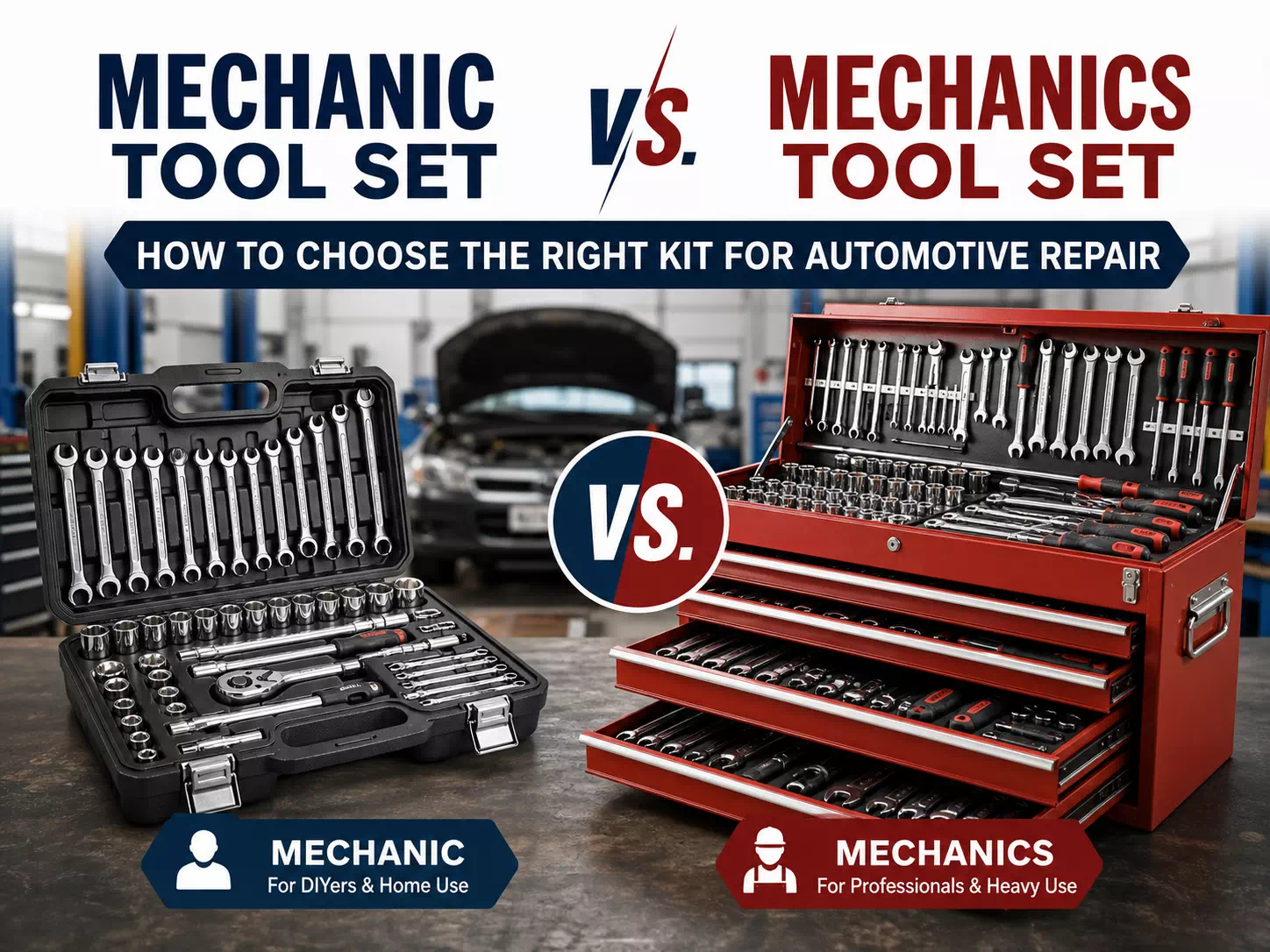
Mechanic Tool Set vs. Mechanics Tool Set: How to Choose the Right Kit for Automotive Repair
-
How to Maintain and Store Insulated Tools: A Daily Care Guide for Electricians