
- Dawei Metal 2026 Chinese New Year Special Offer: Gallop into Success with Upgraded Tools!
- Aluminum Alloy Combination Tool Set for Home, Automotive, and Repair Use
- Striking Tools: Types, Uses, and How to Choose the Right One
- Highest Quality Hand Tools: Inside the World's Most Trusted Tool Brands
- Why a Machete Saw Belongs in Your Outdoor Kit
Company:Shandong Dawei Metal Materials Co., Ltd.
Tel:+8615666285386
Email:dwhardwaretools@gmail.com
Address:Room 1413, Building 8, Shandong Steel Xintiandi Plaza, No. 61 Gongye South Road, High-tech Zone, Jinan City
Essential Insulated Tools for Safe Device Measurement: A Practical Hardware Tools List
When technicians prepare to inspect or repair electrical equipment, the first question is often, “Which meter should I bring?” That question is important, but it is only part of the job.
A device measurement task usually involves more than reading voltage or resistance. Someone has to open the enclosure, remove covers, loosen terminals, hold conductors in place, and sometimes replace a damaged component. That means the tool kit must combine measurement instruments, insulated tools, and a practical selection of general hardware tools.The right setup does not need to be enormous. It needs to match the equipment, the measurement category, and the work being performed. This guide explains how to build a useful hardware tools list for device measurement, with a focus on safe and efficient electrical maintenance.Safety note: Electrical measurement and maintenance should be carried out only by people with the appropriate training. Insulated tools and correctly rated meters reduce risk, but they do not replace de-energization, lockout procedures, personal protective equipment, or verification of the circuit condition.
Why device measurement requires more than a multimeter
A multimeter can tell you what is happening electrically, but it cannot solve every mechanical problem around the measurement point. A terminal may be difficult to reach. A cover may be fastened with a recessed screw. A conductor may need to be trimmed or re-formed before a reliable measurement can be taken.This is why experienced technicians tend to organize their kits around the job rather than around isolated product categories. The sequence usually looks something like this:1.Identify the equipment and the measurement to be taken.2.Inspect the enclosure, wiring, meter, leads, and hand tools.3.Isolate the equipment where the procedure requires it.4.Open or adjust the equipment using suitable insulated tools.5.Take the measurement with an appropriately rated instrument.6.Restore the equipment, retest where necessary, and record the result.Each step places different demands on the tools. A kit designed only around the meter may leave the technician improvising with an ordinary screwdriver or an incorrectly sized wrench. That is where avoidable problems begin.
The core measurement instruments
The instrument selection should follow the equipment and the measurement, not the other way around. A residential control circuit, a commercial distribution board, and an industrial motor drive may all require a multimeter, but they do not necessarily require the same level of protection or the same accessories.
Digital multimeter
A digital multimeter is the basic instrument for measuring voltage, resistance, continuity, and current when the meter and circuit are configured correctly. For routine electrical maintenance, look for a meter with clear input markings, secure test leads, overload protection, and a measurement category rating suitable for the installation.The CAT rating matters because the electrical environment affects the possible energy of a transient event. CAT II is associated with receptacle-connected loads, CAT III with fixed installations and distribution equipment, and CAT IV with the origin of the installation and utility connection points. The meter’s voltage rating must also match or exceed the work environment. Fluke’s safety guidance recommends selecting a meter for the highest category in which it may be used, rather than choosing one based only on the normal operating voltage .
Two-pole voltage tester
A two-pole tester is useful when the main question is whether voltage is present between two points. It gives the technician a direct phase-to-phase, phase-to-neutral, or phase-to-ground reading, depending on the test procedure.A non-contact voltage detector can be useful for a quick indication, but it should not be treated as the only proof that a circuit is safe to touch. It detects an electric field rather than measuring the potential between two defined points. Use the instrument required by the site procedure and verify that it is rated for the installation.
Clamp meter
A clamp meter measures current without requiring the conductor to be disconnected and placed through a meter terminal. This makes it useful for motor loads, branch circuits, and troubleshooting situations where interrupting the circuit would be inconvenient or unsafe.The jaws must close fully around the correct conductor. Clamping around both the outgoing and returning conductors can cause the magnetic fields to cancel and produce a misleading reading. Before using the meter, check its current range, CAT rating, jaw condition, and the manufacturer’s instructions for the type of current being measured.
Insulation resistance tester
An insulation resistance tester applies a test voltage and measures resistance through the insulation system. It is commonly used when checking cables, motors, and other equipment where ordinary resistance measurement is not enough.This type of test can involve voltages higher than the normal operating voltage of the equipment. Confirm that the circuit is disconnected, that sensitive electronic components are protected or isolated as required, and that the equipment has been discharged after the test. The test voltage and acceptance criteria should come from the equipment documentation or the applicable maintenance procedure.
Test leads and accessories
Test leads are part of the measurement system, not disposable accessories. Inspect the probe bodies, insulation, shrouds, plugs, and finger guards before use. Replace leads with cracked insulation, loose connections, exposed metal, or damaged probe tips.For crowded panels, leads with shrouded connectors and narrow probe tips can reduce the chance of bridging adjacent terminals. Fused current inputs are also worth considering on meters used for current measurement, provided the correct fuse type and rating are installed.
Essential insulated tools
Insulated tools are used when a hand tool may come close to energized parts or when the work procedure requires additional protection against accidental contact. Under IEC 60900, insulated and insulating hand tools are designed for work up to 1000V AC and 1500V DC, with the relevant marking and testing requirements . The rating should be treated as a limit for the tool, not as permission to work casually on live equipment.
Insulated screwdrivers
Screwdrivers are usually the first insulated tools to enter an electrical enclosure. A useful starting set includes:•Slotted drivers in approximately 3mm, 5mm, and 6mm sizes.•Phillips drivers in PH1 and PH2, with PH3 added for some industrial equipment.•A compact driver for control terminals and a larger driver for breaker terminals and lugs.Matching the blade to the terminal is more important than carrying one oversized driver. A blade that is too large may not seat correctly; one that is too small can damage the screw head and slip under torque. Both situations slow the work and increase the chance of contacting a neighboring part.
Insulated pliers
A practical set normally contains three types of pliers:•Needle-nose pliers for tight spaces, wire forming, and holding small components.•Combination pliers for gripping, bending, and general handling.•Side-cutting pliers for trimming conductors and cutting smaller wires.Choose the length according to the enclosure and the conductor sizes. Longer handles may provide more leverage, while shorter tools are easier to control in a crowded panel. The cutting capacity should be respected. Using side cutters on a conductor that is too large can damage the cutting edges and leave a rough, unreliable cut.
Insulated wire strippers
Wire strippers should match the conductor range used by the technician. A tool covering roughly 0.2–6mm², or AWG 24–10, suits many control-wiring and branch-circuit tasks. Larger cables may require a heavy-duty stripper or a dedicated cable-preparation tool.The goal is not simply to remove insulation. It is to remove the correct length without nicking the conductor. A damaged copper strand can reduce the quality of the termination and create a future heating point. Where the terminal provides a strip-length guide, use it rather than estimating by eye.
Insulated wrenches and sockets
Electrical equipment often includes hex fasteners that cannot be handled properly with a screwdriver. Insulated box wrenches in ranges such as 8–10mm, 10–13mm, and 13–17mm cover many motor, busbar, and conduit applications. An insulated socket set is useful for recessed fasteners where a box wrench cannot reach.For industrial work, the tool should be selected for both insulation and mechanical load. A tool that is electrically rated but mechanically unsuitable can still slip, deform, or fail during use. Check the manufacturer’s torque guidance and avoid using insulated hand tools as a substitute for a calibrated torque tool when the connection requires a specified tightening torque.
Cable cutters and general hardware tools
For larger conductors and multi-core cables, use a dedicated insulated cable cutter rather than forcing side cutters beyond their capacity. A clean cut makes later stripping and termination easier.Other useful items include an insulated flashlight, inspection mirror, cable markers, a small rule or strip-length gauge, terminal screwdrivers, a deburring tool, and a labeled tool case. These items may look secondary, but they reduce the amount of improvisation inside the enclosure.
A practical hardware tools list for device measurement
The following list is intended for general electrical maintenance. It should be adjusted for the equipment, voltage system, local rules, and company procedures.
Tool or instrument | Typical specification | Main purpose | Priority |
Digital multimeter | Appropriate CAT and voltage rating; voltage, resistance, and continuity functions | General device measurement | Must-have |
Two-pole voltage tester | Rated for the installation | Voltage presence and absence checks | Must-have |
Clamp meter | AC or AC/DC according to the application | Current measurement without disconnecting conductors | Useful |
Insulation resistance tester | Test voltage selected for the equipment | Cable, motor, and insulation checks | Application-dependent |
Test leads | Shrouded connectors, insulated probes, correct CAT rating | Connecting the instrument safely | Must-have |
Slotted screwdrivers | Insulated, approximately 3mm, 5mm, and 6mm | Terminals, lugs, covers | Must-have |
Phillips screwdrivers | Insulated PH1 and PH2; PH3 for industrial work | Equipment fasteners | Must-have |
Needle-nose pliers | Insulated, around 160–200mm | Tight spaces and wire forming | Must-have |
Combination pliers | Insulated, around 180–200mm | Gripping and bending | Must-have |
Side cutters | Insulated, selected for conductor size | Trimming small conductors | Must-have |
Wire strippers | Insulated, matched to wire range | Removing insulation accurately | Must-have |
Box wrenches | Insulated, common metric ranges | Hex terminals and lugs | Industrial must-have |
Socket set | Insulated, commonly 1/4-inch drive | Recessed fasteners | Useful for industrial work |
Cable cutter | Insulated and rated for the cable size | Cutting larger conductors | Application-dependent |
Flashlight and mirror | Insulated or suitable for the work environment | Inspection inside enclosures | Useful |
Tool case | Labeled compartments | Organization and inspection | Must-have |
The table is a starting point, not a universal shopping list. A technician working mainly on control panels may need more precision screwdrivers and small wire tools. Someone maintaining motors and distribution equipment may need larger wrenches, a clamp meter, and a higher CAT-rated instrument.
How to choose tools by measurement task
Measuring voltage in a distribution panel
Start with the meter’s CAT and voltage ratings. For fixed distribution equipment, a CAT III meter may be appropriate; service-entrance work can require CAT IV equipment. Confirm the rating on the meter and leads rather than relying on the product name or the appearance of the case.Use insulated screwdrivers and pliers when opening or adjusting the panel. Keep the probe tips controlled and avoid placing tools, leads, or loose hardware across the enclosure. If the task can be performed de-energized, follow the isolation procedure instead of treating insulated tools as a reason to work energized.
Checking a motor or control circuit
Motor and industrial control work usually combines voltage measurement with current measurement, continuity checks, or insulation testing. A clamp meter can help assess operating current without disconnecting the conductor. An insulated screwdriver set, needle-nose pliers, wire strippers, and box wrenches cover the mechanical work around terminals and covers.Variable-frequency drives and electronic controllers require extra care. Disconnect power according to the manufacturer’s procedure and allow the specified discharge time before touching internal components. Some equipment can retain hazardous voltage after the supply is switched off.
Testing a suspected faulty device
When a relay, fuse, switch, sensor, or control module appears to be faulty, avoid jumping straight to replacement. First inspect the wiring, terminal condition, supply voltage, and connection points. A multimeter, insulated screwdrivers, needle-nose pliers, wire strippers, and a flashlight are often enough for the first stage of diagnosis.The measurement should answer a specific question. Is the supply reaching the device? Is the output changing when the input changes? Is the conductor continuous? Is the terminal loose or overheated? A clear question produces a more useful measurement than testing every point without a plan.
Inspection before and after measurement
Before using a meter, inspect the casing, display, input sockets, test leads, probe tips, and accessories. Fluke recommends checking the instrument for physical damage and verifying that it is operating correctly with a known voltage source or proving unit before making measurements . Do not use a meter or lead with cracked insulation, loose plugs, exposed metal, or unreliable switching.Insulated hand tools need the same discipline. Look for cuts, cracks, deep abrasion, loose insulation, exposed metal, and damage around the finger guards. Clean the tools after use and store them away from sharp metal edges, excessive heat, oils, and chemicals that may affect the insulating material. OSHA’s electrical protective-equipment requirements emphasize inspection of insulating equipment for damage before use . Local regulations and the employer’s safety program may require additional testing or records.After the work, return every tool to its labeled location and record any item removed from service. A damaged tool that remains in the case is likely to be used by the next person who needs it in a hurry.
Common mistakes to avoid
The most common mistake is choosing tools by appearance rather than by rating. A bright two-color handle does not, by itself, prove compliance with an insulation standard. Check the marking, documentation, voltage class, and manufacturer information.Another mistake is confusing a non-contact detector with proof of a dead circuit. It may provide a useful warning, but it does not answer every question about voltage between conductors. Use the test method required for the installation and verify the instrument before and after the test when the procedure calls for it.Finally, do not let a complete tool kit create false confidence. A 1000V-rated screwdriver cannot protect against an incorrect meter connection, a damaged test lead, a short circuit, an arc flash, or a failure to isolate the equipment. Good tools support good work; they do not replace it.
Final buying advice
Build the kit around the devices you actually measure and maintain. For general electrical work, begin with a properly rated multimeter, a two-pole voltage tester, insulated screwdrivers, three basic plier types, wire strippers, and a labeled case. Add a clamp meter, insulation resistance tester, cable cutter, box wrenches, and sockets when the equipment justifies them.The best hardware tools list is not the longest one. It is the one that lets the technician perform the task without borrowing an unsuitable tool, forcing a cutter beyond its capacity, or using a meter outside its safety category. Choose the instrument for the measurement, choose the insulated tool for the surrounding mechanical work, and inspect both before they enter the enclosure.
- Pro:Essential Insulated Tools for Electrical Work: A Task-by-Task Guide
- Next:How to Choose a 1000V VDE Insu
-
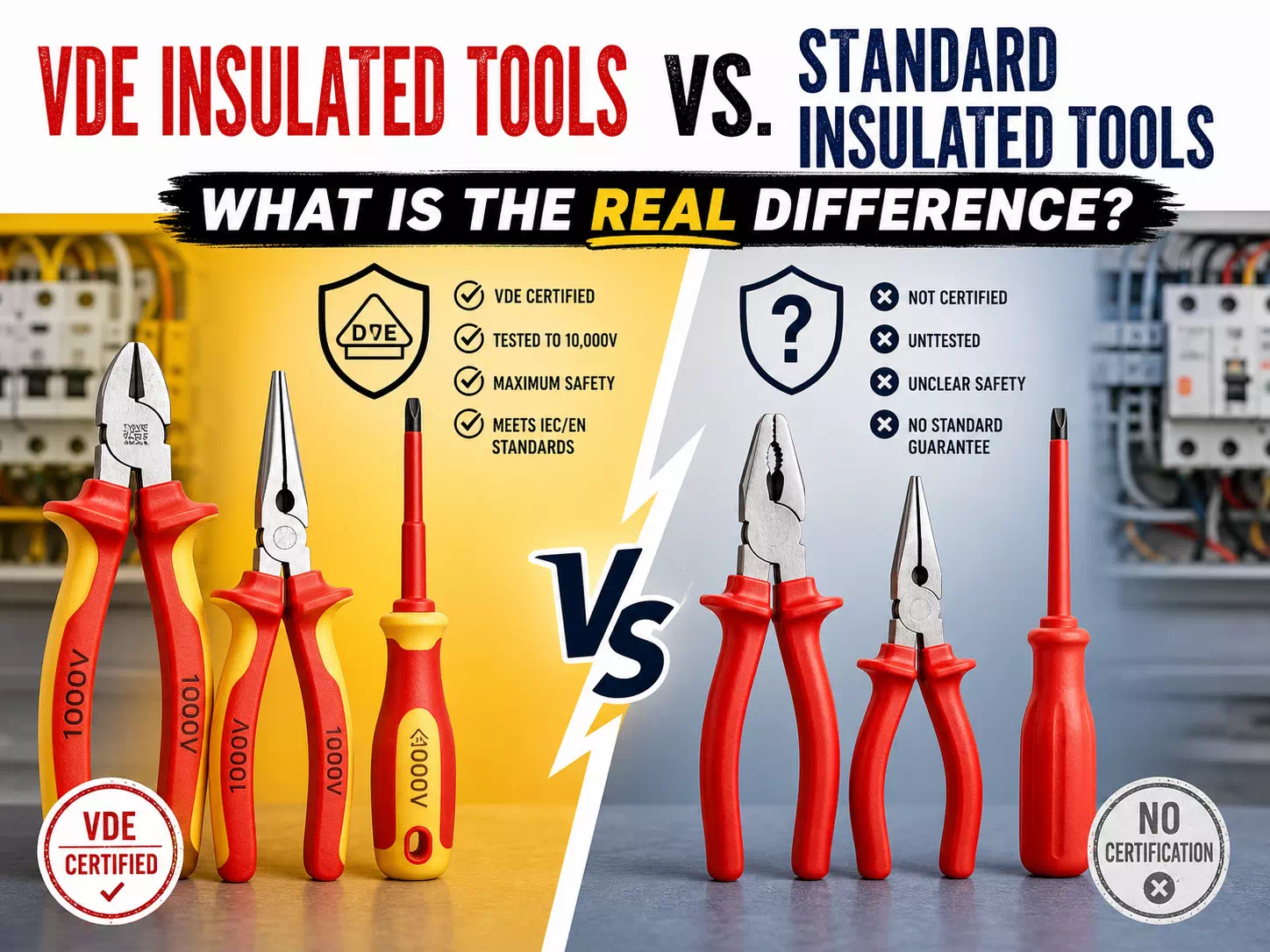
VDE Insulated Tools vs. Standard Insulated Tools: What Is the Real Difference?
-
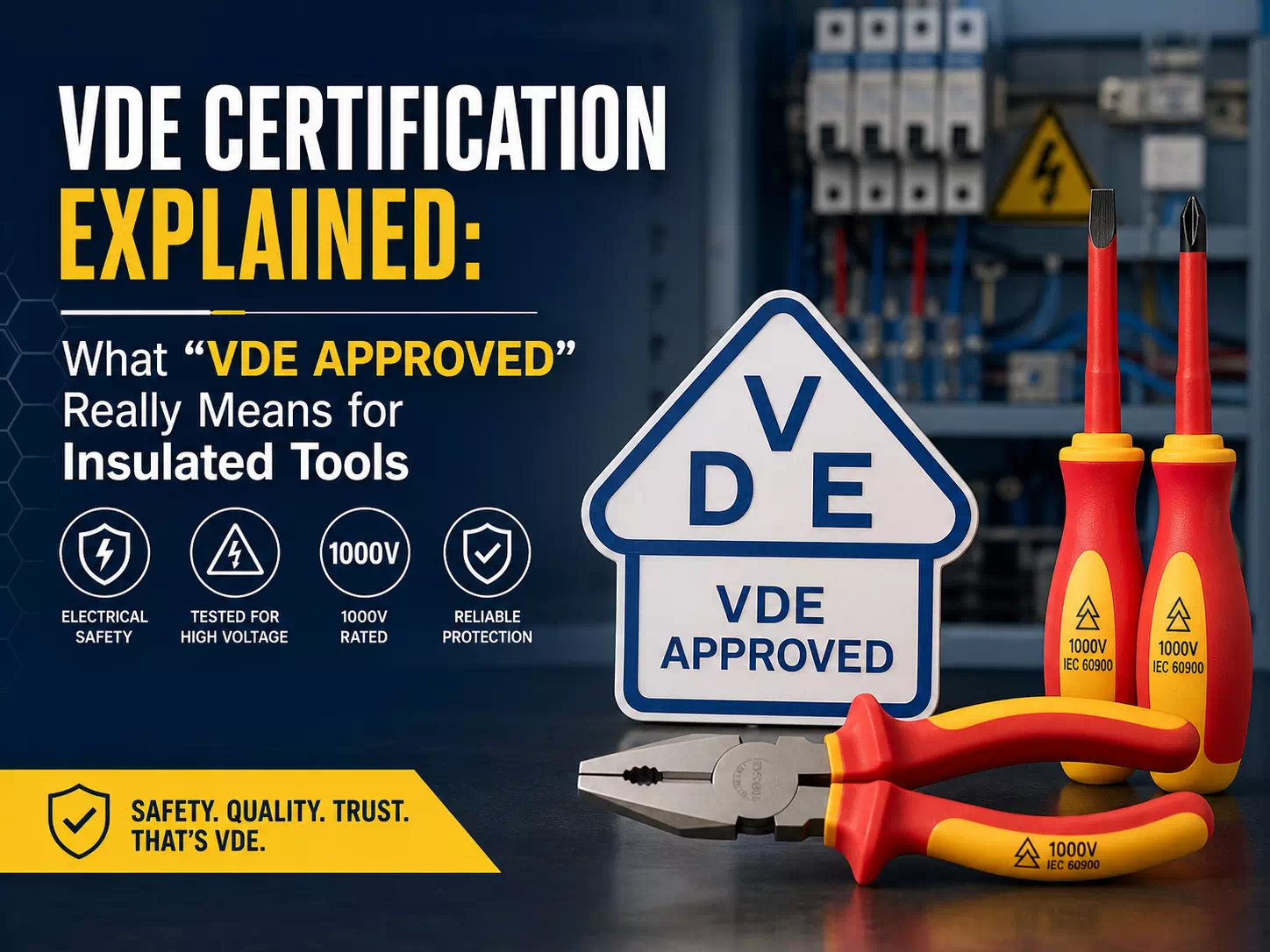
VDE Certification Explained: What “VDE Approved” Really Means for Insulated Tools
-
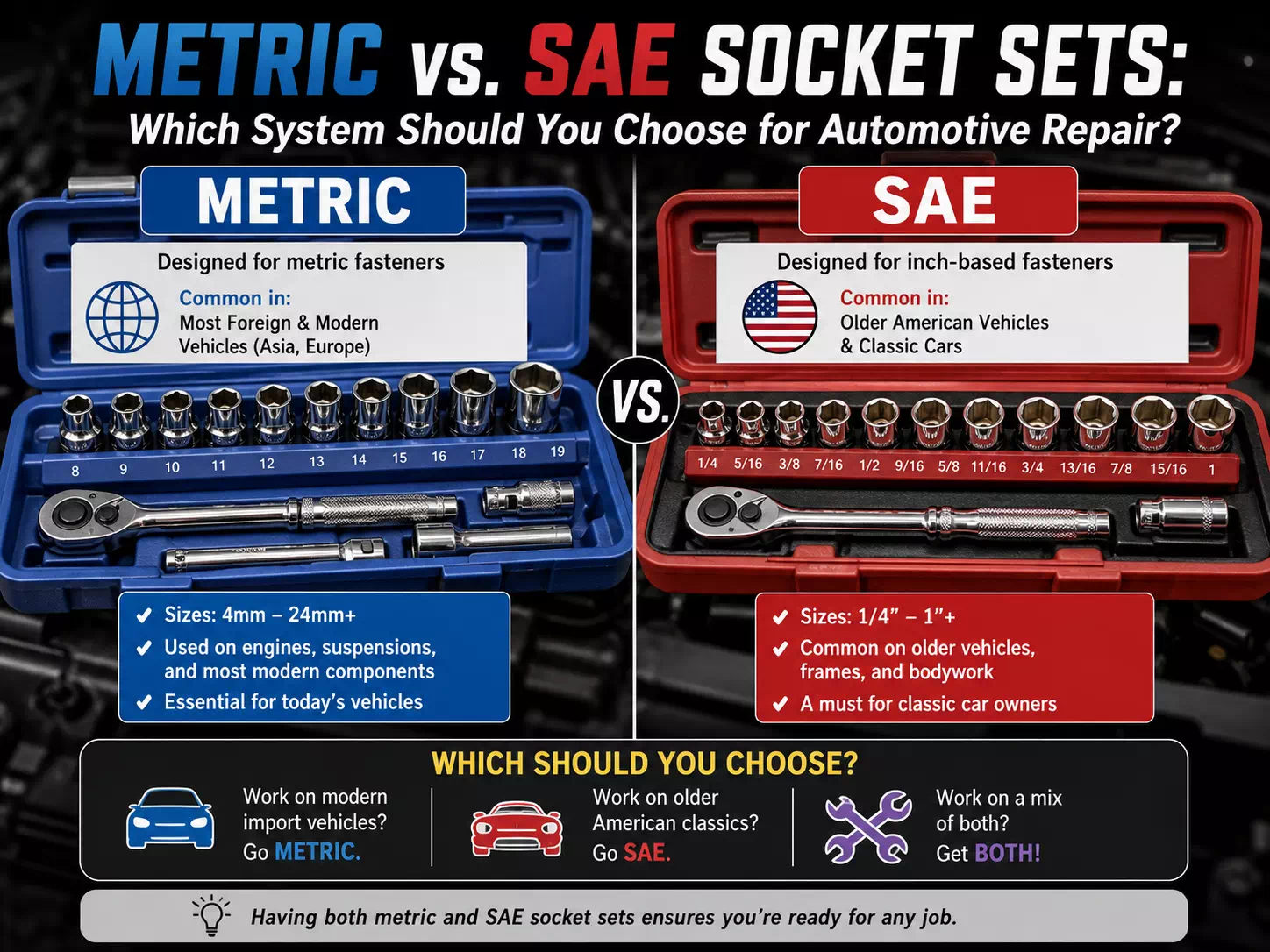
Metric vs. SAE Socket Sets: Which System Should You Choose for Automotive Repair?
-

Combination Wrench vs Adjustable Wrench: What Is the Real Difference?
-
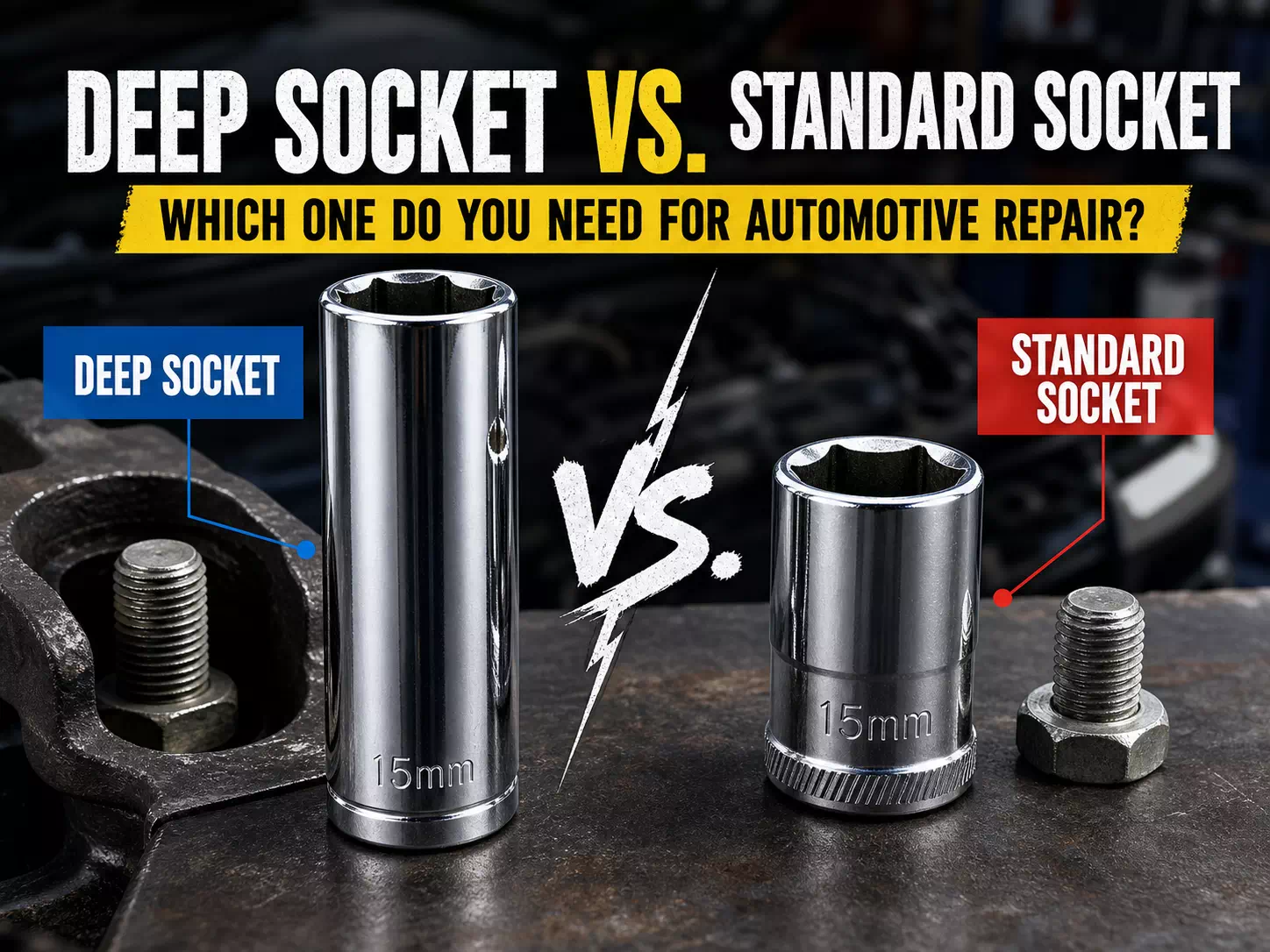
Deep Socket vs. Standard Socket: Which One Do You Need for Automotive Repair?
-

Socket Set vs. Wrench Set: Which Is Better for Automotive Repair?