
- Dawei Metal 2026 Chinese New Year Special Offer: Gallop into Success with Upgraded Tools!
- Aluminum Alloy Combination Tool Set for Home, Automotive, and Repair Use
- Striking Tools: Types, Uses, and How to Choose the Right One
- Highest Quality Hand Tools: Inside the World's Most Trusted Tool Brands
- Why a Machete Saw Belongs in Your Outdoor Kit
Company:Shandong Dawei Metal Materials Co., Ltd.
Tel:+8615666285386
Email:dwhardwaretools@gmail.com
Address:Room 1413, Building 8, Shandong Steel Xintiandi Plaza, No. 61 Gongye South Road, High-tech Zone, Jinan City
Essential Insulated Tools for Electrical Work: A Task-by-Task Guide
The right insulated tool depends on the job in front of you. A panel job usually starts with a few screwdrivers and long-nose pliers. Cable preparation calls for cutters and strippers. Motor control work adds insulated wrenches and sockets. The point is not to own every tool in the catalogue; it is to carry the tools that match the work your crew actually does.
For electrical work, each tool should be individually insulated, tested, and certified for the required voltage class. Tools marked to IEC 60900 or ASTM F1505 are commonly rated for up to 1000V AC. That rating does not make an unsafe job safe, but it does provide protection against accidental contact when the correct isolation and testing procedures are followed.
This guide is organized around tasks rather than tool categories. It covers panel work, wire termination, cable preparation, breaker replacement, industrial equipment, and testing. At the end, there is a practical checklist for building a general-purpose kit or outfitting a team.
Panel and distribution board work
Inside a panel, space is limited and live parts may be closer than they appear. Turning off the main breaker does not necessarily de-energize the line-side lugs or every section of a distribution board. For that reason, any hand tool that enters the enclosure should be insulated and certified for the voltage that may be present.
A basic panel-work kit should include:
· Insulated slotted screwdrivers, 3mm and 5mm. The 3mm driver suits small terminal blocks and DIN-rail devices. The 5mm size is more useful on larger breaker terminals and lugs.
· Insulated Phillips screwdrivers, PH1 and PH2. These are used for cover plates, device mounting, and equipment that uses Phillips-head fasteners.
· Insulated needle-nose pliers. They reach into crowded areas, help form a conductor for a screw terminal, and hold small parts while they are being fastened.
· Insulated combination pliers, around 200mm. These handle general gripping, bending, and manipulation of larger conductors.
One common mistake is choosing a screwdriver that is too large for the terminal. Forcing a 5mm blade into a 3mm slot makes the driver more likely to cam out. That can damage the screw, make the connection harder to tighten, or cause the tool to slip toward an adjacent busbar. Carrying both sizes adds very little weight and avoids an unnecessary risk.
Wire termination and connection
Terminating conductors is repetitive work: landing wires on breaker lugs, terminal blocks, ground bars, and neutral bars. It is also a place where small mistakes become future faults. A nicked conductor or a poorly seated wire may continue to work for a while before heat, oxidation, or vibration exposes the problem.
For this work, use:
· Insulated slotted screwdrivers in 3mm, 5mm, and 6mm sizes. Match the blade to the terminal rather than making one driver do everything.
· Insulated PH1 and PH2 screwdrivers for Phillips terminals and device fasteners.
· Insulated wire strippers suited to the wire sizes in use. A range around 0.2–6mm² (AWG 24–10) covers many control and branch-circuit applications.
· Insulated needle-nose pliers for straightening conductors or forming the end for a screw terminal.
· Insulated side-cutting pliers for trimming conductor ends after termination.
Strip length matters as much as the tool itself. A short strip may leave too little conductor in the terminal; a long strip can leave bare copper outside the clamping area. If the terminal housing has a strip-length mark, use it. The stripper protects the hand, but accurate stripping is what produces a sound connection.
Cable preparation and routing
Before a cable reaches its terminal, it usually has to be cut, stripped, shaped, and routed through a gland, grommet, conduit, or enclosure. This is where the cutting tools see the most abuse.
The usual set is:
· Insulated side cutters, 160mm or 200mm, for individual conductors up to roughly 6mm².
· An insulated cable cutter for conductors around 10mm² and above, or for multi-core cable. A side cutter is not a substitute for a cable cutter; forcing it through a large copper conductor can damage the cutting edges and the joint.
· Insulated wire strippers for conductor insulation. Larger cables may require a heavy-duty stripper. If a knife is necessary, use one with a properly insulated handle and keep it away from energized parts.
· Insulated combination pliers for pulling cable through openings, bending conductors, and general handling.
Side cutters are often misused in cable work. Large conductors can chip the cutting edges, especially on hardened pliers. Once the edge is damaged, it may leave a rough cut or nick the next conductor. Check the jaws before each job and retire the tool if the insulation is cut, cracked, or loose, or if the cutting edge is damaged.
Breaker and fuse replacement
Replacing a breaker or fuse can look routine, but the enclosure may still contain energized parts. The main breaker may be off while the line-side connections remain live from the utility supply. Treat the job accordingly.
You will normally need:
· Insulated 5mm and 6mm slotted screwdrivers for terminals and mounting screws.
· An insulated PH2 screwdriver where the breaker or mounting hardware uses Phillips heads.
· An insulated box wrench or socket, often 10mm or 13mm, for busbar connections and main-lug fasteners. The exact size depends on the equipment manufacturer.
· A voltage tester, preferably a two-pole contact tester, for checking that the part being replaced is de-energized.
Test before touching. Test after isolation. Test again before beginning the work. The line side of a main breaker is a good example of why the tool’s rating matters: the circuit being serviced may be off while another part of the enclosure is still energized. A 1000V-rated tool is intended to provide protection against incidental contact, not to replace isolation, lockout, or verification.
Motor control and industrial equipment
Motor control centers, variable-frequency drives, and industrial control panels tend to use more fastener sizes than residential equipment. You may encounter hex bolts, socket-head screws, larger terminals, and recessed fasteners that cannot be reached with a standard screwdriver.
A practical industrial set includes:
· Insulated slotted screwdrivers in 3mm, 5mm, and 6mm sizes for control terminals.
· Insulated PH1, PH2, and PH3 screwdrivers for covers, motor terminal boxes, and larger equipment.
· Insulated box wrenches in ranges such as 8–10mm, 10–13mm, and 13–17mm for motor lugs, conduit fittings, and busbar connections.
· An insulated 1/4-inch drive socket set, roughly 8–14mm, for recessed fasteners in motor terminal boxes.
· Insulated combination and needle-nose pliers for control wiring and component handling.
· Insulated wire strippers suitable for motor leads and control conductors.
A box wrench generally gives better control than an open-end wrench in a crowded enclosure because it surrounds the fastener and is less likely to slip toward a neighboring busbar. For tools exposed to higher torque loads, tougher steel grades such as chrome-molybdenum may be worth considering. Whatever the steel grade, check that the insulation and certification are genuine rather than relying on the appearance of the handle.
Testing and inspection
Testing is not a final formality. It comes before the work and after it.
For verification, use:
· A two-pole voltage tester rated for the voltage class of the installation. It checks voltage between two points and is generally more dependable for proving a circuit dead than a non-contact pen tester alone.
· Insulated multimeter probes and leads when a multimeter is required. The probe tips should expose only the necessary metal to reduce the chance of bridging adjacent terminals.
· Insulated inspection aids, such as a small mirror or flashlight, when parts of a panel cannot be seen directly.
Before touching a conductor, test phase-to-phase, phase-to-neutral, and phase-to-ground as appropriate for the installation and procedure. After the work is complete and the circuit is re-energized, test again to confirm that voltage is present where it should be and absent where it should not be.
Inspect the tools as well. A screwdriver dropped onto concrete or pliers struck against an enclosure may have damaged the insulation even when the damage is not obvious at first glance. Look for cuts, chips, cracks, deep abrasion, looseness, or any exposed metal that should be covered. Remove damaged tools from service immediately.
Essential insulated tool checklist
The following list covers most general electrical tasks described in this guide. Industrial work may require additional sizes and specialized tools.
Tool | Typical sizes or specification | Main uses | Priority |
Slotted screwdriver | 3mm, 5mm, 6mm | Terminals, breakers, covers, lugs | Must-have |
Phillips screwdriver | PH1, PH2; PH3 for industrial work | Device installation and equipment covers | Must-have |
Needle-nose pliers | Around 200mm, insulated | Tight spaces, wire forming, component holding | Must-have |
Combination pliers | Around 200mm, insulated | Gripping, bending, general handling | Must-have |
Side-cutting pliers | 160mm or 200mm, insulated | Trimming conductors and cutting small wire | Must-have |
Wire strippers | Approximately 0.2–6mm², insulated | Removing conductor insulation | Must-have |
Voltage tester | Two-pole, rated for the installation | Verifying de-energization and re-energization | Must-have |
Box wrenches | 8–10mm, 10–13mm, insulated | Motor lugs, busbars, conduit fittings | Industrial must-have |
Socket set | 1/4-inch drive, about 8–14mm, insulated | Recessed fasteners | Useful for industrial work |
Cable cutter | For conductors around 10mm² and above | Cutting larger cables | Industrial must-have |
Inspected tool case | Labeled slots or molded storage | Organization and missing-tool checks | Must-have |
A kit is usually easier to manage than a collection of individual tools bought at random. It keeps the common sizes together and makes missing or damaged tools easier to spot. Add specialist tools only when the work justifies them.
Outfitting a team
For a contractor, maintenance department, or distributor, consistency matters as much as the individual tools. Standardize the core kit so that every electrician has the same basic sizes. That makes tools interchangeable and makes a missing item obvious. A 200mm plier in one kit and a 160mm plier in another may both be useful, but they are not the same replacement.
For volume purchases, ask for certification and the dielectric test report for the actual production batch, not only a model-level certificate. A supplier that tests each batch should be able to provide the relevant records. Also plan for replacement. Insulation wears with use, impact, and age; screwdrivers and cutters usually need attention sooner than tools that see less contact. Set replacement intervals according to usage and inspection results rather than treating the calendar as a substitute for inspection.
Before tools are issued, inspect every piece. Ask electricians to make a visual check after major jobs and after any drop or impact. Where the applicable safety program requires it, arrange periodic dielectric testing and keep the records with the tool inventory. Local rules and company procedures should determine the exact inspection and test frequency.
Frequently asked questions
What insulated tools do I need for electrical work?
For general work, start with 3mm, 5mm, and 6mm slotted screwdrivers; PH1 and PH2 Phillips screwdrivers; needle-nose, combination, and side-cutting pliers; wire strippers; and a two-pole voltage tester. Industrial work commonly adds insulated box wrenches, sockets, and a cable cutter. Each tool should carry a verifiable certification and the appropriate voltage rating.
Can I use regular tools for electrical work?
Do not use an ordinary uninsulated tool on or near energized equipment. A rubber grip by itself does not make a tool an insulated electrical tool. Look for a tested insulating layer and a verifiable certification mark that meets the requirements of your workplace and local safety rules.
What is the difference between insulated tools and VDE tools?
“Insulated tool” describes the protective construction of the tool. VDE is a certification mark associated with testing by the VDE institute against relevant standards, including IEC 60900. Other recognized bodies may certify tools as well, so check the actual mark, documentation, and voltage rating rather than assuming that every brightly colored handle is certified.
Do I need insulated tools if I always de-energize the circuit?
Yes. Isolation must still be verified, and upstream parts of an enclosure may remain energized. Insulated tools provide additional protection against incidental contact while you work, but they do not replace isolation, lockout, or voltage testing.
How often should insulated tools be inspected?
Inspect them before every job and immediately after a drop or impact. Look for cuts, chips, cracks, exposed metal, and wear through the warning layer. Arrange dielectric re-testing when required by the applicable safety program, and remove any tool that fails visual inspection or testing from service immediately.
What voltage rating do insulated tools need?
For many residential, commercial, and light-industrial applications, the common class is 1000V AC / 1500V DC under IEC 60900. Specialized high-voltage work may require tools rated above this class. Always match the tool to the installation and the requirements of the governing safety rules.
- Pro:The Ultimate Guide to High-Voltage Safety: Mastering EV and Hybrid Maintenance with VDE Insulated To
- Next:Essential Insulated Tools for
-
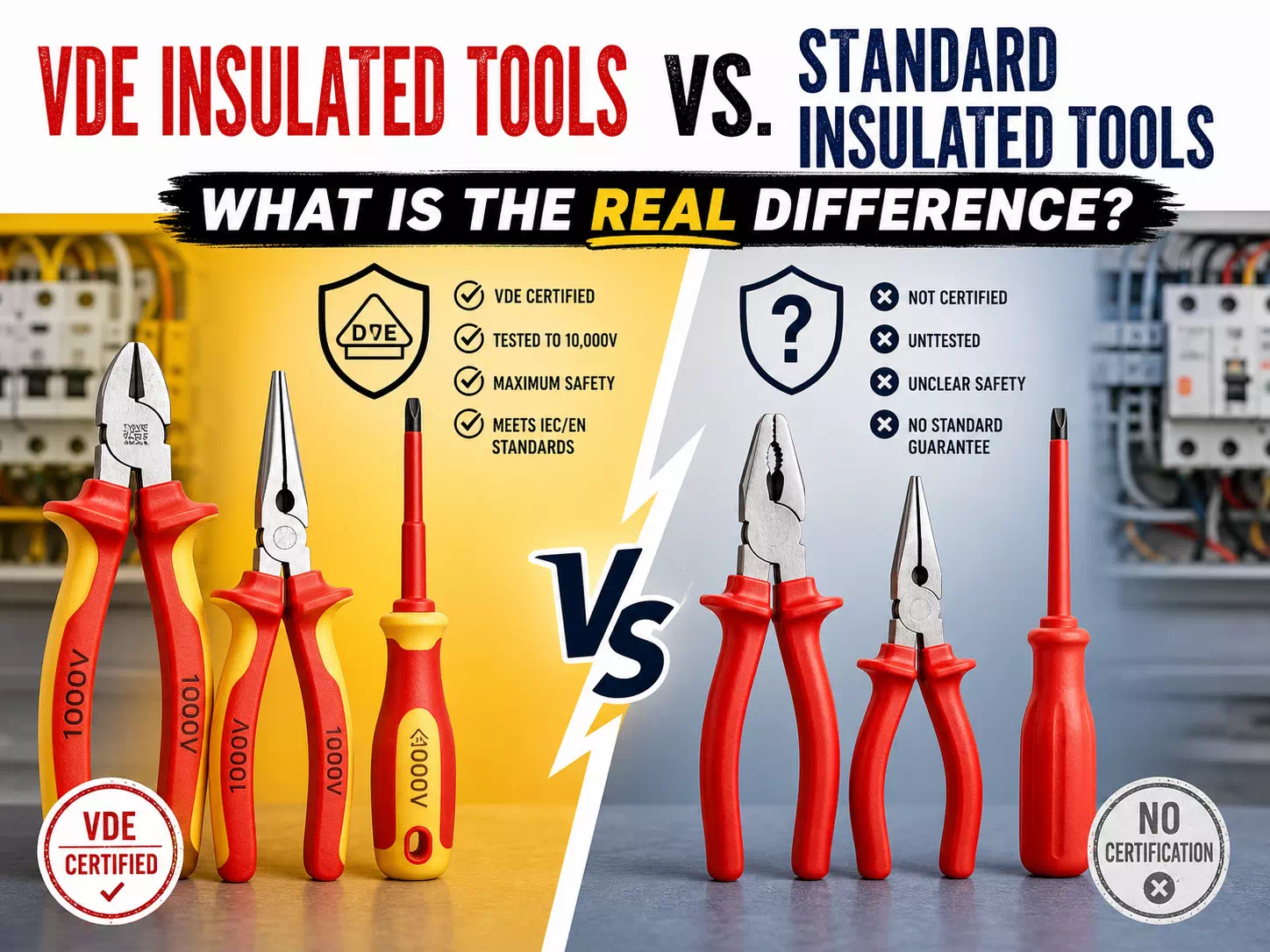
VDE Insulated Tools vs. Standard Insulated Tools: What Is the Real Difference?
-
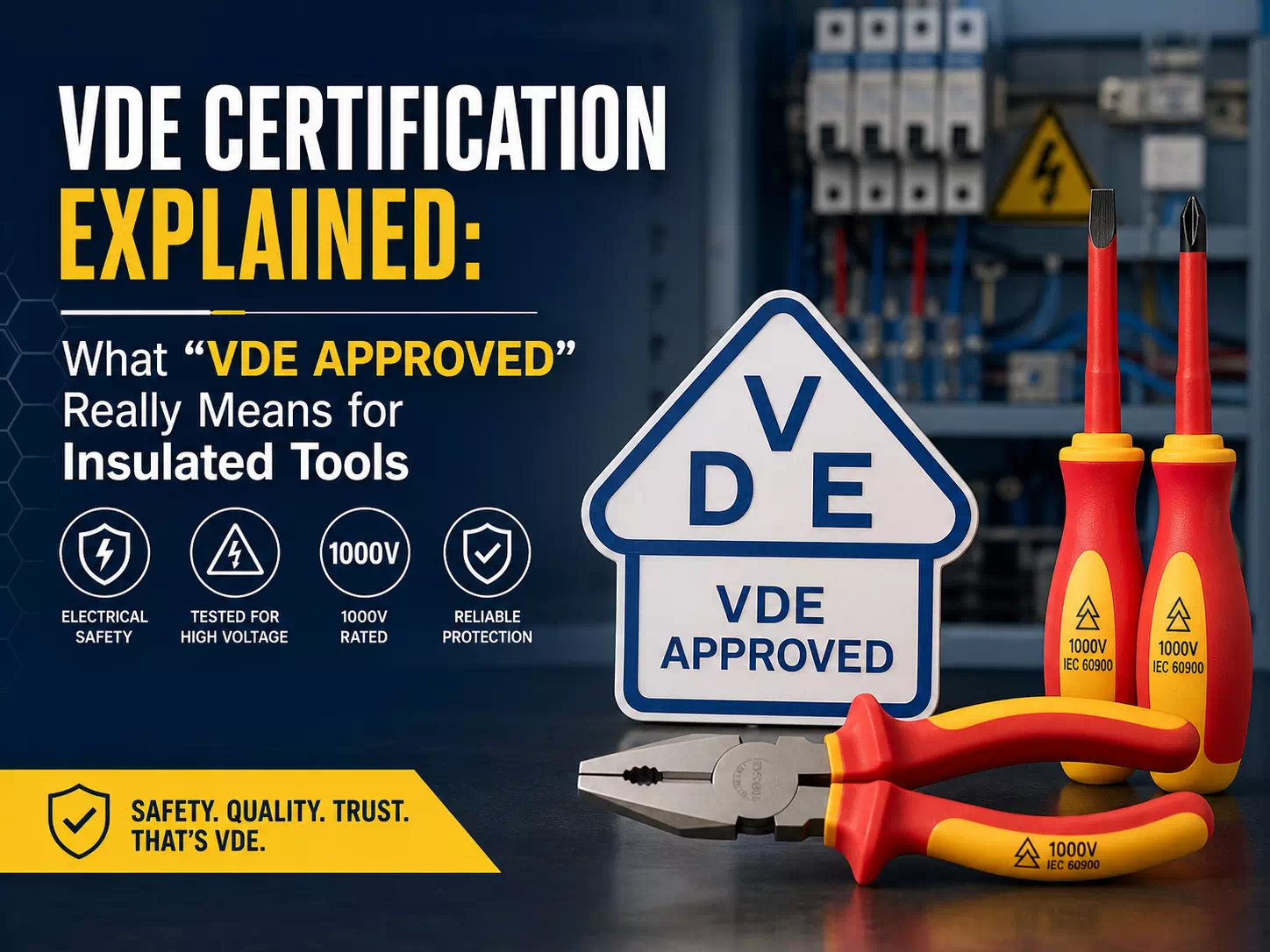
VDE Certification Explained: What “VDE Approved” Really Means for Insulated Tools
-
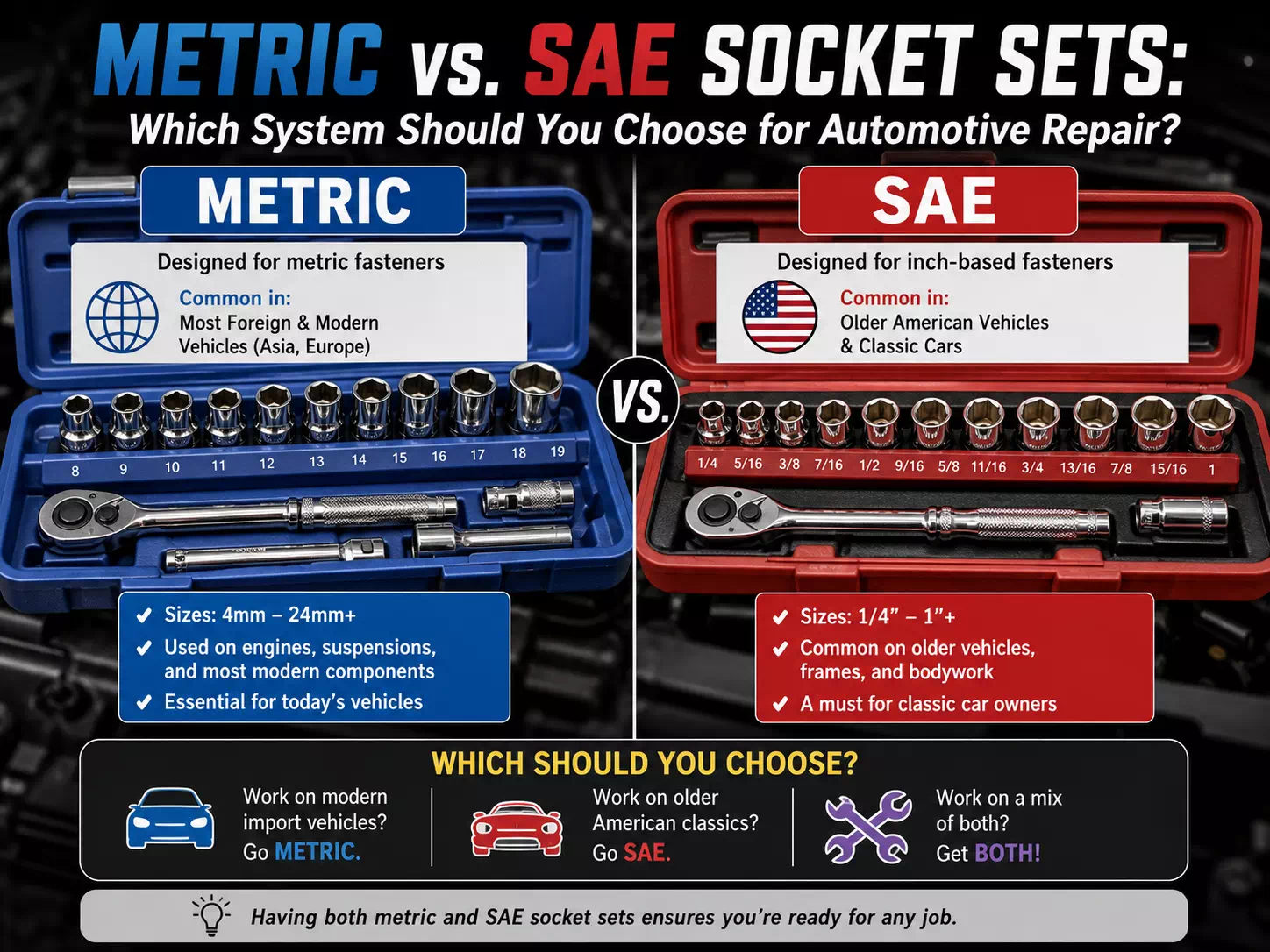
Metric vs. SAE Socket Sets: Which System Should You Choose for Automotive Repair?
-
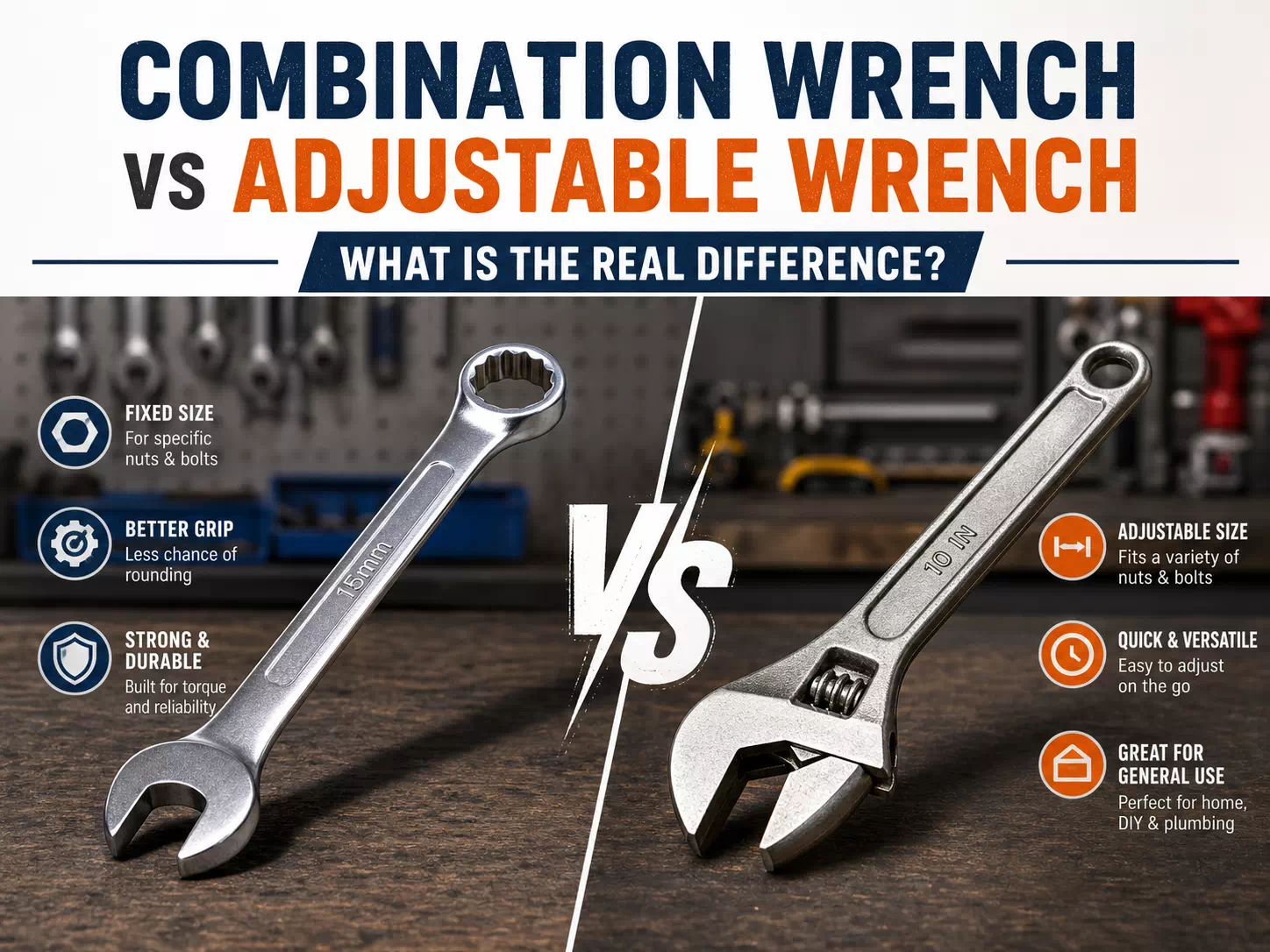
Combination Wrench vs Adjustable Wrench: What Is the Real Difference?
-
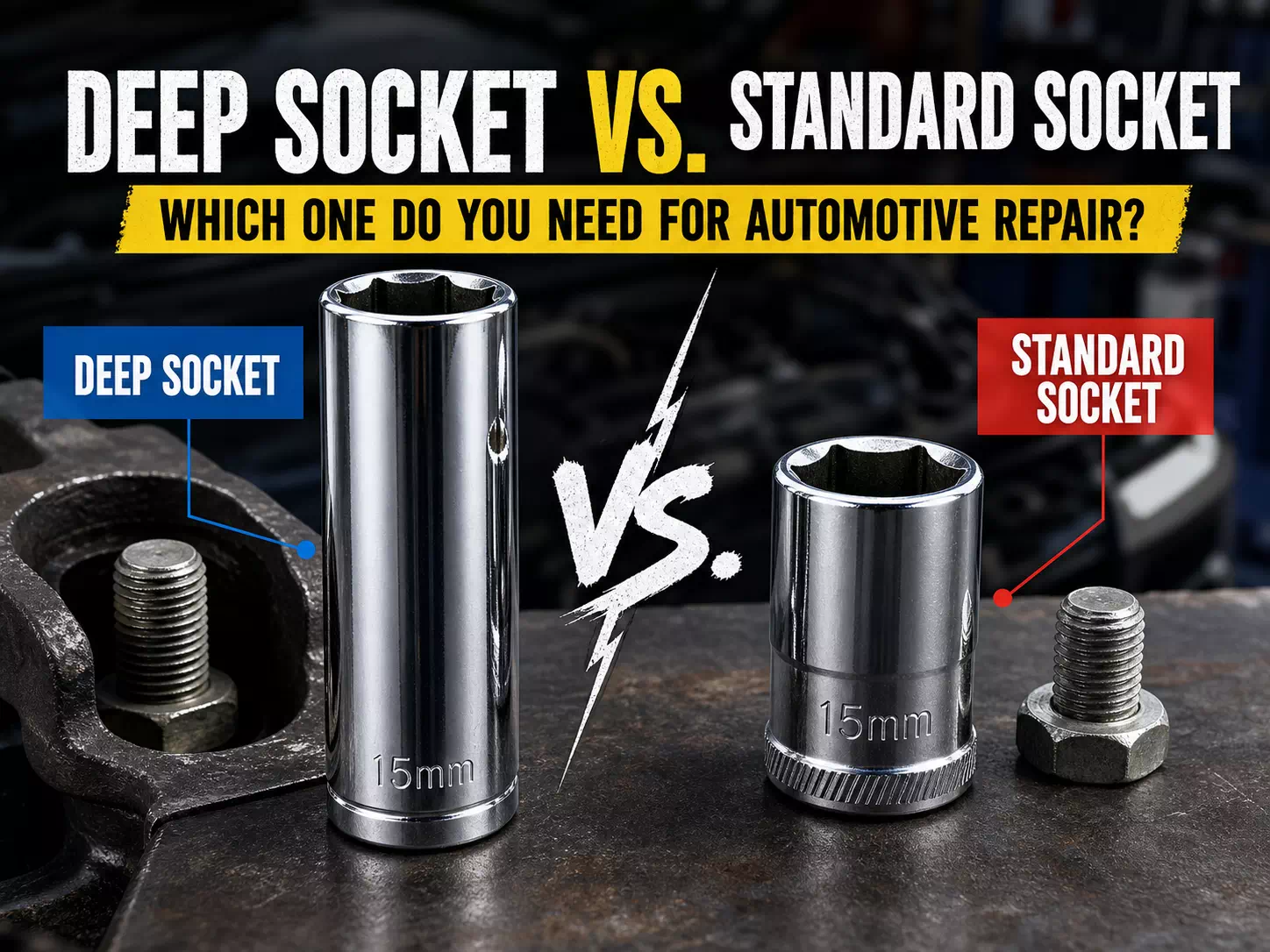
Deep Socket vs. Standard Socket: Which One Do You Need for Automotive Repair?
-

Socket Set vs. Wrench Set: Which Is Better for Automotive Repair?