That is why the real question is not simply socket set vs wrench set. The better question is: which tool gives you the best access to the fastener you need to remove or tighten?
For basic maintenance, one type of tool may be enough to get started. For a professional repair shop, fleet maintenance team or serious home garage, however, a socket set and wrench set usually work better together. Each solves a different access problem.
What Is the Difference Between a Socket Set and a Wrench Set?
A socket set normally includes sockets in different sizes, one or more ratchets, extension bars and sometimes adapters or universal joints. The socket surrounds the fastener and transfers force through the drive tool.
A wrench set contains open-end, box-end, combination or specialty wrenches. A wrench is positioned directly over or around the nut or bolt head, so it does not require a separate ratchet. This makes it particularly useful when the fastener is accessible from the side or when surrounding components prevent a socket from being positioned correctly.
| Tool Set | Main Advantage | Typical Limitation |
|---|---|---|
| Socket Set | Fast operation, good control and access to recessed fasteners | Needs clearance above the fastener and normally requires a ratchet or drive tool |
| Wrench Set | Works from the side and can reach areas where a socket cannot | Requires swing room and may be slower in confined spaces |
| Socket + Wrench Combination | Covers more access conditions and reduces the need to improvise | Higher initial cost and more storage space required |
The two tools overlap in some automotive jobs, but they do not perform in exactly the same way. Your choice should depend on the vehicle, fastener location and amount of working space available.
When Is a Socket Set the Better Choice?
A socket set is often the first choice when a fastener is recessed, surrounded by brackets or positioned where a ratchet can be moved repeatedly through a relatively small arc.
Engine Bay Work
Many fasteners around engine covers, brackets, intake components, cooling-system parts and accessory mounts are easier to handle with a socket. An extension bar can move the ratchet away from wiring, hoses and other components while keeping the socket aligned with the fastener.
Deep sockets are especially useful when a threaded stud extends beyond the nut. A standard shallow socket may bottom out on the exposed thread before fully engaging the fastener. For this reason, a practical automotive socket set should ideally include both shallow and deep sockets in commonly used sizes.
Chassis and Suspension Repairs
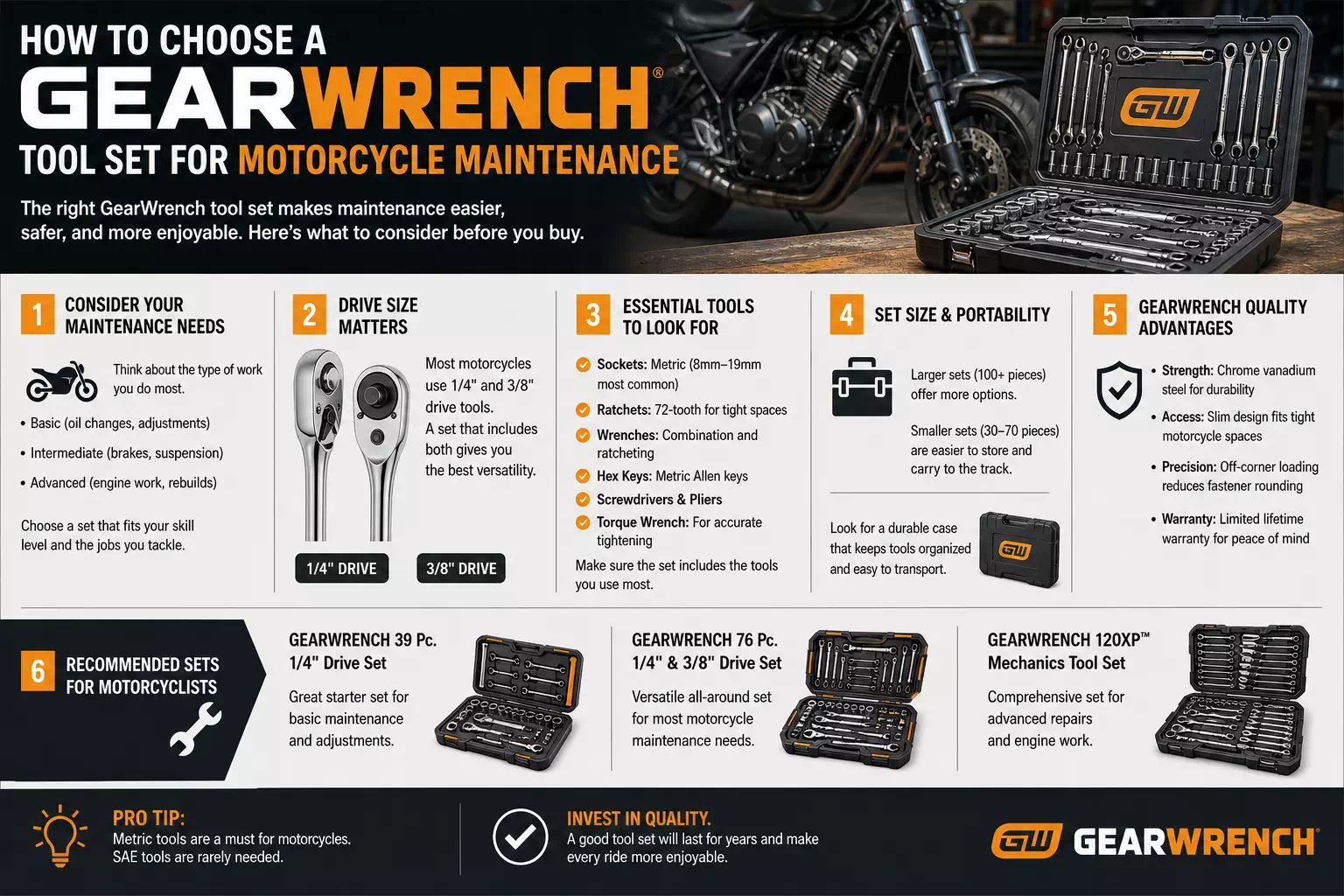
Socket sets are also useful for brake, suspension, steering and underbody work. A 3/8-inch drive is versatile for many general automotive tasks, while a 1/2-inch drive is better suited to larger fasteners and applications requiring more force.
The drive size still needs to match the job. A larger ratchet does not automatically make a seized fastener safe to remove. When additional breakaway force is required, use the appropriate breaker bar, penetrating method, impact-rated accessory or manufacturer-recommended procedure.
Deep and Awkward Fasteners
Extensions and universal joints can make a socket setup considerably more adaptable. A universal joint can help when the ratchet cannot remain perfectly straight with the socket, although correct alignment remains important when applying high force.
Sockets are particularly efficient when several fasteners of the same size need to be removed. The ratchet allows repeated back-and-forth movement without lifting the tool after every partial turn.
When Is a Wrench Set the Better Choice?
A wrench set becomes more useful when the fastener can be approached from the side, when a hose or pipe prevents a socket from passing over it, or when surrounding components leave insufficient room for a socket and ratchet.
Open-End Wrenches for Limited Access
An open-end wrench can slide over a nut from the side, making it useful around fittings, brake lines, fuel lines and other components where a socket cannot approach the fastener from above.
The trade-off is reduced contact area compared with a box-end design. Always use the correct size and make sure the wrench is properly seated before applying force.
Box-End Wrenches for Better Engagement
A box-end wrench surrounds more of the fastener and generally provides better engagement than an open-end wrench. It works well when there is enough clearance to place the wrench over the nut and swing it through the available space.
A six-point box end is often preferred for higher-force work because it engages the flats of a hex fastener. Twelve-point designs provide more starting positions when working in tight spaces.
Combination Wrenches for Everyday Automotive Work
A combination wrench provides an open end on one side and a box end on the other. This makes it one of the most practical formats for general automotive repair.
The open end provides easier side access, while the box end can provide stronger engagement when there is sufficient clearance. A well-organized metric combination wrench set works well alongside a socket set and fills many of the access gaps left by sockets.
Do You Need Both a Socket Set and a Wrench Set?
For occasional maintenance, start with the tool that matches your most common jobs. A home user who mainly performs oil changes, battery replacement and basic maintenance may get good value from a 3/8-inch socket set combined with a small metric combination wrench set.
For a professional automotive repair shop, carrying both is usually more practical. Vehicle fasteners are rarely arranged in convenient positions. Some are recessed, some are exposed, and others are located beside pipes, brackets, wiring or body panels.
Having both tools reduces the temptation to force a socket into an unsuitable position or use an adjustable wrench or pliers when a properly sized wrench or socket is required.
For fleet maintenance, tool selection should be based on the vehicles being serviced. Reviewing common fastener sizes and repair tasks can help create a standardized combination of sockets and wrenches that is easier to issue, inspect and replace.
Choosing the Right Socket Drive Size
Socket drive size determines the balance between access and the amount of force the tool can handle. Most automotive repair setups benefit from more than one drive size.
| Drive Size | Typical Automotive Uses | Practical Advantage |
|---|---|---|
| 1/4-inch | Interior work, small fasteners, sensors, clamps and tight spaces | Compact and easy to control |
| 3/8-inch | Engine-bay work, brackets, accessories and routine repairs | Highly versatile for general automotive work |
| 1/2-inch | Wheels, suspension, subframes, axles and larger fasteners | Better suited to larger sockets and higher-force applications |
A 1/4-inch socket set is useful when clearance matters more than force. A 3/8-inch set is often the best starting point for general automotive service. A 1/2-inch set becomes increasingly important when work regularly involves suspension, chassis or larger fasteners.
A professional workshop will often need all three drive sizes rather than trying to make one size handle every task.
Metric or SAE: Which Socket and Wrench Sizes Should You Buy?
The right choice depends on the vehicles and equipment being serviced. Metric tools are widely used on modern vehicles, while SAE sizes may still be needed for certain imported vehicles, older models, agricultural equipment and industrial machinery.
For a workshop serving different customers, a metric-first setup with selected SAE coverage may be practical. For a private garage, start with the fastener sizes used on your own vehicles instead of automatically purchasing two complete sets.
Never use a metric tool simply because it appears close to an SAE size, or vice versa. A poor fit can round the fastener and make the next repair more difficult.
Standard Sockets, Deep Sockets and Specialty Sockets
A complete automotive socket set usually needs more than one socket type. The right combination depends on the repair work the tools are expected to handle.
Standard Sockets
Standard or shallow sockets are compact and work well when the nut is not sitting on a long exposed stud. Their shorter body makes them useful in many crowded engine-bay locations.
Deep Sockets
Deep sockets extend farther over the nut and are useful for long studs, spark plugs, wheel-related fasteners and other applications where a shallow socket cannot fully engage the fastener.
They do require additional clearance, so deep sockets should complement rather than replace standard sockets.
Specialty Sockets
Some automotive jobs require spark-plug sockets, impact sockets, thin-wall sockets, hex-bit sockets, Torx sockets or other specialty designs. Select these according to the actual repair tasks rather than simply choosing a kit because it contains a larger number of pieces.
If a socket will be used with an impact wrench, make sure it is specifically rated for impact applications. Standard chrome hand-tool sockets and impact sockets are designed for different loading conditions.
Socket and Wrench Materials: What Should You Look For?
The performance of a socket or wrench depends on more than the label printed on the package. Chrome vanadium steel is commonly used in general hand tools, while chrome molybdenum is widely associated with impact applications and tools exposed to higher shock loading.
A polished finish can make a tool easier to clean and may help with surface corrosion control, but finish alone does not determine service life. Buyers should also consider working profile, fit, heat treatment, wall thickness, joint quality and manufacturer specifications.
Ratchet construction is equally important. A fine-tooth ratchet can reduce the swing angle required in a tight space, but tooth count is only one factor. Reversing mechanism quality, load capacity, handle strength and overall construction also deserve attention.
Avoid using an extension pipe or cheater bar on a standard ratchet unless the tool is specifically designed for that type of loading. When a fastener requires high breakaway force, use an appropriate breaker bar or high-torque tool.
Common Mistakes When Buying Socket and Wrench Sets
1. Buying Only by Piece Count
A large piece count does not always mean a more useful tool set. Some kits contain adapters, bits, duplicate sizes or accessories that may rarely be used.
Instead of asking only how many pieces are included, compare the actual socket sizes, wrench sizes, drive sizes and accessories that your work requires.
2. Ignoring Deep Sockets
A set with many shallow sockets may still leave you unprepared for long studs and recessed fasteners. Check whether deep sockets are included in the sizes you use most often.
3. Choosing Extensions Without Considering Access
An extension can solve a reach problem, but the wrong length can make the tool difficult to control or align. A useful setup often includes more than one extension length and, where appropriate, a universal joint.
4. Using Standard Sockets With an Impact Wrench
Impact tools generate loading conditions that differ from hand ratchets. Use accessories specifically rated for impact applications and follow the tool manufacturer's instructions.
5. Overusing an Adjustable Wrench
An adjustable wrench is convenient for some general tasks, but it should not replace a properly sized fixed wrench or socket on a tight automotive fastener. Excessive clearance can damage the fastener flats.
6. Forgetting Individual Tool Replacement
High-use sockets and wrenches can eventually become misplaced or damaged. Before buying a professional workshop set, check whether individual replacement pieces are available.
What Should a Workshop Buy First?
The best configuration depends on the type of work being performed. The following approach provides a practical starting point for different users.
| User | Suggested Starting Configuration | Main Priority |
|---|---|---|
| Home Garage | 3/8-inch socket set plus basic metric combination wrenches | Common sizes, extensions and easy storage |
| Mobile Technician | Compact multi-drive socket set plus portable wrench set | Weight, case layout and frequently used sizes |
| Automotive Repair Shop | 1/4-inch, 3/8-inch and 1/2-inch sockets with shallow and deep coverage | Access, durability and replacement availability |
| Fleet Maintenance Team | Standardized metric socket and combination wrench sets | Common vehicle fasteners and inventory control |
| Heavy-Duty Repair | 1/2-inch and larger high-capacity tools plus specialist equipment | Torque capacity, impact-rated accessories and safe handling |
Choosing a Complete Mechanic Tool Set
If you are setting up a workshop rather than purchasing a single socket or wrench, a complete mechanic tool set can simplify the purchasing process by combining commonly used tools in one organized configuration.
For buyers who need a broader selection of sockets and ratchets, Dawei's 94-piece socket and ratchet wrench set provides coverage across multiple drive sizes.
If you are comparing different configurations for professional workshop use, the professional socket wrench set collection provides another option for reviewing different socket and wrench combinations.
For customers looking for a broader automotive hand-tool package that includes sockets, wrenches, pliers, a hammer and screwdrivers, see the hand tool set for automotive repair.
Before choosing the size of a complete kit, our mechanic tool set buying guide can help you evaluate tool coverage, drive sizes, storage and practical workshop requirements.
Storage and Workshop Organization
Sockets and wrenches are easy to lose when they are stored without a consistent system. A molded case is convenient for portable work, while a drawer cabinet or modular tray may be more practical for a busy repair shop.
Whatever storage method you choose, the layout should make missing tools obvious. Keep sockets grouped by drive size and separate metric and SAE tools clearly. Extensions, universal joints and adapters should also have designated positions.
A workshop should have a simple process for checking tools after a repair. A final inspection can prevent a socket, extension or wrench from being left in the engine bay or under the vehicle.
Frequently Asked Questions
Is a socket set better than a wrench set for car repair?
Not in every situation. A socket set is usually faster for recessed or repeated fasteners, while a wrench set is more useful when access is from the side or a socket cannot pass over an obstruction. Most professional automotive repair setups benefit from having both.
Do I need both a socket set and a wrench set?
For occasional basic maintenance, you can start with one and add the other as needed. For a repair shop, fleet maintenance team or serious home garage, having both provides better access to different fastener positions.
Is a 3/8-inch socket set enough for automotive repair?
A 3/8-inch socket set is a strong starting point for general automotive service, but it may not cover larger suspension or chassis fasteners. A 1/4-inch set is useful for smaller and tighter applications, while a 1/2-inch set is better suited to larger fasteners and higher-force work.
Are deep sockets necessary?
Deep sockets are necessary for some jobs, especially when a nut sits on a long stud or a shallow socket cannot fully engage the fastener. They are useful additions but do not replace shallow sockets because they require more clearance.
Should I buy a complete socket and wrench set or individual tools?
A complete set can be economical when you need a broad range of common sizes. Individual tools make more sense when you already have a good collection and only need to fill specific gaps. For professional workshops, check whether high-use individual pieces can be replaced.
Final Recommendation: Socket Set or Wrench Set?
A socket set and a wrench set solve different access problems. Sockets are efficient and controlled and are particularly useful for recessed fasteners. Wrenches work from the side and can reach positions where a socket cannot.
For a home garage, a 3/8-inch socket set combined with a basic metric combination wrench set is a practical starting point for many common maintenance tasks.
A professional automotive repair shop will usually need a wider setup, including 1/4-inch, 3/8-inch and 1/2-inch drive sockets, shallow and deep sockets, combination wrenches and specialist tools for high-torque or manufacturer-specific applications.
The most important thing is to choose the tools according to the jobs they must handle rather than the largest piece count printed on the case. Check drive sizes, metric or SAE coverage, socket depth, wrench type, material, storage and replacement options.
When the tool matches the fastener and the available working space, automotive repair becomes simpler, faster and less likely to damage either the tool or the vehicle.
Looking for Socket Sets or Automotive Hand Tools?
Dawei Metal supplies socket sets, wrench sets, mechanic tool sets and automotive hand tools for professional workshops, distributors, wholesalers and other international buyers.
If you are sourcing a socket set, wrench set, mechanic tool set or customized automotive tool kit, contact Dawei with your required sizes, drive configuration, piece count, packaging requirements and target market.
Our team can help you compare suitable configurations for your project and discuss OEM, packaging and bulk-order requirements.
About Dawei Metal
Dawei Metal is a China-based supplier of hardware tools and automotive hand tools for international markets. Its product range includes socket sets, wrench sets, mechanic tool sets, hand tools and other workshop equipment.
For wholesale sourcing, OEM projects, private-label tool sets or customized packaging, contact the Dawei team with your product requirements.