
- Dawei Metal 2026 Chinese New Year Special Offer: Gallop into Success with Upgraded Tools!
- Aluminum Alloy Combination Tool Set for Home, Automotive, and Repair Use
- Striking Tools: Types, Uses, and How to Choose the Right One
- Highest Quality Hand Tools: Inside the World's Most Trusted Tool Brands
- Why a Machete Saw Belongs in Your Outdoor Kit
Company:Shandong Dawei Metal Materials Co., Ltd.
Tel:+8615666285386
Email:dwhardwaretools@gmail.com
Address:Room 1413, Building 8, Shandong Steel Xintiandi Plaza, No. 61 Gongye South Road, High-tech Zone, Jinan City
Worksite Tools in Real Use: Portable Hand Grinder and Worksite Compressor Setup
Most tool articles list features but never show what happens on a real job when time is tight, space is limited, and materials are not clean. This guide uses a realistic work scenario to explain which worksite tools you actually reach for, when a portable hand grinder is the best solution, and how to choose a worksite compressor that keeps up.
You will also find a simple power tools definition, plus two comparison tables to help you pick the right cutting tool and the right compressor style.
1.Power tools definition
Power tools definition: tools that use an external power source such as electricity, batteries, gasoline, or compressed air to perform work faster or with less effort than hand tools.
On most worksites, power tools fall into two main groups:
Electric tools powered by cord or battery
Air tools powered by a compressor
That is why a worksite compressor can still be useful even if most of your kit is cordless.
2.Real work scenario: metal gate repair and light framing reinforcement
Project goal: Replace a bent metal bracket, clean the mounting surface, and reinforce a small wood frame near the hinge side.
Common jobsite constraints:
No workshop access
Tight space near a wall
Rusty fasteners and sharp edges
The finish needs to look clean, not just functional
This is exactly where the right worksite tools save hours.
3.Worksite tools you actually use first
Core worksite tools
Tape measure and marker
Impact driver and bit set
Drill and metal and wood bits
Clamps for safe cutting and accurate alignment
Portable hand grinder for cutting, prep, and finishing
Safety gear: eye protection, face shield, hearing protection, gloves
Support worksite tools that save time
Worksite compressor with hose and blow gun
Charger, spare batteries, or extension lead depending on your setup
4.Portable hand grinder: what it does best on real jobs
A portable hand grinder is one of the most versatile worksite tools because it can switch roles quickly with the right disc.
Task A: Cut off seized or rounded hardware
When bolts are rusted or rounded, cutting is often faster than trying to remove them with hand tools. It also reduces the risk of damaging surrounding parts.
Task B: Prep metal for a flush fit
Removing rust, paint, and high spots helps the bracket sit flat. A flat seating surface reduces movement, noise, and premature loosening.
Task C: Finish edges so the work looks professional
A quick edge cleanup makes the repair safer to touch and visibly higher quality.
Consumables that matter
Cut-off wheels for fast cuts
Flap discs for smoothing and blending
Grinding wheels for heavy shaping
Wire brushes for rust and paint removal
5.Comparison table: portable hand grinder vs cut-off tool vs reciprocating saw
People often buy the wrong cutting tool for jobsite work. Use this table to decide quickly.
| Tool | Best for | Strengths | Limitations | Typical jobsite examples |
|---|---|---|---|---|
| Portable hand grinder | Metal cutting, surface prep, deburring, blending | Fast, versatile with different discs, good finish control | Sparks, noise, requires steady control and good safety practices | Cut seized bolts, remove rust, smooth welds, clean sharp edges |
| Cut-off tool | Straight cuts in metal, quick trimming | Very fast for clean straight cuts, compact | Less versatile for finishing, limited to cutting tasks | Cut brackets, cut threaded rod, trim metal stock |
| Reciprocating saw | Demolition cuts, mixed material cutting | Works in awkward positions, good for rough cuts through wood and metal | Slower and rougher cut, more vibration, less precise finishing | Cut old fasteners, demo a damaged frame section, cut pipes or studs |
Practical workflow tip: break the problem into stages. Use the tool that removes material fastest first, then switch to the tool that produces the best finish.
6.Worksite compressor: what it really helps with
A worksite compressor is often a time-saver even when you do not use air tools all day.
Use case 1: Blow-out cleanup before reassembly
Blowing dust out of hinge areas, bolt holes, and corners helps parts seat properly and reduces grit that causes premature wear.
Use case 2: Pneumatic fastening when speed matters
A nailer or stapler can be faster than screws for certain positioning and trim steps.
Use case 3: Quick inflation and general on-site support
Tires, carts, and equipment often need air at the worst times. A compressor prevents delays.
7.Compressor sizing: what to look at first
Many buyers focus on tank size, but jobsite performance depends more on airflow.
The three specs that matter most
CFM at 90 PSI
Maximum pressure rating
Recovery time and duty cycle
Simple rule: if you will use air tools repeatedly, match the compressor to the tool’s airflow requirement. If you only need cleanup and occasional fastening, a smaller unit may be enough.
8.Comparison table: worksite compressor types
| Compressor type | Best for | Pros | Cons |
|---|---|---|---|
| Compact portable | Blow gun, inflation, occasional light nailing | Easy to carry, quick setup | Limited airflow for continuous tool use |
| Twin-tank portable | More frequent nailing, faster recovery | Better recovery and airflow than many compact units | Heavier, takes more space |
| Wheeled portable | Longer tasks, higher air demand | Better for repeated pneumatic work, easier transport on wheels | Larger footprint, can be louder, more storage space needed |
9.Safety essentials that affect real jobs
Portable hand grinder safety
Use the guard and the correct disc rating
Wear eye protection and a face shield
Control sparks and keep the area clear of flammables
Let the disc stop fully before setting the tool down
Worksite compressor safety
Drain tank moisture regularly
Check fittings for leaks
Do not exceed tool pressure ratings
10.Fast workflow example using both tools
Mark and clamp the bracket position
Drill pilot holes and confirm alignment
Use the portable hand grinder to remove rust and prep the mounting surface
Cut seized hardware cleanly
Install and fasten the new bracket and wood reinforcement
Use the worksite compressor to blow out debris before final tightening
Finish with a flap disc to remove burrs and sharpen the final appearance
This sequence reduces rework and improves the quality of the finished job.
FAQ
What is the simplest power tools definition?
Power tools are tools powered by electricity, batteries, fuel, or compressed air that perform work faster than hand tools.
What is a portable hand grinder commonly used for on a worksite?
Cutting seized bolts, removing rust and paint, prepping metal surfaces, smoothing welds, and removing burrs and sharp edges.
What spec matters most when choosing a worksite compressor?
CFM at 90 PSI matters most because it determines whether the compressor can keep up with air tools during repeated use.
Do I need a worksite compressor if I mostly use cordless tools?
Often yes. A compressor speeds up cleanup with a blow gun, supports nailers, and handles quick inflation tasks that prevent downtime.
What discs should I keep for a portable hand grinder?
At minimum, keep cut-off wheels for cutting and flap discs for cleanup and finishing. Add a wire brush for rust removal if you do metal repair work.
- Pro:Cordless Power Tools Buying Guide (2026): Best Kits, Batteries, Storage & Organizer Solutions
- Next:None
-
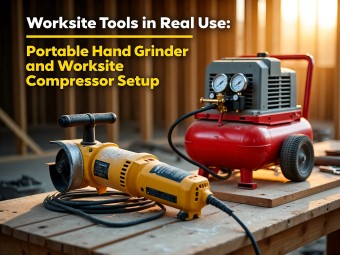
Worksite Tools in Real Use: Portable Hand Grinder and Worksite Compressor Setup
-
Cordless Power Tools Buying Guide (2026): Best Kits, Batteries, Storage & Organizer Solutions
-
Mechanic Tool Set Buying Guide (2026): How to Choose the Right Mechanics Tool Set
-
Essential Measuring Tools for Construction and Inspection: H-Shaped Rulers, Angle Tools, Girth Measu
-
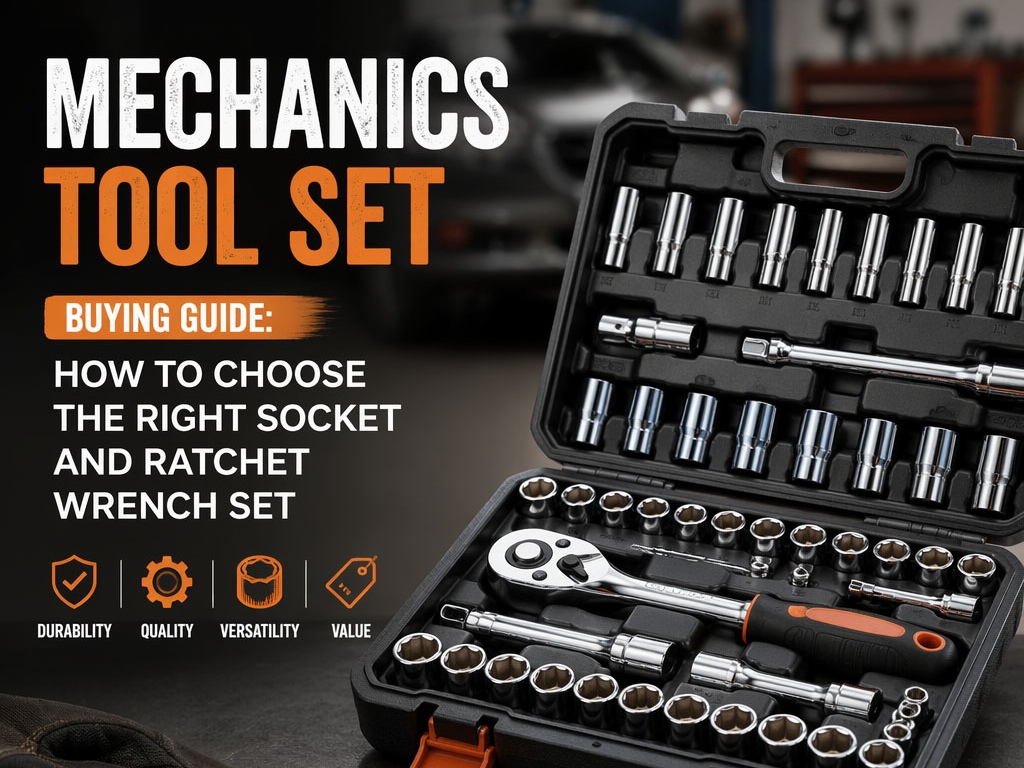
Mechanics Tool Set Buying Guide: How to Choose the Right Socket and Ratchet Wrench Set
-
Complete Guide to Dawei Wrench Tools: Torque Wrenches, Impact Wrenches, Spanners and More