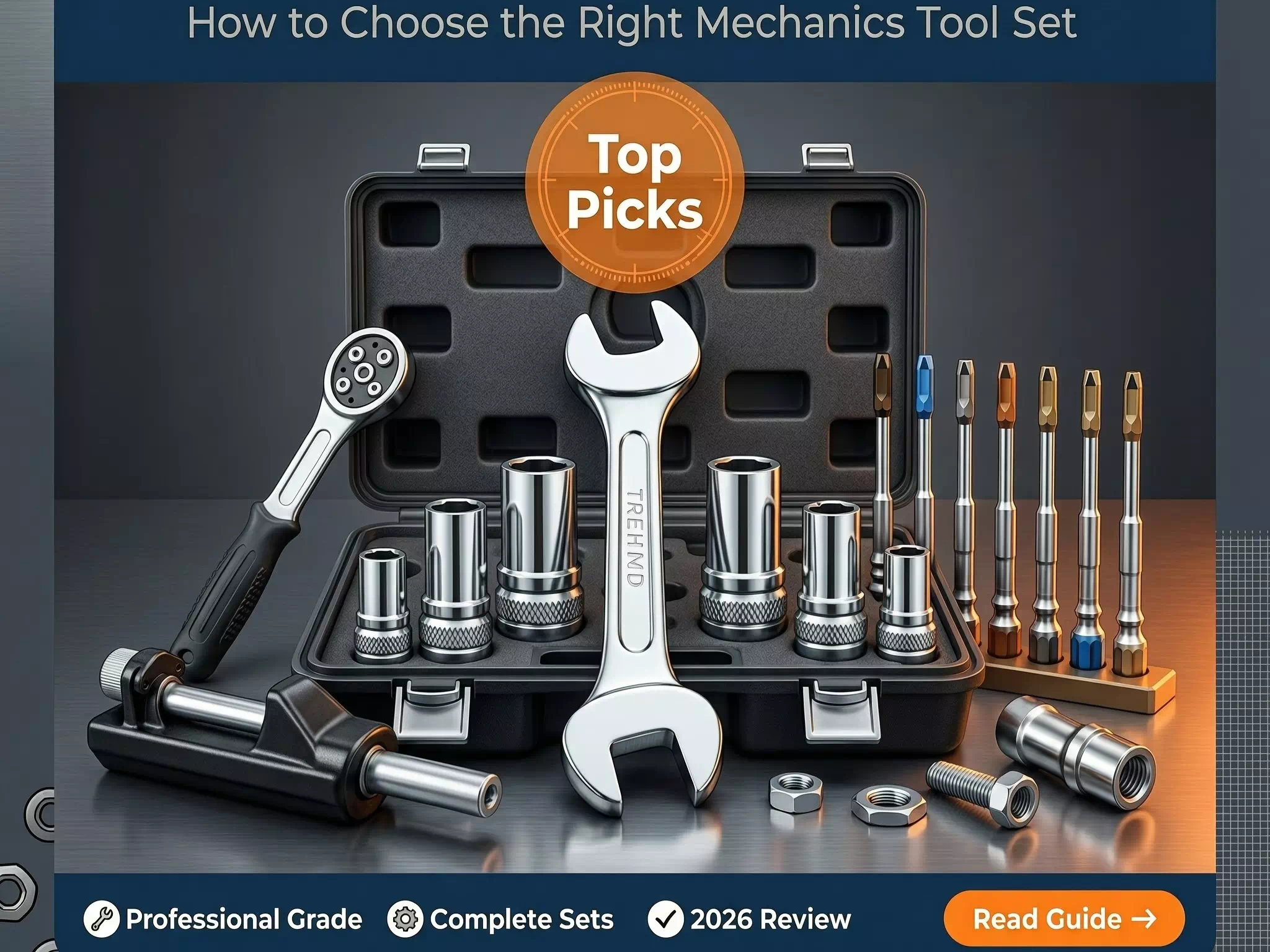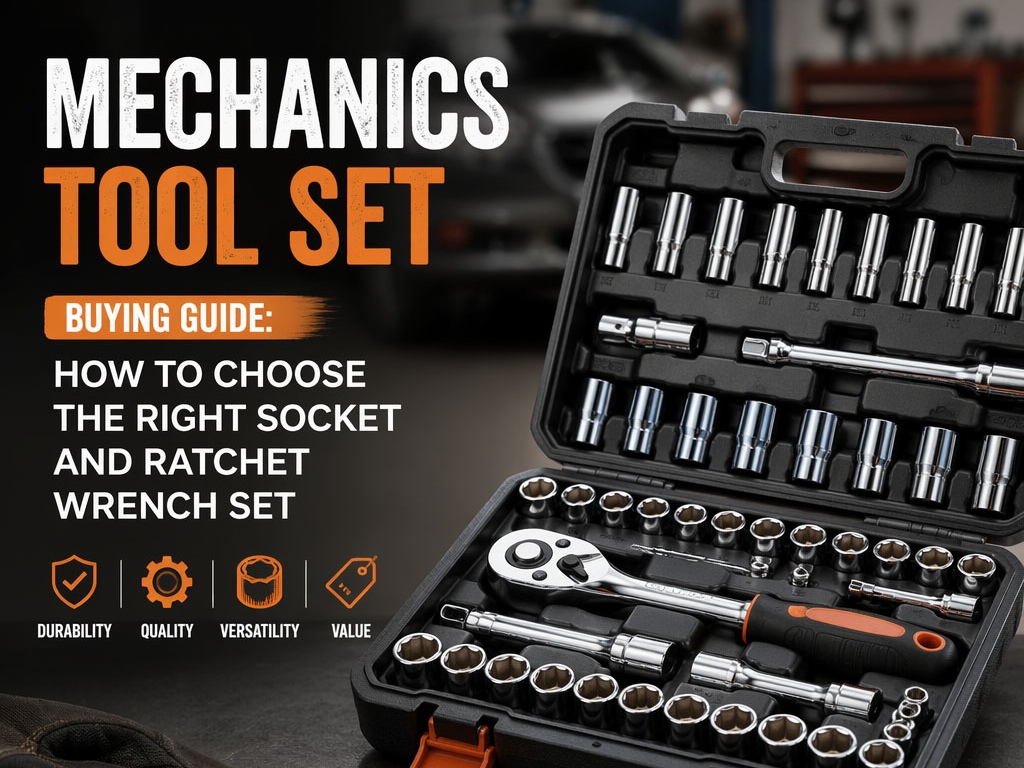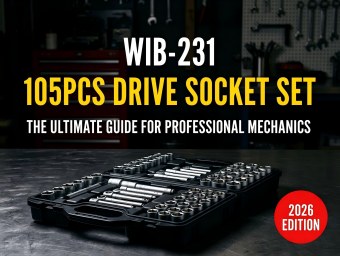
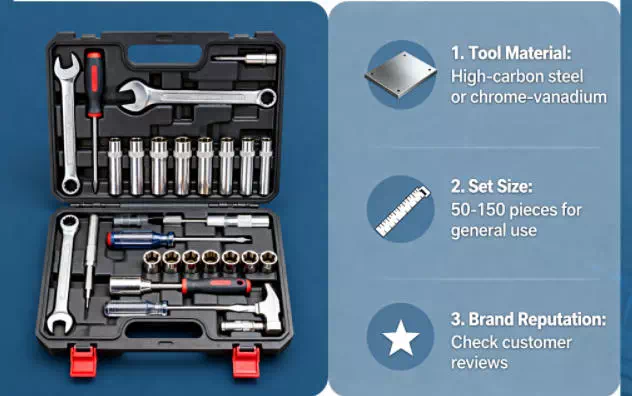
A reliable mechanic tool set is one of the quickest upgrades you can make for DIY and automotive work. The challenge is that many tool sets look “complete” on a product page but include filler pieces—or skip the sizes you actually use.
This guide explains how to pick a practical mechanics tool set, what to look for in sockets/ratchets/wrenches, and when a tool box with tools is the smarter choice. You may also see searches like “tools tool sets” when shoppers mean general-purpose kits—this article clarifies the difference.
1) Mechanic tool set vs general tool sets: what are you really buying?
Mechanic tool set / mechanics tool set (automotive-focused)
Typically includes:
Metric and/or SAE sockets (often deep + shallow)
Ratchets (1/4", 3/8", sometimes 1/2" drive)
Extensions, adapters, and sometimes universal joints
Wrenches (combination; sometimes ratcheting)
Best for: cars, motorcycles, engine bays, brakes, suspension, and equipment fasteners.
Tool box with tools (household-focused)
Often includes:
Screwdrivers, pliers, hammer, tape measure, utility knife
A smaller bit and socket selection
A portable toolbox with room to expand
Best for: home maintenance, furniture assembly, and general repairs.
2) Drive sizes: the #1 factor in a mechanics tool set
Drive size determines what bolts you can comfortably handle and how compact the ratchet system will be.
| Drive size | Best for | Why it matters |
|---|---|---|
| 1/4" | Small fasteners, tight spaces, interior work | Compact and precise |
| 3/8" | Most automotive repairs | Best all-around balance of size and torque |
| 1/2" | Lug nuts, suspension, higher torque | More strength and leverage for heavy jobs |
3) Socket coverage: how to avoid “filler-piece” tool sets
6-point vs 12-point sockets
6-point: better grip on flats; reduces rounding (recommended for most mechanical work)
12-point: easier to position; can slip more under high load
Deep vs shallow sockets
Deep sockets: ideal for studs and recessed nuts (very common in automotive)
Shallow sockets: better for low-clearance areas
Extensions + universal joint
A great mechanics tool set isn’t just sockets—it’s access. Extensions and a U-joint help you reach fasteners behind brackets, under manifolds, or near frame rails where a straight shot is impossible.
4) Ratchet quality checklist (what you’ll feel immediately)
Fine-tooth mechanism (often 72T/90T): smaller swing arc in tight spaces
Quick-release: faster socket changes, fewer drops
Strong reverse switch: positive engagement and control
Low back-drag: smoother operation when fasteners are light
Two tool sets can list similar contents, but the ratchet is the part you use constantly—prioritize feel, durability, and warranty support.
5) Wrenches: do tool sets need them?
Sockets do most of the work in a mechanic tool set, but wrenches solve the problems sockets can’t—especially when a fastener is too close to a wall, the bolt head is partially blocked, or you need to hold a nut while turning the bolt.
Combination wrenches: great for torque and slim access
Ratcheting wrenches (optional): faster in tight spaces, great for repeated turns
6) Metric vs SAE: choose for your projects
Metric: essential for most modern vehicles and equipment
SAE: useful for older vehicles, certain US hardware, and mixed projects
If you want one kit to cover more situations, choose a mechanics tool set with both metric and SAE. If you mainly service modern cars, go metric-first.
7) Storage: case kits vs a tool box with tools
Blow-mold case (common for mechanics tool sets)
Great organization for sockets and accessories
Portable and easy to spot missing pieces
Less room to expand
Tool box with tools (best for flexible, general-purpose kits)
More space to add tools over time
Better for odd-shape tools (pliers, hammer, tape)
Needs organizers to stay tidy
8) Simple buying checklist (use this on any product page)
Drive sizes: 1/4" + 3/8" (add 1/2" if needed)
Socket style: prioritize 6-point in common sizes
Depth: deep + shallow sockets
Access tools: extensions + universal joint
Wrenches: included or planned add-on
Storage: organized case or tool box with tools
Warranty/support: realistic replacement policy
FAQ
What’s the best mechanics tool set for beginners?
For most beginners, the best mechanics tool set includes 1/4" and 3/8" drive ratchets, deep and shallow 6-point sockets in common sizes, plus extensions and a universal joint.
Should I buy a tool box with tools or a mechanic tool set?
Choose a tool box with tools for general household maintenance (screwdrivers, pliers, tape measure). Choose a mechanic tool set (or mechanics tool set) for automotive work where sockets and ratchets do most of the job.
Do I need 1/2" drive in a mechanic tool set?
Not always. 1/2" drive is recommended if you plan to do wheels, suspension, or other higher-torque jobs. For light DIY and many car repairs, 1/4" + 3/8" drive may be enough.
Are 6-point sockets better than 12-point sockets?
For stubborn or rusty fasteners, 6-point sockets are usually better because they grip the flats more securely and reduce rounding. 12-point sockets can be faster to position but may slip more under heavy load.