
- Dawei Metal 2026 Chinese New Year Special Offer: Gallop into Success with Upgraded Tools!
- Aluminum Alloy Combination Tool Set for Home, Automotive, and Repair Use
- Striking Tools: Types, Uses, and How to Choose the Right One
- Highest Quality Hand Tools: Inside the World's Most Trusted Tool Brands
- Why a Machete Saw Belongs in Your Outdoor Kit
Company:Shandong Dawei Metal Materials Co., Ltd.
Tel:+8615666285386
Email:dwhardwaretools@gmail.com
Address:Room 1413, Building 8, Shandong Steel Xintiandi Plaza, No. 61 Gongye South Road, High-tech Zone, Jinan City
What Tool Is Used for Measuring Mass | Complete Guide to Mass Measuring Tools
The most common tool used for measuring mass is a balance scale or a digital scale. These instruments determine the mass of an object either by comparing it with known standard weights or by using electronic sensors to provide accurate readings. Different mass measuring tools are used in laboratories, industrial production, commercial trade, education, and daily applications depending on required precision and capacity.
In this complete guide, we will explain the main types of tools used for measuring mass, how they work, where they are commonly used, and how to choose the right measuring instrument for different applications.
Understanding Mass and Why Measuring It Matters
What Is Mass?
Mass is a fundamental physical property of matter. It represents the amount of material contained in an object and is typically measured in grams (g), kilograms (kg), milligrams (mg), or metric tons (t). Unlike weight, which varies with gravity, mass remains constant regardless of location.
Why Is Measuring Mass Important?
Accurate mass measurement is essential in many fields and applications, including:
Scientific research and laboratory experiments
Industrial production and quality control
Commercial trade and goods weighing
Medical and pharmaceutical applications
Construction and engineering work
Food processing and packaging
Educational purposes and teaching
Without proper mass measuring tools, it is impossible to maintain accuracy, consistency, and safety in these applications.
Main Types of Tools Used for Measuring Mass
1. Balance Scale (Beam Balance)
A balance scale, also called a beam balance, is one of the oldest and most traditional tools for measuring mass. It works by comparing the unknown mass of an object with known standard masses placed on the opposite side of the beam.
How It Works: The object is placed on one pan, and calibrated weights are added to the other pan until the beam is level. When both sides are balanced, the mass of the object equals the total of the known weights.
Key Features:
Simple mechanical operation
No electricity required
High accuracy for laboratory and educational use
Not affected by gravity changes
Common Applications:
Science laboratories
Educational institutions
Jewelry weighing
Pharmaceutical compounding
2. Digital Scale (Electronic Scale)
A digital scale is a modern mass measuring tool that uses electronic sensors (load cells) to determine the mass of an object. It displays the result on a digital screen, making it easy and fast to read.
How It Works: When an object is placed on the platform, the load cell inside the scale detects the force applied and converts it into an electrical signal. The built-in processor then calculates and displays the mass value.
Key Features:
Fast and convenient reading
High accuracy available in different precision levels
Easy to use
Available in portable and bench-top models
Can include features like tare function, unit conversion, and data output
Common Applications:
Industrial weighing
Commercial trade
Food processing
Laboratory measurement
Workshop and warehouse operations
3. Analytical Balance
An analytical balance is a high-precision digital instrument used for very accurate mass measurement, typically to 0.0001 gram (0.1 mg). It is commonly found in scientific and pharmaceutical laboratories.
How It Works: Similar to a digital scale but with much higher sensitivity. It usually includes a draft shield (enclosure) to protect the measurement from air currents and vibrations.
Key Features:
Extremely high precision
Enclosed design for accuracy
Used for very small mass measurements
Requires stable and controlled environment
Common Applications:
Chemical analysis
Pharmaceutical research
Material science
Quality control testing
4. Spring Scale
A spring scale measures mass (or more precisely, weight) using the extension of a spring. When an object is hung from the hook, the spring stretches, and the scale indicates the reading based on how far the spring extends.
How It Works: The spring inside the scale stretches in proportion to the force applied by the hanging object. The reading is shown on a graduated scale alongside the spring.
Key Features:
Simple and portable design
No electricity needed
Lower accuracy than balance scales or digital scales
Measures weight which can be used to calculate mass
Common Applications:
Outdoor and field weighing
Fishing and sports
Market and trade use
Educational demonstrations
5. Platform Scale
A platform scale is a large-capacity weighing instrument designed for measuring the mass of heavy objects. It is commonly used in industrial, logistics, and warehouse applications.
How It Works: The object is placed on a flat platform surface. Internal load cells measure the applied force and display the mass reading on a connected indicator.
Key Features:
High capacity for heavy loads
Durable structure for industrial use
Digital or mechanical display
Floor-mounted or bench-mounted options
Common Applications:
Warehouse and logistics
Manufacturing and production
Shipping and freight
Agricultural weighing
6. Triple Beam Balance
A triple beam balance is a mechanical measuring instrument that uses three beams with sliding weights to determine the mass of an object. It is widely used in schools and laboratories.
How It Works: The object is placed on the pan. The user slides the weights along the three beams until the pointer indicates balance. The mass is read by adding the values of all three beam positions.
Key Features:
No electricity required
Good accuracy for educational and basic laboratory use
Durable and reliable
Easy to understand and operate
Common Applications:
School science classes
Teaching laboratories
Basic industrial measurement
7. Precision Counting Scale
A precision counting scale is a digital instrument used for counting small parts or items by measuring their total mass and dividing by the average piece weight.
How It Works: The user first weighs a sample quantity of parts to establish the average unit weight. Then, when more parts are placed on the scale, it automatically calculates the quantity based on total mass.
Key Features:
Accurate counting function
Digital display
Suitable for small hardware items
Improves inventory efficiency
Common Applications:
Hardware and fastener counting
Electronics component inventory
Warehouse stock management
Manufacturing quality control
Comparison of Mass Measuring Tools
| Tool Type | Accuracy | Power Required | Main Use |
|---|---|---|---|
| Balance Scale | High | No | Laboratory, Education, Jewelry |
| Digital Scale | Medium to High | Yes | Industrial, Commercial, Workshop |
| Analytical Balance | Very High | Yes | Scientific Research, Pharmaceutical |
| Spring Scale | Low to Medium | No | Outdoor, Market, Education |
| Platform Scale | Medium | Yes | Warehouse, Logistics, Industry |
| Triple Beam Balance | Medium to High | No | School, Laboratory |
| Counting Scale | High | Yes | Hardware Counting, Inventory |
How to Choose the Right Tool for Measuring Mass
Choosing the right mass measuring tool depends on several important factors:
Required Accuracy: Laboratories need analytical balances. General industrial or commercial use can rely on digital scales.
Capacity Range: Platform scales are best for heavy loads. Analytical balances are designed for very small quantities.
Working Environment: Outdoor or field conditions may require portable spring scales or battery-powered digital scales.
Power Availability: Mechanical tools like balance scales and spring scales are useful where electricity is unavailable.
Application Type: Industrial, scientific, medical, educational, and commercial uses each require different tools.
Budget: Mechanical tools offer lower cost. Digital and analytical tools provide higher precision.
The Role of Measuring Tools in Industrial and Hardware Applications
In the hardware and industrial tools industry, mass measuring tools play an important role in production, quality control, packaging, and inventory management. Common uses include:
Measuring raw material weight before production
Checking finished product weight for quality assurance
Counting small hardware parts like screws, bolts, and nuts
Weighing packages before shipping
Verifying material specifications in workshop and factory settings
For hardware tool suppliers and manufacturers, having reliable measuring instruments helps maintain product consistency and customer satisfaction.
Mass vs Weight: What Is the Difference?
Mass measures the amount of matter in an object and does not change regardless of location. Weight is the force of gravity acting on that object and can vary depending on where you are. Mass is measured in kilograms or grams, while weight is measured in newtons.
Understanding this difference is important because most everyday measuring tools actually measure the effect of gravity (weight) but display the result in mass units (kg or g) through calibration.
People Also Ask
What instrument is used to measure mass in a laboratory?
In a laboratory, the most commonly used instruments for measuring mass are analytical balances and triple beam balances. Analytical balances provide the highest accuracy and are used for precise scientific measurements.
What is the difference between mass and weight?
Mass is the amount of matter in an object and remains constant everywhere. Weight is the force of gravity acting on an object and can change depending on location. Mass is measured in grams or kilograms, while weight is measured in newtons.
Can a digital scale measure mass?
Yes, digital scales can measure mass. While they technically measure the force of gravity on an object, they are calibrated to display the result in mass units such as grams or kilograms.
What is the most accurate tool for measuring mass?
The most accurate tool for measuring mass is an analytical balance, which can measure to 0.0001 gram (0.1 mg) or even higher precision depending on the model.
What is a triple beam balance used for?
A triple beam balance is used for measuring mass in educational settings and basic laboratories. It provides good accuracy without requiring electricity.
How do you measure mass accurately?
To measure mass accurately, use a calibrated instrument appropriate for the required precision, ensure the measuring surface is level and stable, eliminate air currents and vibrations, and follow proper measurement procedures.
Frequently Asked Questions
What tool is used for measuring mass?
The most common tools for measuring mass are balance scales, digital scales, analytical balances, spring scales, and platform scales. The choice depends on the required accuracy and application.
What is the best tool for measuring mass in industry?
For industrial applications, digital scales and platform scales are the most commonly used tools because of their convenience, capacity, and practical accuracy.
What is a balance scale?
A balance scale is a traditional measuring instrument that determines mass by comparing an unknown mass with known standard weights on opposite sides of a beam.
Where are mass measuring tools used?
Mass measuring tools are used in laboratories, factories, warehouses, commercial trade, schools, medical facilities, food processing, and many other applications.
Does Dawei Hardware Tools supply measuring instruments?
Yes, Dawei Hardware Tools supplies various measuring tools and hardware instruments suitable for industrial, workshop, and commercial applications.
Contact Us
If you need reliable measuring tools, hardware instruments, or industrial hand tools for your business, please contact us for product information, specifications, and quotation. We support wholesale orders, OEM service, and bulk supply for distributors, importers, and hardware buyers worldwide.
-

Deep Socket vs. Standard Socket: Which One Do You Need for Automotive Repair?
-

Socket Set vs. Wrench Set: Which Is Better for Automotive Repair?
-
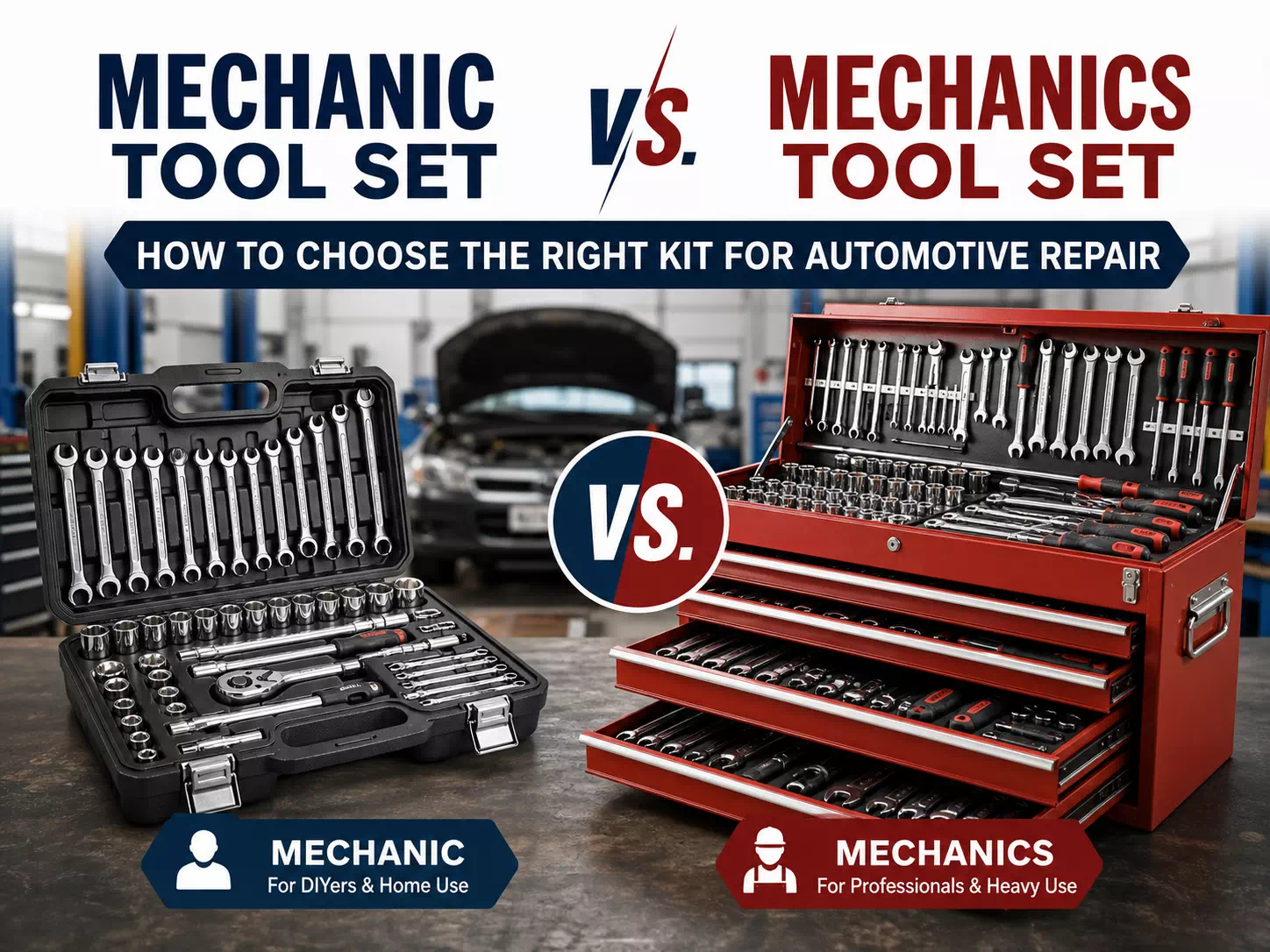
Mechanic Tool Set vs. Mechanics Tool Set: How to Choose the Right Kit for Automotive Repair
-

How to Maintain and Store Insulated Tools: A Daily Care Guide for Electricians
-

How to Choose a 1000V VDE Insulated Tool Set: A Practical Guide for Electricians and Maintenance Tea
-
Essential Insulated Tools for Safe Device Measurement: A Practical Hardware Tools List